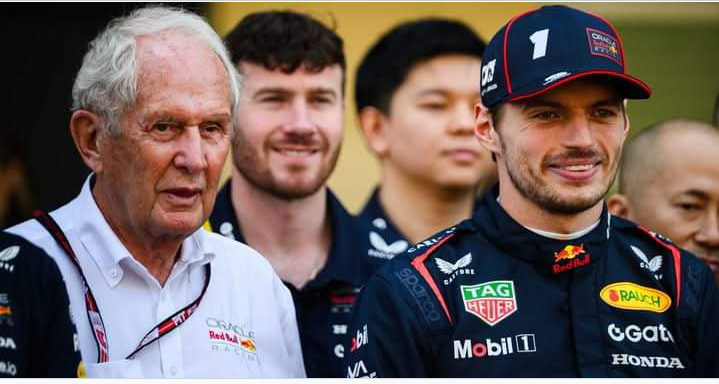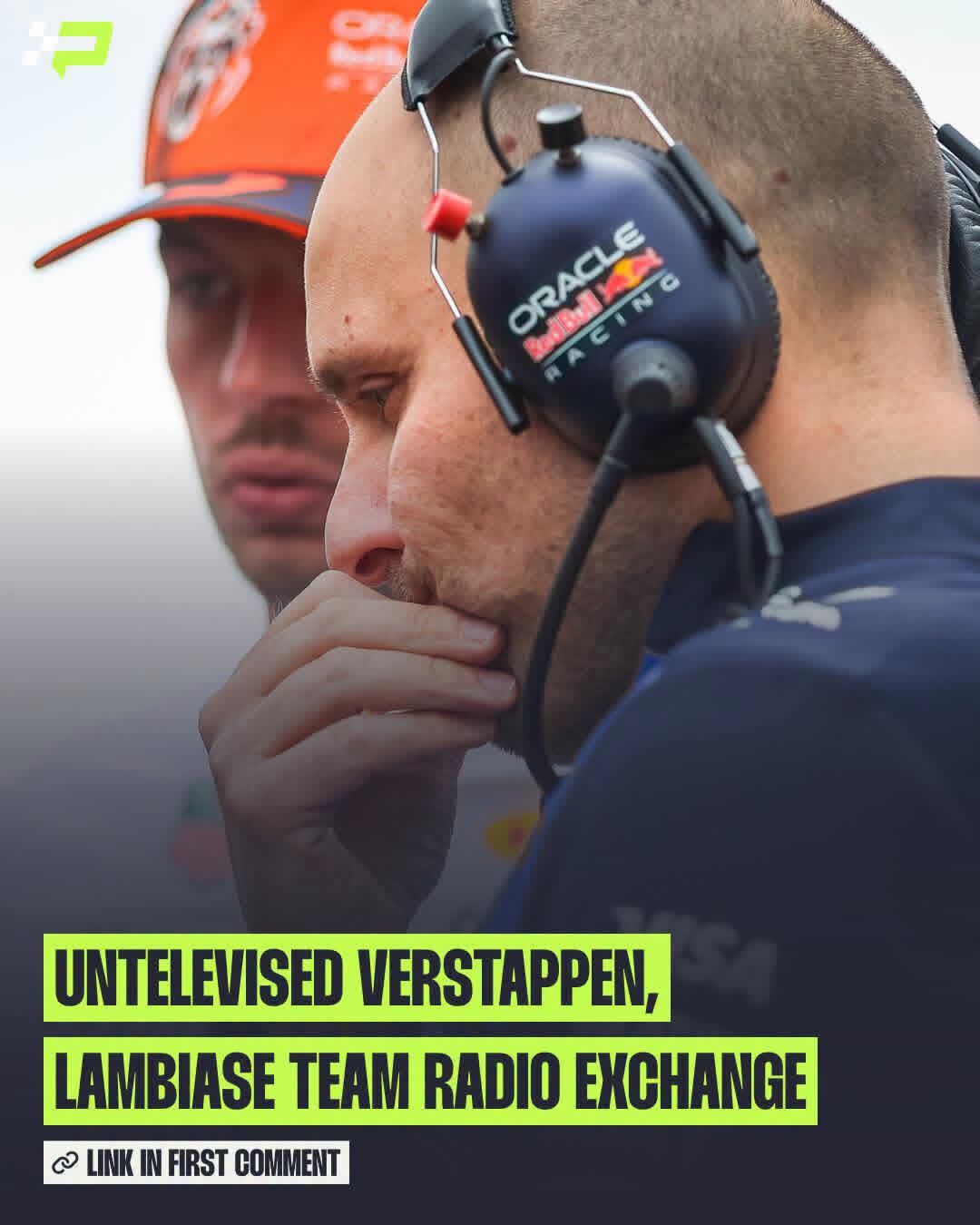
Max Verstappen’s podium finish at the 2026 Belgian Grand Prix may have looked like another strong damage-limitation drive, but newly released team radio conversations have exposed just how difficult the race really was inside the Red Bull cockpit. The previously unheard exchanges between Verstappen and race engineer GianPiero Lambiase reveal a driver battling persistent energy deployment problems, tyre issues, gearbox frustrations, and battery management concerns throughout the race—while still managing to secure third place.
The untelevised communications also highlight the unique relationship between Verstappen and Lambiase. Despite moments of visible frustration, the reigning world champion made a point of telling his long-time engineer not to take his comments personally, offering fans another glimpse into one of Formula 1’s strongest driver-engineer partnerships.
RED BULL’S ENERGY DEPLOYMENT PROBLEMS HURT VERSTAPPEN FROM LAP ONE
Verstappen wasted no time reporting problems after the race began.
Almost immediately, he informed Red Bull that the car’s energy deployment strategy was incorrect through the opening sector, claiming rivals were receiving significantly stronger electrical assistance after Turn 1. The issue left him vulnerable despite making a strong initial launch from the grid.
His concerns did not end there. Throughout the race, Verstappen repeatedly questioned battery charging behaviour, complaining that the system was failing to recharge where he expected. Those issues became particularly noticeable during Safety Car and Virtual Safety Car periods, where energy recovery and deployment play a critical strategic role under the 2026 power unit regulations.
Although Red Bull reassured him that some of the behaviour was planned, Verstappen clearly remained unconvinced for much of the afternoon.
THE DRIVER-ENGINEER PARTNERSHIP REMAINED STRONG DESPITE THE FRUSTRATION
Perhaps the most revealing moment came early in the race.
During discussions over deployment strategy before the restart, Verstappen blurted out a frustrated remark about race understanding before immediately adding, “Don’t take that personal, of course.”
That brief exchange perfectly captured the trust between Verstappen and GianPiero Lambiase.
Unlike many emotional radio outbursts heard in Formula 1, Verstappen’s comments were directed at the situation rather than the individual. His quick clarification demonstrated that even in the heat of battle, he understood the importance of maintaining clear communication with the engineer who has guided him through multiple world championships.
It is another example of why the Verstappen-Lambiase partnership continues to be regarded as one of the strongest working relationships on the Formula 1 grid.
TYRE PROBLEMS BROUGHT BACK MEMORIES OF SILVERSTONE
As the race progressed, another familiar issue emerged.
Verstappen repeatedly complained that the tyres simply refused to generate grip, comparing the experience directly to his difficult British Grand Prix weekend at Silverstone.
Red Bull attempted several adjustments throughout the race, suggesting different energy management settings and changes to Turn 15 driving techniques in an effort to improve battery deployment while also preserving tyre performance.
However, Verstappen remained frustrated, insisting that the underlying problem was not driving style but a lack of front-end grip.
His comments reinforce a growing concern that Red Bull’s RB22 still struggles to maintain tyre performance over long race stints—particularly on circuits where degradation and temperature management become critical.
RED BULL CONTINUED SEARCHING FOR SOLUTIONS DURING THE RACE
The radio conversations also revealed just how actively Red Bull was adapting its strategy in real time.
Lambiase continuously relayed information about deployment maps, battery modes, throttle application, and tyre management as engineers searched for a better balance between corner performance and straight-line speed.
At one point, Verstappen even joked that the engineers watching the laptops should simply tell him what worked best rather than leaving him to guess.
That exchange illustrates how modern Formula 1 has evolved. Drivers are no longer simply racing the cars—they are constantly managing complex hybrid systems, energy harvesting, deployment strategies, tyre temperatures, and software optimisation throughout every lap.
The Belgian Grand Prix became another reminder that success in Formula 1 now depends just as much on engineering decisions as raw driving talent.
WHY THIRD PLACE COULD PROVE MORE IMPORTANT THAN IT LOOKED
Despite all the technical challenges, Verstappen still finished on the podium.
That achievement underlines why many within the paddock continue to regard him as one of the sport’s most complete competitors. Even with compromised deployment, battery concerns, inconsistent gear shifts, and tyres that refused to cooperate, he extracted the maximum available result from the RB22.
Red Bull team principal Laurent Mekies reinforced that belief after the race by thanking Verstappen for “bearing with us” and promising that further performance upgrades are already on the way.
Those comments suggest Red Bull believes the gap to Mercedes and Ferrari is far from permanent.
THE CHAMPIONSHIP FIGHT IS ENTERING A DECISIVE STAGE
The Belgian Grand Prix demonstrated that Red Bull still has work to do before consistently challenging for victories again.
Mercedes continues to lead both championships, while Ferrari has also emerged as a serious threat following recent aerodynamic improvements. With the Hungarian Grand Prix marking the final race before Formula 1’s summer break, every upgrade and every point carries increased significance.
If Red Bull can resolve its energy deployment inconsistencies and tyre performance issues, Verstappen could quickly return to regular race-winning form. However, if these problems continue into the second half of the season, Mercedes’ Andrea Kimi Antonelli and Ferrari’s Lewis Hamilton may strengthen their championship positions even further.
The newly released team radio proves that Verstappen’s third-place finish in Belgium was far more impressive than the final classification alone suggests. While the podium added valuable points, the conversations behind the scenes reveal a team still fighting technical challenges—and a world champion determined to extract every possible result while Red Bull works to regain its place at the very front of Formula 1.