Formula 1 thrives on intensity. Wheel-to-wheel battles, championship pressure, multi-million-dollar machinery, and the constant demand for perfection create a world that often looks ruthless from the outside. Yet every so often a quiet scene cuts through the noise and reminds everyone why this sport still feels deeply human.
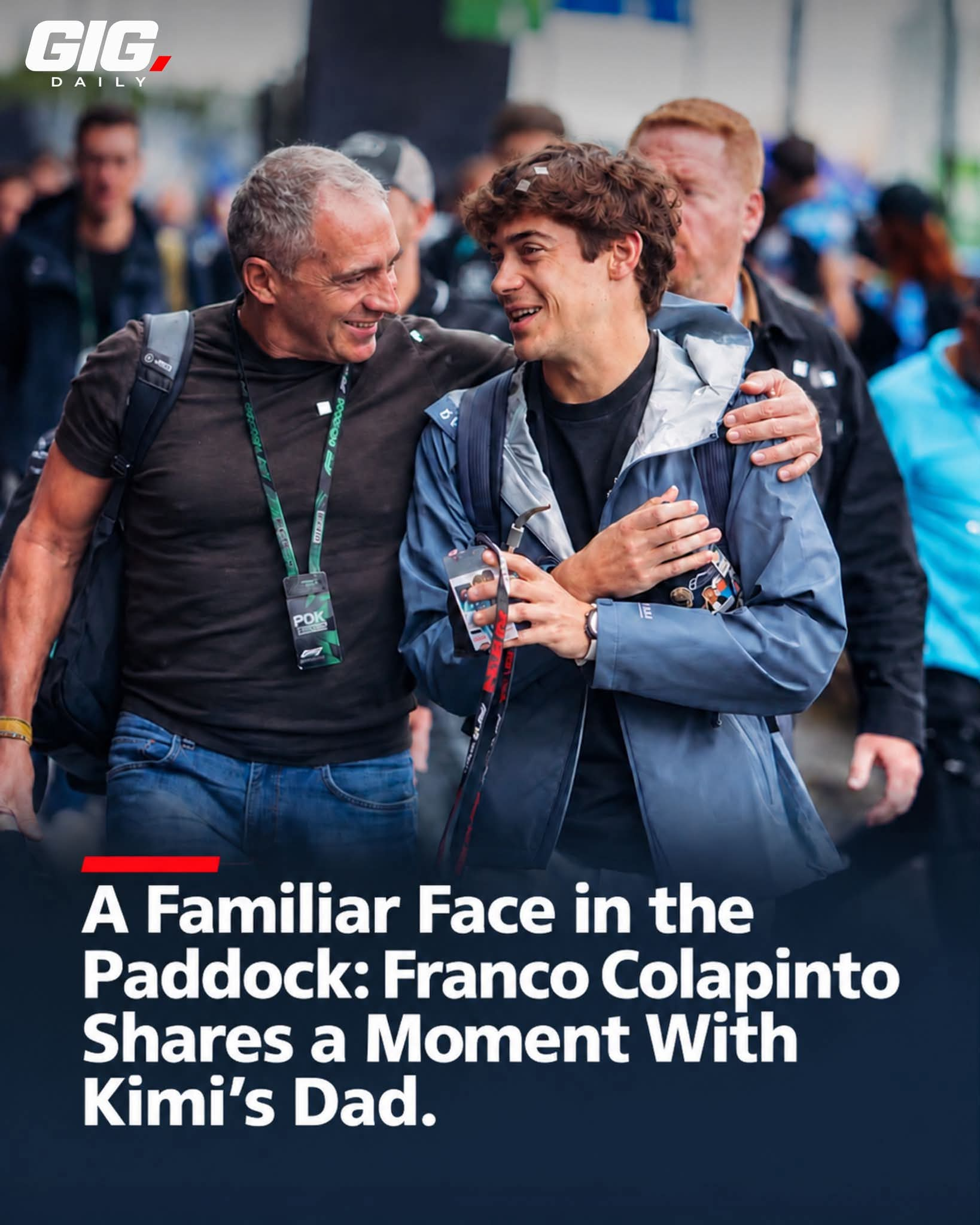
At Interlagos ahead of the São Paulo Grand Prix, Alpine driver Franco Colapinto was spotted in the paddock sharing a relaxed, genuine conversation with Marco Antonelli, father of newly crowned world champion Kimi Antonelli. The images and reports of their chat quickly resonated across social media and the F1 community. It was not a staged photo opportunity or a media obligation. It was simply two people connected through the sport taking a moment to talk while the circus prepared for another high-stakes weekend.
That small interaction says more about Formula 1 than many race results ever could.
THE HUMAN THREAD THAT RUNS THROUGH THE PADDOCK
Behind every driver is a support system that rarely makes the highlight reels. Families sacrifice time, stability, and ordinary life so their children can chase a dream that statistically almost never works out. Marco Antonelli knows that journey better than most. A former racer himself and the man who guided his son from karting through the junior ranks into Mercedes, he has lived the long, uncertain road that produced the youngest Formula 1 world champion in history.
Kimi Antonelli sealed the 2026 title in Mexico at just 20 years old, becoming Italy’s first champion since Alberto Ascari in 1953. The celebrations were emotional, the podium shared with legends, and the family presence visible. Marco has been a constant presence throughout the season, offering both quiet support and the perspective that only someone who has raced can provide. Seeing him exchange warm words with Colapinto in Brazil underscores how the paddock still functions as a small, interconnected village even as the sport grows more global and commercial.
For Colapinto, the moment carries its own weight. The Argentine has fought hard to establish himself in Formula 1, first with a promising late-season run at Williams and then through a challenging but progressive campaign with Alpine. Confirmed to stay with the team for 2026 alongside Pierre Gasly, he continues to develop under pressure while carrying the hopes of a passionate South American fanbase. Arriving at Interlagos, one of the most atmospheric venues on the calendar and the closest thing to a home race for many Latin American fans, he found time for a conversation that had nothing to do with strategy or lap times.
WHY THESE MOMENTS MATTER MORE THAN THEY SEEM
High-performance sport can isolate people. Drivers live in a bubble of data, media obligations, physical training, and relentless competition. The people who understand the unique pressures best are often those who have lived similar paths or supported someone through them. A father who has watched his son become champion talking with a young driver still building his career creates a subtle but powerful bridge.
These interactions help sustain mental resilience. They humanize the grid for fans who sometimes only see helmets and radio messages. They also reinforce the idea that success in Formula 1 is rarely an individual achievement. Teams, engineers, mechanics, and families all form part of the story. When the sport shows that side, it becomes more accessible and more meaningful.
The Brazilian Grand Prix weekend already carries special emotional weight. Interlagos has a history of dramatic races, passionate crowds, and unforgettable atmospheres. Adding a visible reminder of shared humanity only strengthens the connection between the sport and its audience.
THE BIGGER PICTURE FOR A NEW GENERATION
Kimi Antonelli’s rapid rise and Colapinto’s determination represent two different paths within the same generation of drivers. One is already a world champion rewriting records. The other is grinding through the midfield, learning, adapting, and earning his place race by race. Their families and the people around them form an informal network that crosses team lines.
In an era of intense manufacturer rivalries and tightly controlled media environments, spontaneous paddock moments like this one feel increasingly valuable. They suggest that while the competition remains fierce, the community still exists beneath the surface. That balance is part of what keeps Formula 1 compelling. Fans do not only want to see who is fastest. They want to feel that the people involved are real.
As the sport continues to evolve with new regulations, new markets, and younger talent, the ability to preserve these human connections may prove as important as any technical advantage. Drivers who feel supported, families who stay involved, and moments of genuine warmth all contribute to a healthier, more sustainable environment at the highest level.
The conversation between Franco Colapinto and Marco Antonelli will not appear in the final classification. It will not change the championship standings or rewrite any records. Yet it offers something rarer: a glimpse of the relationships and shared understanding that make the entire spectacle possible. In a sport defined by speed and pressure, that reminder of connection might be one of the most important things the paddock has to offer.