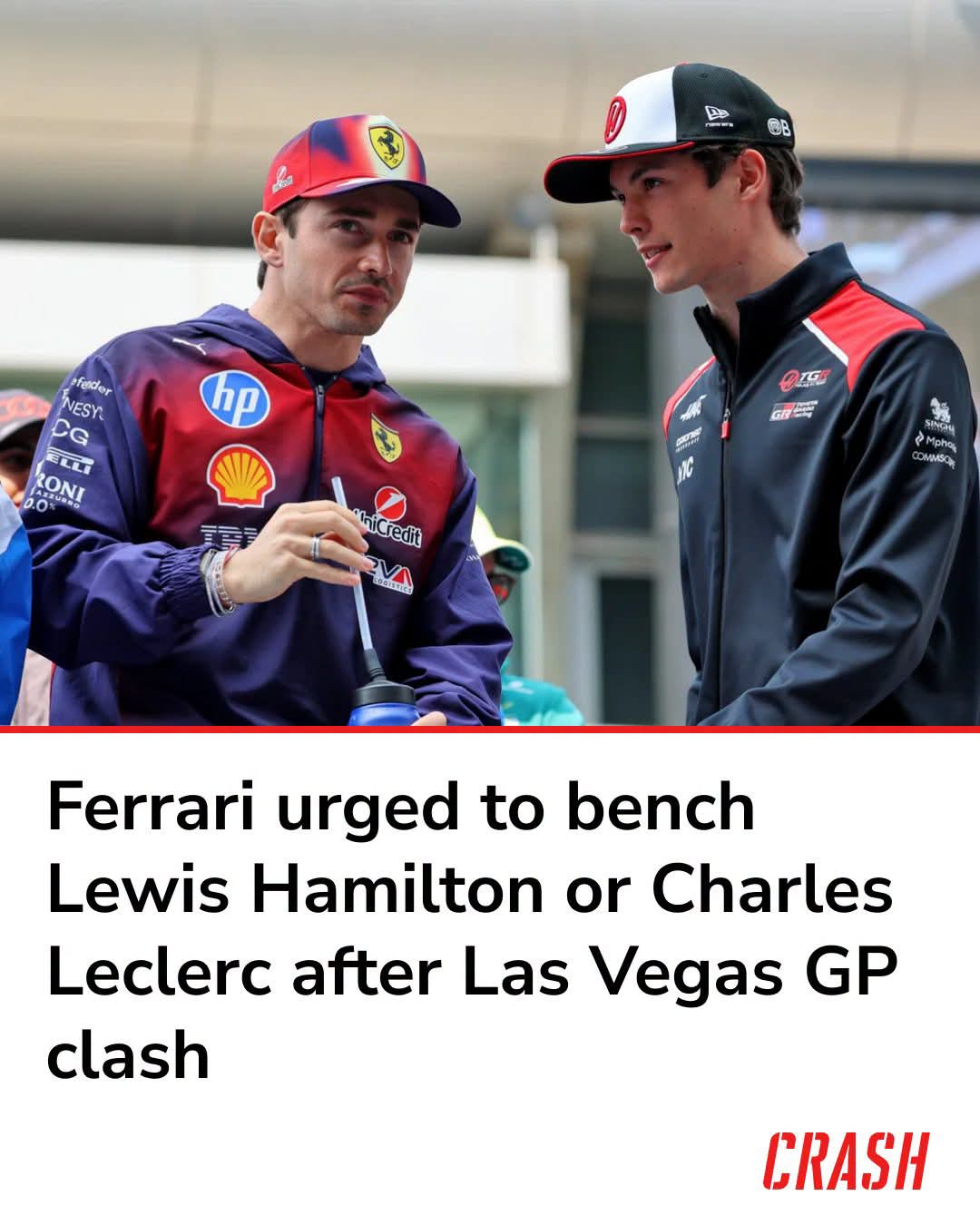
The lights of the Las Vegas Strip Circuit delivered another high-stakes Formula 1 spectacle, but for Ferrari the night ended in familiar frustration and internal recrimination. Lewis Hamilton and Charles Leclerc collided late in the race, costing the Scuderia valuable points and reigniting questions about whether the pair can share a garage without self-inflicted damage. Team principal Fred Vasseur did not mince words afterward, labeling the contact “completely unacceptable” and signaling that stronger measures may now be required.
This was no isolated flash of wheel-to-wheel racing. It formed the latest chapter in a pattern of tension that has already cost Ferrari results earlier in the season. The question is no longer whether the drivers can race hard against each other. It is whether Ferrari can impose the discipline needed to stop the bleeding before the championship picture darkens further.
WHAT ACTUALLY HAPPENED ON THE LAS VEGAS STRIP
On lap 38 of a race defined by slipstreaming and constant position changes, Leclerc attempted an inside move on Hamilton at Turn 7. Contact followed. Hamilton spun, dropped places, and the stewards quickly determined Leclerc was wholly responsible. A 10-second time penalty dropped the Monegasque from a potential sixth-place finish to tenth. Hamilton recovered to seventh after serving his own earlier penalty for leaving the track while battling a McLaren.
Radio traffic before the incident painted a picture of rising friction. Hamilton urged the team to tell his teammate to “back off” while he tried to catch cars ahead. Leclerc warned that Hamilton’s defensive squeezing would not end well. The team, according to Vasseur, had already instructed Leclerc to prioritize the bigger picture and avoid unnecessary risk. The message went unheeded.
The result left Ferrari watching Max Verstappen take the win while their own cars finished outside the top six after starting outside the top ten following a difficult qualifying. Points were scored, but far fewer than the car’s potential suggested on a night when the midfield and frontrunners were tightly packed.
A PATTERN THAT CAN NO LONGER BE IGNORED
This was not the first time the two Ferrari drivers have compromised each other. Earlier in Mexico, aggressive first-lap battling cost the team a realistic shot at victory and prompted clear-the-air talks in Brazil. An incident at Monza earlier still had also drawn scrutiny. Each time, the public message has been similar: race hard, but respect the team. Each time, the outcome has fallen short of that standard.
Vasseur’s post-race comments carried unusual edge. He spoke of a lack of respect for the hundreds of people working in Maranello, for the sponsors, and for the collective effort that produces the car. The team had already reminded both drivers of their responsibilities. The fact that another costly collision occurred so soon afterward left the Frenchman “more than upset.”
Hamilton’s response was measured but pointed. He described the incident as something that should never happen and suggested the question of how to prevent repeats now rests with the team. Leclerc accepted the stewards’ decision, expressed embarrassment on behalf of Ferrari, and said the pair need to fix “whatever is not working.” Neither driver appeared interested in a prolonged public argument. Both, however, left the clear impression that the current arrangement is not sustainable without change.
WHY THIS MATTERS BEYOND ONE RACE RESULT
Ferrari entered the 2026 season with high expectations. Pairing a seven-time world champion with a proven race winner was supposed to create a formidable package capable of challenging at the front on a consistent basis. Instead, the constructors’ championship has been undermined by self-inflicted wounds at key moments. Every point lost to an internal collision is a point handed to rivals who face no such drama.
The psychological cost may prove even higher. Drivers at this level thrive on confidence and clear hierarchy or clear freedom. Ambiguity breeds caution or over-aggression, both of which destroy performance. Fans and sponsors notice when the cars in the same colors cannot trust each other. Media coverage shifts from technical progress to soap-opera tension, which rarely helps a team trying to project competence and control.
Historically, successful multi-car operations have managed internal competition through a combination of clear rules, strong leadership, and occasional hard decisions. McLaren’s management of its drivers in recent seasons, Red Bull’s firm hierarchy, and even Ferrari’s own past approaches under different leadership offer examples of both success and failure. Vasseur has so far preferred dialogue and professional appeals. Las Vegas suggests that approach has reached its limit.
WHAT DRASTIC ACTION COULD LOOK LIKE
Reports emerging in the days after the race indicate Ferrari is examining options that go beyond another meeting. Financial penalties have been mentioned in Italian media. More structured racing protocols, clearer priority orders in certain situations, or even the possibility of stronger internal sanctions have entered the conversation. Some observers have floated the nuclear option of resting a driver for a race as a deterrent, though that remains speculative and would carry its own sporting and commercial risks.
Any formal system of team orders or restrictions risks accusations of favoritism and can demotivate the driver on the receiving end. Yet the alternative—continued collisions that hand points to competitors—is already damaging the team’s championship ambitions and public image. Vasseur has indicated further discussions will take place, including face-to-face talks ahead of the next race in Qatar. The tone of those conversations will reveal how seriously the team intends to draw a line.
THE BIGGER PICTURE FOR FERRARI AND FORMULA 1
Ferrari’s internal tension arrives at a moment when the 2026 championship is still very much alive. Consistent scoring is the difference between fighting for titles and merely fighting for occasional podiums. A team that cannot trust its own drivers to share the track cleanly will always underperform relative to its pure pace.
For the wider sport, the story carries both risk and opportunity. Intra-team rivalries have long been part of Formula 1’s drama—Senna and Prost, Hamilton and Rosberg, Verstappen and Perez in different eras. When managed well they produce compelling racing. When left unmanaged they produce the kind of avoidable chaos that frustrates fans who want to see the best cars fight the best opposition rather than each other.
Hamilton’s presence at Ferrari was always going to raise the temperature. A driver of his stature and experience does not arrive to play second fiddle, and Leclerc has every right to defend his position as the established face of the team. The challenge for leadership is to channel that competitive fire outward rather than inward.
LOOKING AHEAD: PREDICTIONS AND PRESSURE POINTS
Expect Ferrari to implement clearer internal guidelines before the next race. Whether those guidelines are formal or informal, the drivers will face heightened scrutiny every time they find themselves in close proximity. Any further contact will likely trigger stronger consequences. The constructors’ championship standings will dictate how aggressive the team can afford to be with priority calls.
Longer term, the relationship between Hamilton and Leclerc will be one of the defining storylines of the 2026 season and beyond. If they find a way to race each other with mutual respect while still maximizing results, Ferrari could yet become the force many predicted. If the pattern continues, the team risks turning a potential powerhouse into a case study in how not to manage two elite drivers.
Las Vegas was more than a single collision. It was a public stress test of Ferrari’s internal culture. The team has been urged—by its own leadership, by the drivers’ post-race comments, and by the scoreboard—to take decisive action. The coming races will show whether that urgency translates into lasting change or simply another round of familiar frustrations under the lights.