Lewis Hamilton’s increasingly tense relationship with Ferrari has taken another turn after his frustrated Dutch Grand Prix radio messages sparked a wider debate about his position within the team.
Hamilton believed Ferrari cost him a potential podium at Zandvoort after he spent several laps behind teammate Charles Leclerc on fresher tyres. When Leclerc eventually pitted, Hamilton was unable to recover enough ground and finished just 0.8 seconds behind George Russell.
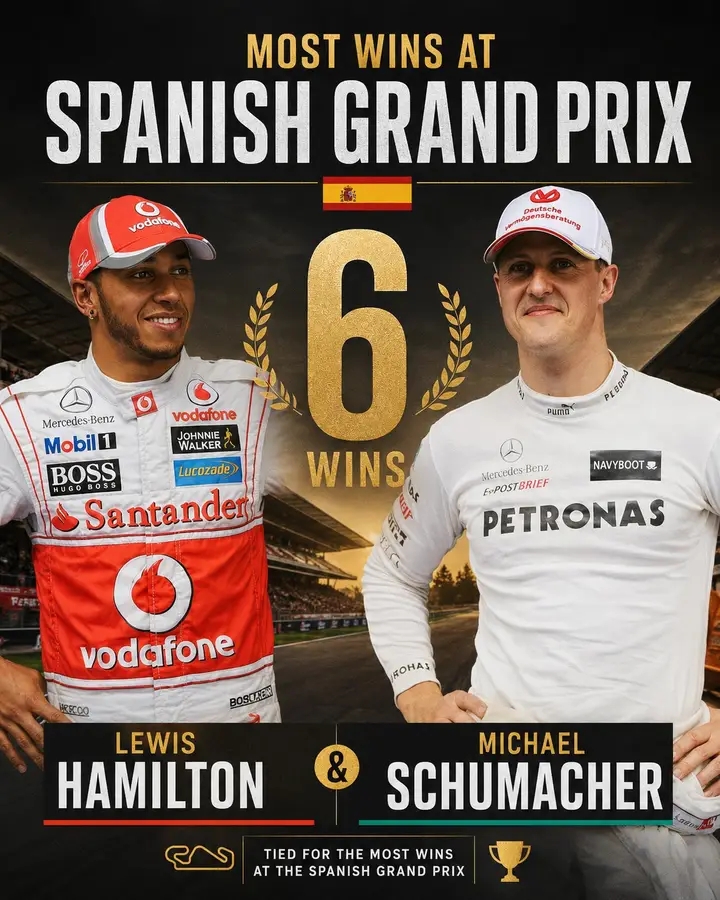
The incident was significant because it highlighted something Hamilton became accustomed to during his dominant Mercedes years: having the team structure built around his championship ambitions.
HAMILTON IS NO LONGER THE UNDISPUTED NUMBER ONE
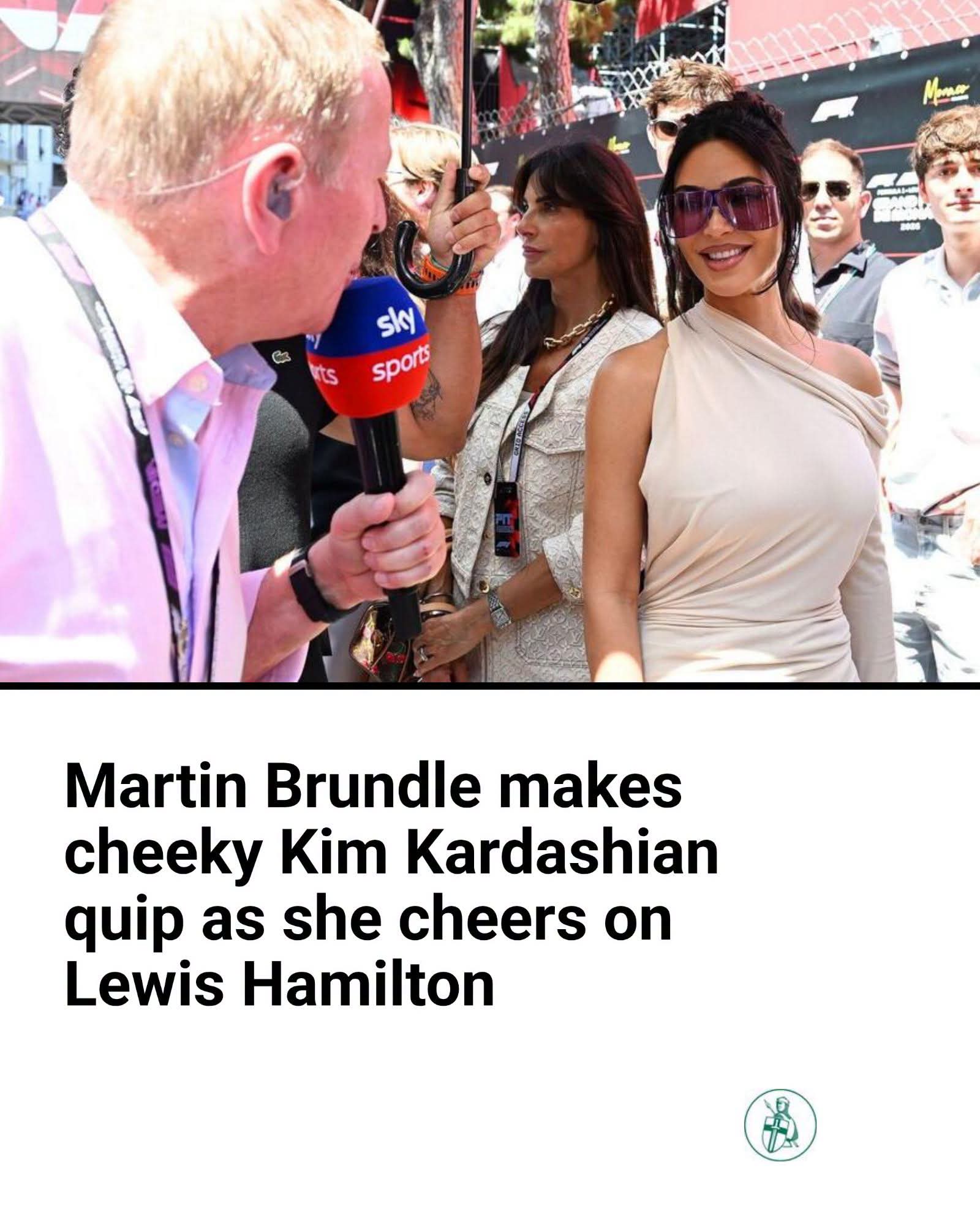
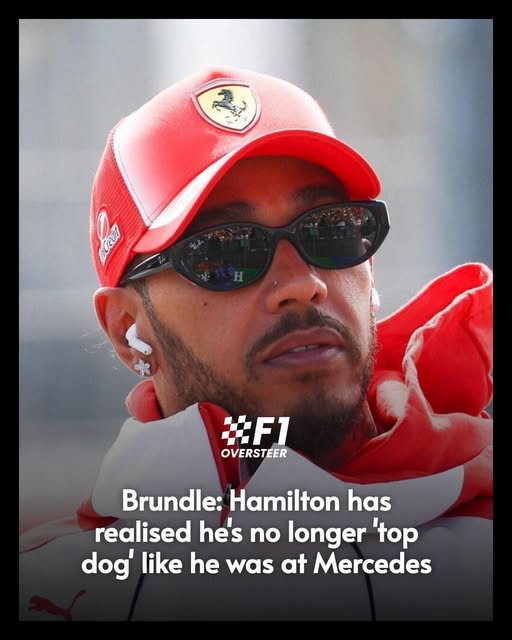
Alex Brundle believes Hamilton may be discovering that life at Ferrari is fundamentally different from what he experienced at Mercedes.
During his years alongside Valtteri Bottas, Hamilton was frequently given priority when Mercedes believed the Briton had the stronger championship position. Bottas was asked to move aside on several occasions, particularly when Hamilton was fighting Sebastian Vettel and Ferrari for the world championship.
Ferrari, however, has not operated with the same hierarchy between Hamilton and Leclerc.
That distinction matters.
Leclerc has been part of Ferrari since 2019 and has built a significant relationship with the team. Hamilton arrived at Maranello as one of the greatest drivers in Formula 1 history, but that reputation does not automatically give him absolute authority over a teammate who already has years of experience inside the organisation.
Brundle’s argument is therefore less about Hamilton suddenly becoming a lesser driver and more about the changing power structure around him.
FERRARI’S DECISION WAS NOT NECESSARILY WRONG
Hamilton’s frustration is understandable, but Ferrari’s refusal to immediately order Leclerc aside can also be defended.
Hamilton entered the Dutch Grand Prix weekend 31 points ahead of Leclerc, but the championship situation was not so overwhelming that Ferrari had an obvious reason to sacrifice Leclerc’s race.
There is also a broader strategic consideration.
If Ferrari begins treating Hamilton as its automatic number one whenever the two drivers meet on track, it risks creating resentment within the garage. Leclerc has been Ferrari’s long-term project, while Hamilton is attempting to establish himself within a completely new environment.
The smarter approach may actually be to allow both drivers to compete until the championship mathematics make team orders unavoidable.
The problem is that Hamilton appears to have expected Ferrari to recognise the situation differently at Zandvoort.
HAMILTON’S RADIO MESSAGE SHOWED HOW FRUSTRATED HE WAS
The most revealing part of the incident was arguably not the strategy itself but Hamilton’s reaction.
While following Leclerc, Hamilton told race engineer Carlo Santi that Ferrari was “just losing time.” Later, after Leclerc finally pitted, Hamilton sarcastically praised the team for doing a “great job of wasting time.”
Those comments were unusually forceful from Hamilton.
David Coulthard also noted the strength of Hamilton’s reaction, describing it as an unusually assertive moment from the seven-time world champion.
That tells us something important about Hamilton’s current Ferrari experience.
He is not simply trying to adapt to a new car. He is also adapting to a new political and competitive environment.
At Mercedes, Hamilton understood his place in the organisation. At Ferrari, that hierarchy is still being established.
THE CHAMPIONSHIP NUMBERS MAKE THE SITUATION EVEN MORE INTERESTING
Hamilton’s frustration also comes at an increasingly important point in the championship.
After Kimi Antonelli’s second-place finish in the Netherlands, Hamilton slipped further behind the leading drivers and lost second place to George Russell. He is now 59 points adrift of Antonelli, while Lando Norris has moved to within 24 points of Hamilton.
That creates pressure that extends beyond one Ferrari strategy call.
Hamilton needs results.
Ferrari needs results.
And Leclerc has no reason to voluntarily surrender positions unless the team believes doing so materially improves Ferrari’s championship prospects.
The closer Norris gets, the more Hamilton’s position in the championship becomes vulnerable. If his points deficit continues to grow, the narrative around his Ferrari move will inevitably become more difficult.
THIS COULD BECOME A MAJOR FERRARI STORYLINE
The biggest question now is whether the Dutch Grand Prix was simply an isolated strategic disagreement or the beginning of a larger internal battle.
Hamilton’s arrival at Ferrari generated enormous expectations. The seven-time champion was expected to challenge for victories and potentially add another championship to his extraordinary career.
But Ferrari cannot simply recreate the Mercedes environment for him.
Leclerc is too established, the championship is too competitive, and Ferrari’s long-term interests may require both drivers to be treated relatively equally.
That could produce some fascinating moments later in the season.
If Hamilton begins consistently outperforming Leclerc, Ferrari may eventually have little choice but to prioritise him. Conversely, if Leclerc continues matching or beating Hamilton, the team will have a strong argument for maintaining equal treatment.
HAMILTON’S NEXT RESPONSE WILL MATTER MORE THAN THE RADIO MESSAGE
The Dutch Grand Prix frustration will eventually disappear if Hamilton responds with performance.
That is the simplest way to settle the argument.
If he returns at Monza and starts qualifying ahead of Leclerc, finishing ahead of him regularly and closing the championship deficit, Ferrari will have a much stronger reason to reconsider its internal hierarchy.
But if Leclerc continues to outperform him while Ferrari refuses to establish a number-one driver, Hamilton’s frustration could become increasingly visible.
That is why Zandvoort may be more significant than it initially appeared.
Hamilton is not merely learning how to drive a Ferrari. He is learning how to operate inside Ferrari’s ecosystem—and that requires accepting that the authority he once enjoyed at Mercedes cannot simply be transferred to Maranello.
For Ferrari, the challenge will be balancing Hamilton’s enormous experience and championship pedigree with Leclerc’s established status. For Hamilton, the answer is straightforward: performance must ultimately determine who gets priority.
And with the championship battle tightening, Ferrari may soon be forced to decide whether it truly has two equal drivers—or whether one of them must finally become the team’s clear leader.