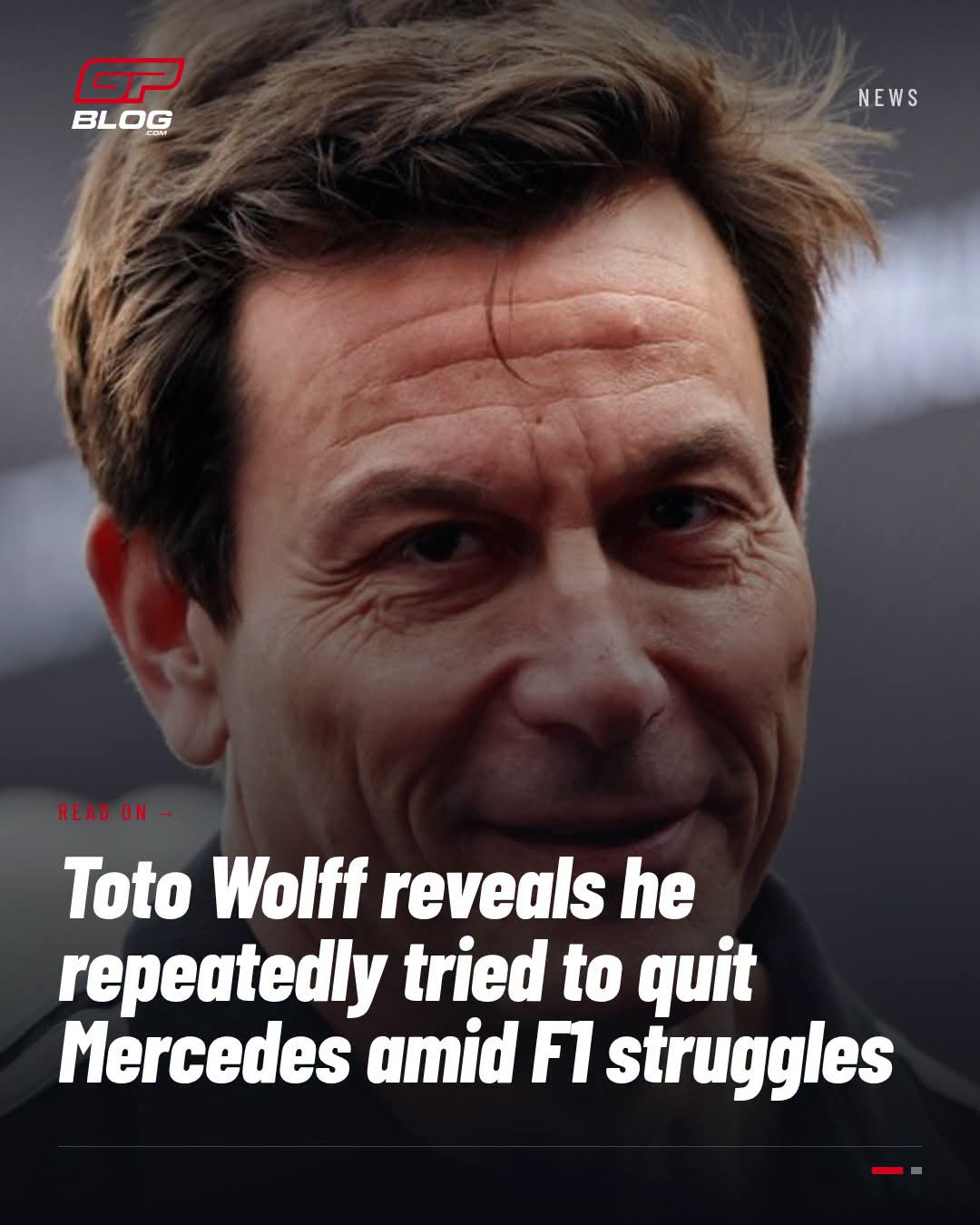
Toto Wolff has spent more than a decade shaping Mercedes into one of Formula 1’s most successful outfits. Yet during the team’s most painful stretch, the Austrian repeatedly offered to walk away. Speaking at the Golden Steering Wheel awards in Berlin, where he collected the AUTO BILD Motorsport Award, Wolff revealed he had tendered his resignation to Mercedes-Benz CEO Ola Källenius several times. Each time the answer was the same: stay and finish the job.
The admission lands with extra weight after Mercedes reclaimed both the drivers’ and constructors’ championships in 2026. Young star Kimi Antonelli sealed the drivers’ title in Mexico, becoming the youngest champion in the sport’s history, before the team locked up the constructors’ crown in Brazil. For a leader who once oversaw eight straight constructors’ titles, the intervening years felt like a freefall. Wolff’s honesty about those dark periods offers a rare window into leadership under sustained pressure in elite motorsport.
WHY THE DARKEST YEARS PUSHED WOLFF TO THE EDGE
Mercedes entered the ground-effect era in 2022 after years of near-total dominance. The new regulations exposed weaknesses the team had not faced in almost a decade. Wins became scarce. Between 2022 and 2025 the Silver Arrows managed only a handful of victories, a sharp drop from the relentless success that defined the hybrid era. The organization that once set the benchmark suddenly found itself fighting for midfield scraps on many weekends.
Wolff, who joined as executive director in 2013 and holds a significant ownership stake, is not a conventional employee. That dual role as shareholder and team principal makes his repeated resignation offers especially notable. He has long said he would step aside if he believed someone else could deliver better results. During the difficult seasons that principle collided with reality. The pressure of leading a proud manufacturer through underperformance, media scrutiny, and internal frustration clearly took a toll.
Källenius’s consistent refusal to accept those offers reveals something important about corporate culture at Mercedes. In an industry where prolonged failure often triggers rapid executive changes, the CEO chose continuity. He told Wolff, in essence, that the same person who built the dynasty was the one best placed to rebuild it. That decision kept institutional knowledge, relationships with key technical staff, and long-term strategy intact at a moment when upheaval could have set the recovery back further.
THE IMPACT ON MERCEDES, THE DRIVERS, AND THE WIDER PADDOCK
Keeping Wolff in place had tangible consequences. Stability at the top allowed the technical group time to understand the new aerodynamic philosophy without the distraction of leadership chaos. It also sent a clear message to the workforce and to young drivers such as Antonelli: the organization believed in its direction even when results lagged. That confidence mattered when Mercedes needed to attract and retain talent during leaner seasons.
For the broader industry, the episode challenges the assumption that poor performance automatically requires a change at the top. Many teams have cycled through principals during downturns, sometimes accelerating decline rather than reversing it. Mercedes’s patience looks, in hindsight, like a calculated bet that paid off with the 2026 double. Wolff now sits on 17 world titles as team principal—eight drivers’ championships and nine constructors’—matching historic marks held by figures such as Ron Dennis and Frank Williams.
The story also humanizes a figure often portrayed as steely and unflappable. Publicly acknowledging the urge to resign strips away some of the myth of invincibility that surrounds successful team principals. It shows that even the most decorated leaders experience doubt when the car stops winning. That honesty may resonate with other executives facing similar pressure across motorsport and beyond.
WHAT THIS REVEALS ABOUT LEADERSHIP AND LONG-TERM THINKING
One of the more interesting layers is the relationship between ownership and accountability. Because Wolff owns part of the team, his resignation offers carried different weight than those of a pure employee. He was prepared to surrender operational control while remaining an investor. Källenius’s insistence that he continue suggests the CEO valued Wolff’s blend of commercial vision, technical understanding, and paddock relationships more than short-term optics.
This approach contrasts with more reactive leadership styles seen elsewhere in Formula 1. Teams that change principals frequently often struggle to maintain coherent multi-year development programs. Mercedes’s decision to stick with Wolff through the difficult years appears to have preserved the continuity needed to adapt to the current regulations and to develop the next generation of drivers and engineers.
Looking ahead, the revelation raises questions about succession. Wolff has spoken about eventually sharing or dividing responsibilities rather than handing the entire role to one successor. The presence of figures such as deputy team principal Bradley Lord already shows an attempt to lighten the load. With titles back in Brackley and a young champion in the car, the immediate pressure has eased. Yet the next regulatory cycle will test whether the same leadership group can stay ahead once more.
WHY THIS STORY MATTERS BEYOND THE HEADLINES
In Formula 1, success is measured in tenths of a second and championship points. Behind those numbers sit people making high-stakes decisions under intense public and internal scrutiny. Wolff’s admission that he tried to leave more than once reminds us that even the most successful figures question themselves when results dry up. The fact that his CEO refused those offers and the team later returned to the top of the pile adds a compelling chapter to Mercedes’s modern history.
It also offers a quiet lesson in resilience and corporate loyalty. In an era of short attention spans and rapid managerial turnover, one of the sport’s most powerful manufacturers chose patience. That choice helped deliver a championship double in 2026 and kept one of F1’s most influential leaders in place for the next challenge. For fans, rivals, and aspiring team principals, the message is clear: sometimes the right response to difficulty is not change for its own sake, but the determination to stay and fix what is broken.