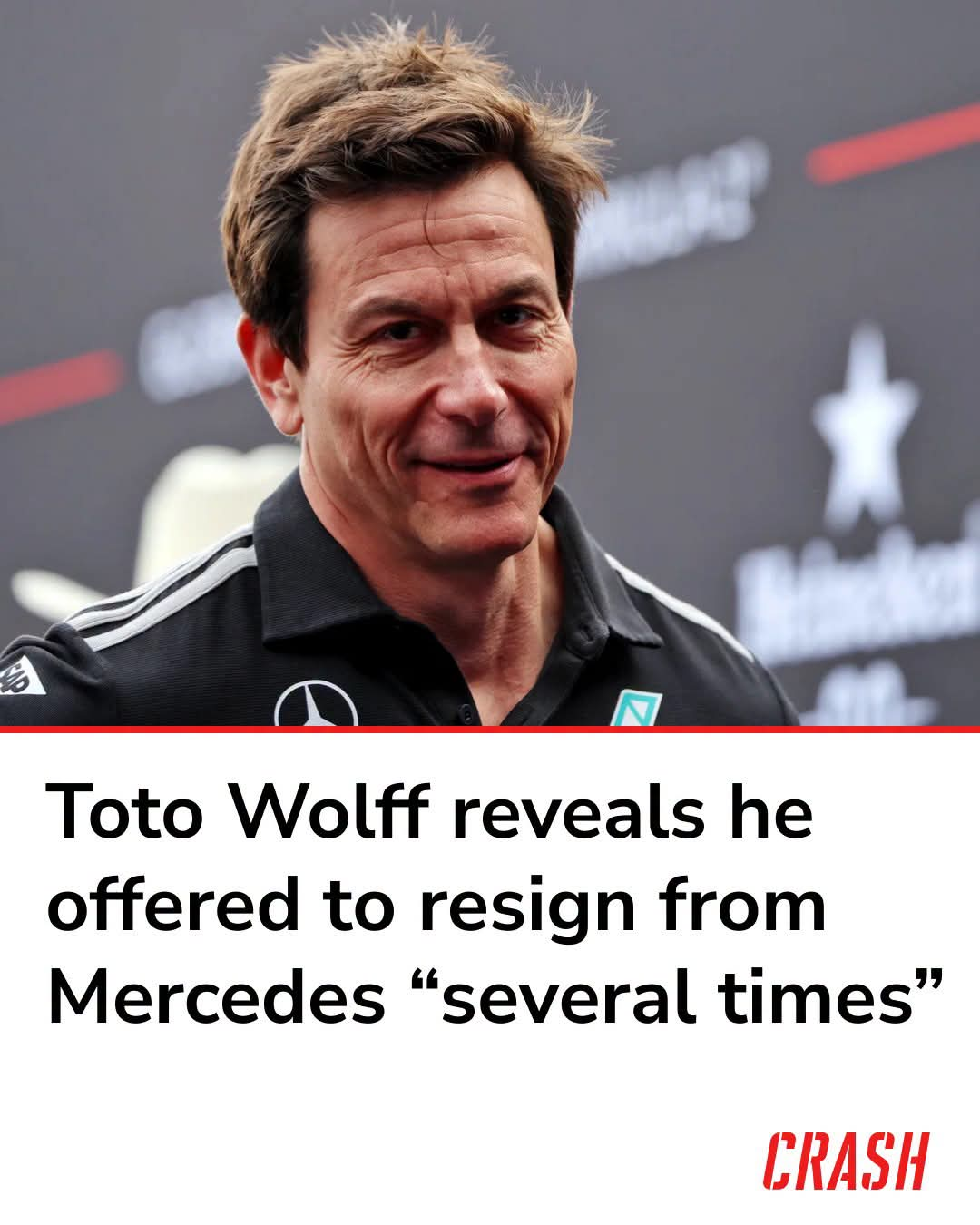
Mercedes team principal Toto Wolff has pulled back the curtain on one of the most turbulent chapters in modern Formula 1 history. Speaking at the Golden Steering Wheel awards in Berlin, the Austrian revealed he offered his resignation several times while the Silver Arrows laboured through four difficult seasons under the ground-effect regulations. Mercedes-Benz chairman Ola Källenius refused every time.
“I’ve offered Ola my resignation several times over the past few years, but he’s always said: ‘You’ll keep doing this,’” Wolff said. When asked if he planned to stay, he added with characteristic dry humour: “Yes. Ola is forcing me to.”
The timing of the admission carries extra weight. Just days earlier in São Paulo, Mercedes sealed its ninth constructors’ championship — and its first since 2021 — completing a remarkable recovery that also delivered the drivers’ title to teenage sensation Kimi Antonelli.
THE WEIGHT OF EXPECTATION AFTER YEARS OF DOMINANCE
Between 2014 and 2021 Mercedes rewrote the record books. Eight consecutive constructors’ titles. Multiple drivers’ crowns. A level of technical and organisational superiority that made winning look almost routine. Then the 2022 regulation reset arrived, and the team that had mastered the hybrid era suddenly looked lost.
The notorious “zeropod” sidepod concept became a symbol of that misstep — a development path that proved a costly dead end. Over the next four seasons Mercedes managed just seven Grand Prix victories. The team finished third, second, fourth and second in the constructors’ standings. Respectable on paper. Painful in the paddock.
Wolff has never sugar-coated those years. “When you are in these difficult moments, like we all are sometimes in our lives, it’s not that easy to keep going,” he reflected. Looking back, he now sees the value. “You’re saying, ‘We needed these tough moments in order to grow as people or to grow as an organisation.’ But when you’re down, that is quite difficult to feel.”
The constant cycle of diagnosing problems, believing the answers had been found, then discovering the understanding was incomplete proved especially draining. It was not a simple case of one big mistake followed by a clean recovery. It was iterative frustration.
WHY THE RESIGNATION OFFERS MATTER
In Formula 1, team principals rarely admit vulnerability at this level. Offering to step down is not a casual gesture. It signals that the pressure, the self-doubt, and the responsibility for hundreds of people and a global brand had reached a breaking point for even one of the sport’s most successful leaders.
Källenius’s consistent refusal says as much about Mercedes’ long-term philosophy as it does about Wolff’s value. The board chose continuity and institutional knowledge over the temptation of a high-profile reset. In an era of cost caps, compressed development windows, and intense scrutiny, that decision looks increasingly shrewd.
The alternative — changing leadership mid-struggle — risks compounding the problem. New leaders need time to understand culture, processes, and the specific technical debt a team has accumulated. Mercedes chose to stay the course with the man who had overseen the glory years and was still learning the hard lessons of the new ones.
THE HUMAN AND ORGANISATIONAL IMPACT
Those four seasons tested more than aero maps and correlation tools. They tested culture. Drivers felt the pressure. Engineers faced public and internal criticism. The entire organisation had to recalibrate from a mindset of expected dominance to one of grinding recovery.
Wolff has spoken about how the experience forced a different style of leadership. The old demand for relentless excellence had to sit alongside patience, psychological safety, and the willingness to admit when the team simply did not yet understand the physics of its own car. The fact that key people stayed and the factory continued to attract talent speaks to the environment that was protected even while results lagged.
For the broader industry, the story underlines a quiet truth. Even the best-resourced, most successful organisations can get regulations wrong. The margin between dynasty and struggle is thinner than outsiders assume. Red Bull and McLaren’s success in that period was real, but so was Mercedes’ eventual ability to absorb the lessons and emerge stronger when the next regulatory cycle arrived in 2026.
A RECOVERY THAT FEELS DIFFERENT
The 2026 season has been a different story. Mercedes arrived prepared. The new car concept worked. Antonelli delivered a historic drivers’ title as the youngest champion the sport has seen. The constructors’ crown followed in Brazil. Twelve victories already this year stand in sharp contrast to the seven collected across the previous four seasons.
Yet even in celebration, Wolff refuses to erase the difficult chapter. The statistics were not those of “complete losers,” he has pointed out — the team still won races and finished consistently near the front. The feeling inside the organisation, however, was something else entirely. That honest reckoning may be one reason the current success feels more satisfying.
WHAT COMES NEXT
The revelation raises natural questions about Wolff’s long-term future. He has previously described himself as increasingly aware of the “dinosaur” nature of the traditional team principal role in a 24-race, cost-capped, highly corporate modern Formula 1. Succession planning is clearly part of the conversation inside Mercedes. For now, though, the message is continuity. The man who offered to leave was told to stay — and the results that followed have vindicated that call.
For rivals, the lesson is cautionary. Mercedes did not collapse. It absorbed pain, protected its people, retained its leader, and waited for the next opportunity. When that opportunity arrived, the organisation was ready.
For fans and the sport itself, Wolff’s candour adds depth to a narrative that could easily have been reduced to “they finally got the car right.” The human cost of those four years, the private offers to resign, and the quiet decision by the board to keep faith all form part of the real story of how one of Formula 1’s great teams rediscovered its edge.
The trophies are back in Brackley. The scars from the journey remain — and Toto Wolff is no longer hiding them.