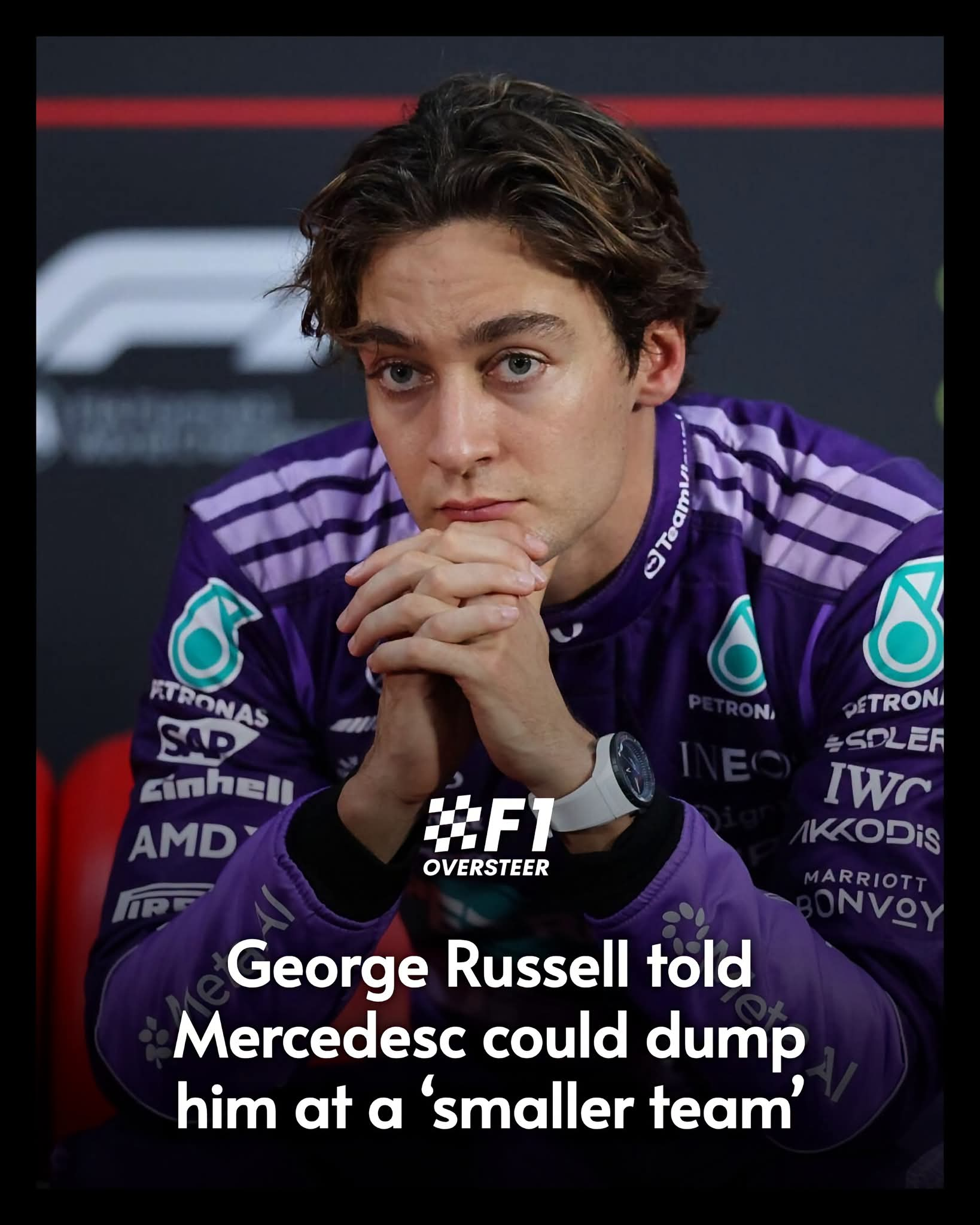
George Russell entered the 2026 Formula 1 season as the clear favourite to deliver Mercedes its first drivers’ championship since Lewis Hamilton’s departure. The new regulations favoured the Silver Arrows’ power unit and chassis package. Russell carried the experience, the pedigree, and the expectations of a team that had rebuilt itself after years of struggle. By early November, those expectations lay in ruins.
Kimi Antonelli, the 20-year-old Italian promoted into the seat vacated by Hamilton, sealed the drivers’ title in Mexico City with races still remaining. Russell finished the same weekend sixth after a technical issue at the start and a penalty, dropping further behind in the standings. The gap between the two Mercedes drivers had already stretched beyond 100 points. What began as a partnership of mentor and prodigy had become a clear hierarchy, with the younger driver operating at a consistently higher level.
The question now hanging over the Brackley team is no longer whether Russell can win a title this year. It is whether he still has a long-term future in a car that has suddenly become the property of a new generation.
THE CONTRACT REALITY BEHIND THE HEADLINES
Russell is not out of a job. His current agreement with Mercedes runs at least through the end of 2027, structured as a multi-year deal with performance-related clauses that he has publicly stated he expects to meet. Toto Wolff has made clear the line-up remains unchanged for next season. Both Russell and Antonelli are expected to continue together.
That formal security matters. Formula 1 contracts at the front of the grid rarely leave drivers completely exposed after one difficult campaign. Russell has delivered wins, poles and consistent points across multiple seasons. He is still only 28. Teams do not discard proven race winners lightly, especially when the alternative is disrupting a pairing that has just delivered a constructors’ championship.
Yet formal security and long-term security are not the same thing. Antonelli’s sudden emergence as a title winner at 20 changes the internal dynamics. Mercedes now possesses a driver who has already delivered what Russell was expected to deliver. The pressure on the more experienced man to reassert himself in 2027 will be intense.
WHY THIS SEASON FELT SO DIFFERENT FOR RUSSELL
Russell’s 2026 campaign was not defined by a single catastrophic failure. It was defined by a steady erosion of advantage. Antonelli adapted faster to the new generation of cars. The Italian extracted more consistent race pace and, crucially, made fewer costly errors when the pressure rose. Russell has spoken openly about the difficulty of the year, describing 2026 as “not meant to be my year” and acknowledging that his teammate operated at a higher level.
Mechanical misfortune played a part. Russell suffered more reliability issues and strategic setbacks than his teammate in key races. But the gap was too large and too consistent to be explained by luck alone. When a driver who was supposed to lead the team finds himself routinely outpaced by a second-year teammate still young enough to be in Formula 2 in another era, questions about ceiling and adaptability inevitably surface.
Mercedes team principal Toto Wolff has shown loyalty to Russell in public. After the Mexico race he described Russell as “distraught” and defended his decision to skip media duties. That public support is important. Wolff has history of protecting drivers he believes in even when results dip. The question is how long that protection lasts if the performance gap remains in 2027.
WHAT SURVIVAL ACTUALLY LOOKS LIKE IN MODERN FORMULA 1
“Surviving” at Mercedes no longer means simply keeping a seat. It means remaining competitive enough that the team continues to view you as a viable long-term option rather than a transitional figure. Antonelli’s age and results make him the natural long-term priority. Russell’s path to remaining central involves closing the performance gap next season and delivering the kind of results that force the team to treat the partnership as equal again.
History offers mixed lessons. Drivers who lose an internal power struggle at a top team often find themselves moved sideways or downward. Others use the setback as fuel and re-establish themselves. Russell has the technical understanding and the work rate that Mercedes values. He has also shown resilience through the difficult years when the cars were uncompetitive. Those qualities still count.
The broader market offers limited escape routes. The top seats at Ferrari, McLaren and Red Bull are largely locked. A move to a midfield team would represent a significant step down in competitiveness and status for a driver who has spent the last half-decade in machinery capable of winning races. Russell’s best chance remains proving he still belongs in the Mercedes garage on merit rather than history.
THE IMPACT ON MERCEDES AND THE WIDER GRID
A stable Russell-Antonelli pairing into 2027 gives Mercedes continuity at a moment when the new regulations are still settling. The team has already demonstrated it can produce a title-winning package. Keeping both drivers reduces the risk of disrupting a winning culture. It also maintains the internal competition that pushes both men harder.
For the rest of the grid the situation is equally relevant. If Russell fails to respond and eventually leaves, a high-calibre seat could open at one of the strongest teams. That possibility keeps other drivers and their managers watching the Mercedes garage closely. For now, though, the more likely scenario is that both drivers remain and the internal battle continues into a second full season under the new rules.
PREDICTIONS FOR 2027 AND BEYOND
Russell will still be a Mercedes driver when the 2027 season begins. The contract, the team’s public statements and the practical difficulty of finding a better alternative all point in that direction. The more interesting question is the shape of that second year together.
If Russell returns closer to Antonelli’s level and wins races regularly, the partnership can continue as a genuine two-driver attack. If the gap remains similar to 2026, the conversation inside Mercedes will shift toward long-term planning around Antonelli as the clear number one. Russell’s ability to reset mentally after a bruising campaign will determine which path opens.
Formula 1 is rarely kind to drivers who lose an internal hierarchy once it has been established. Russell has the talent and the platform to reverse the narrative. Whether he still has the mental bandwidth after watching a younger teammate claim the title he was expected to win will be one of the central storylines of the next season. The seat is his for now. Keeping it on the terms he wants will require a response that matches the height of the expectations that once surrounded him.