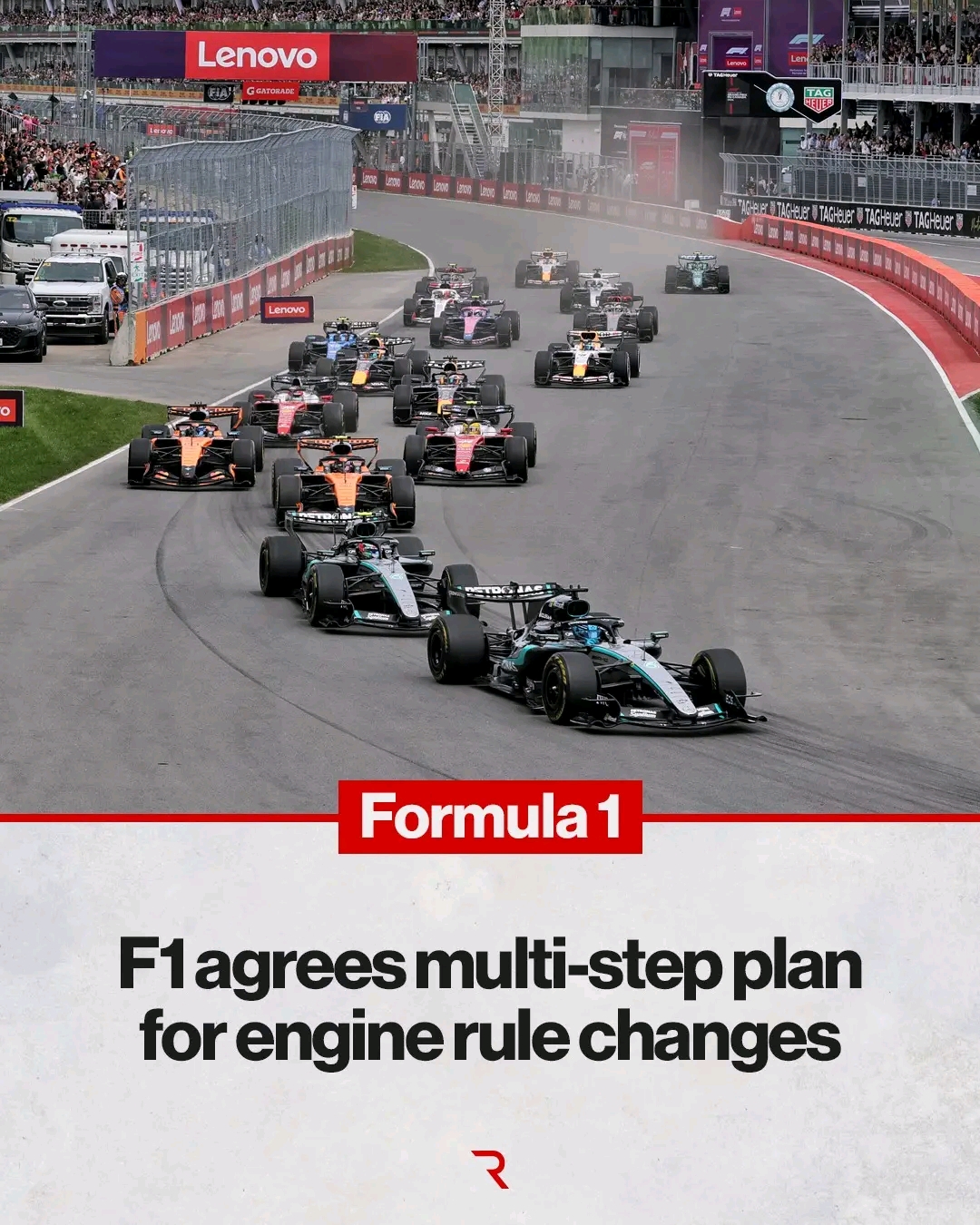
Formula 1 is preparing for one of its most important technical recalibrations in years, as the sport moves toward reshaping its power unit philosophy between now and the 2027 and 2028 seasons. The updated direction aims to move away from the strict 50/50 split between electric and combustion power that defines the current hybrid era, instead seeking a more balanced and race-friendly formula.
The plan does not abandon hybrid technology, but it does signal a clear intent: simplify energy deployment, improve racing quality, and reduce the strategic complexity that has increasingly defined modern F1.
This shift could have long-term consequences for performance, team hierarchies, and even how Formula 1 racing feels on track.
WHY FORMULA 1 IS CHANGING THE ENGINE FORMULA AGAIN
Since the introduction of hybrid power units in 2014, Formula 1 has become heavily dependent on energy recovery systems and electrical deployment strategies. While this brought efficiency gains and technological relevance, it also created unintended side effects.
Drivers and engineers have increasingly highlighted issues such as:
Complex energy management during races
Difficulty pushing flat-out for entire laps
Strategic lifting and coasting
Reduced natural racing intensity in certain phases
As a result, the FIA and stakeholders have been under pressure to refine the system without completely abandoning hybrid technology.
The new direction represents a compromise between modern sustainability goals and traditional racing excitement.
WHAT IS CHANGING IN THE 2027–2028 ENGINE PLAN
The most significant shift in the updated framework is the move away from the strict 50/50 split between electric and combustion power.
Instead, the revised direction is expected to:
Increase the contribution of the internal combustion engine
Reduce dependency on electric deployment for full performance
Simplify how energy is harvested and used during races
Make power delivery more predictable and driver-friendly
In practical terms, this means drivers may spend less time managing energy limits and more time focusing on outright performance.
The goal is to make Formula 1 feel less like an energy management exercise and more like a pure racing competition again, while still retaining hybrid relevance.
HOW THIS IMPACTS CURRENT AND FUTURE TEAMS
For manufacturers such as Mercedes-AMG Petronas Formula One Team, Red Bull Racing, Scuderia Ferrari, and McLaren Racing, this is not just a regulatory update, it is a strategic reset point.
Power unit regulation changes always carry massive competitive implications because they affect:
Engine architecture design
Energy recovery systems
Cooling and packaging layouts
Long-term development direction
Even small shifts in electrical contribution can reshape which teams excel, especially those with stronger engine development programs.
Historically, regulation resets have often created new dominant eras in Formula 1, and this update could be no different.
WHY THIS COULD SHAKE UP THE GRID
One of the biggest unknowns is how each manufacturer will interpret and adapt to the new rules.
In Formula 1, the gap between success and failure is often not about the regulation itself, but how well it is understood.
Teams that adapt quickly could gain:
Stronger race pace consistency
Better reliability in power delivery
More flexible race strategies
Improved driver confidence under pressure
On the other hand, teams that misread the direction risk falling behind in both performance and development efficiency.
This is where future championships are often won before the first race even begins.
IMPACT ON DRIVERS AND RACING STYLE
Perhaps the most noticeable change will come from behind the wheel.
Modern hybrid F1 cars require constant energy management, often forcing drivers to:
Lift and coast into corners
Carefully time throttle application
Balance electrical deployment over laps
Adjust driving style based on battery levels
With a reduced emphasis on electric dominance, drivers could experience:
More consistent full-throttle racing
Less strategic compromise mid-lap
Improved wheel-to-wheel battles
A more natural driving rhythm
This shift may also make qualifying more representative of true race pace, reducing the variability caused by energy limitations.
THE BALANCE BETWEEN TECHNOLOGY AND ENTERTAINMENT
Formula 1’s challenge has always been balancing technological innovation with on-track excitement. The hybrid era has pushed efficiency and sustainability forward, but it has also introduced complexity that sometimes distances the sport from pure racing instincts.
The 2027–2028 changes aim to bridge that gap.
The FIA’s direction suggests a philosophy built around:
Retaining hybrid technology for relevance
Improving race spectacle for fans
Reducing unnecessary complexity
Preserving manufacturer involvement
It is not a return to the past, but rather an attempt to refine the present.
WHAT THIS MEANS FOR THE FUTURE OF F1
While these changes focus on 2027 and 2028, their influence will stretch far beyond those seasons. Engine rules define development cycles, investment decisions, and even driver career paths.
This means:
Teams will begin development planning years in advance
Engine manufacturers will reassess long-term strategies
Competitive order could shift significantly after 2028
New opportunities may emerge for emerging teams
In many ways, this is the beginning of the next Formula 1 era, not just a rule update.
FINAL THOUGHTS: A NEW DIRECTION FOR HYBRID F1
The decision to move away from the rigid 50/50 electric-combustion split marks a clear evolution in Formula 1’s hybrid journey.
It signals a sport trying to refine its identity rather than redefine it completely.
If successful, these changes could deliver a version of Formula 1 that feels:
Faster
More natural
More competitive
More engaging for fans
But as always in Formula 1, the real story will not be written in the rulebook. It will be written in how teams interpret it, and who gets it right first.