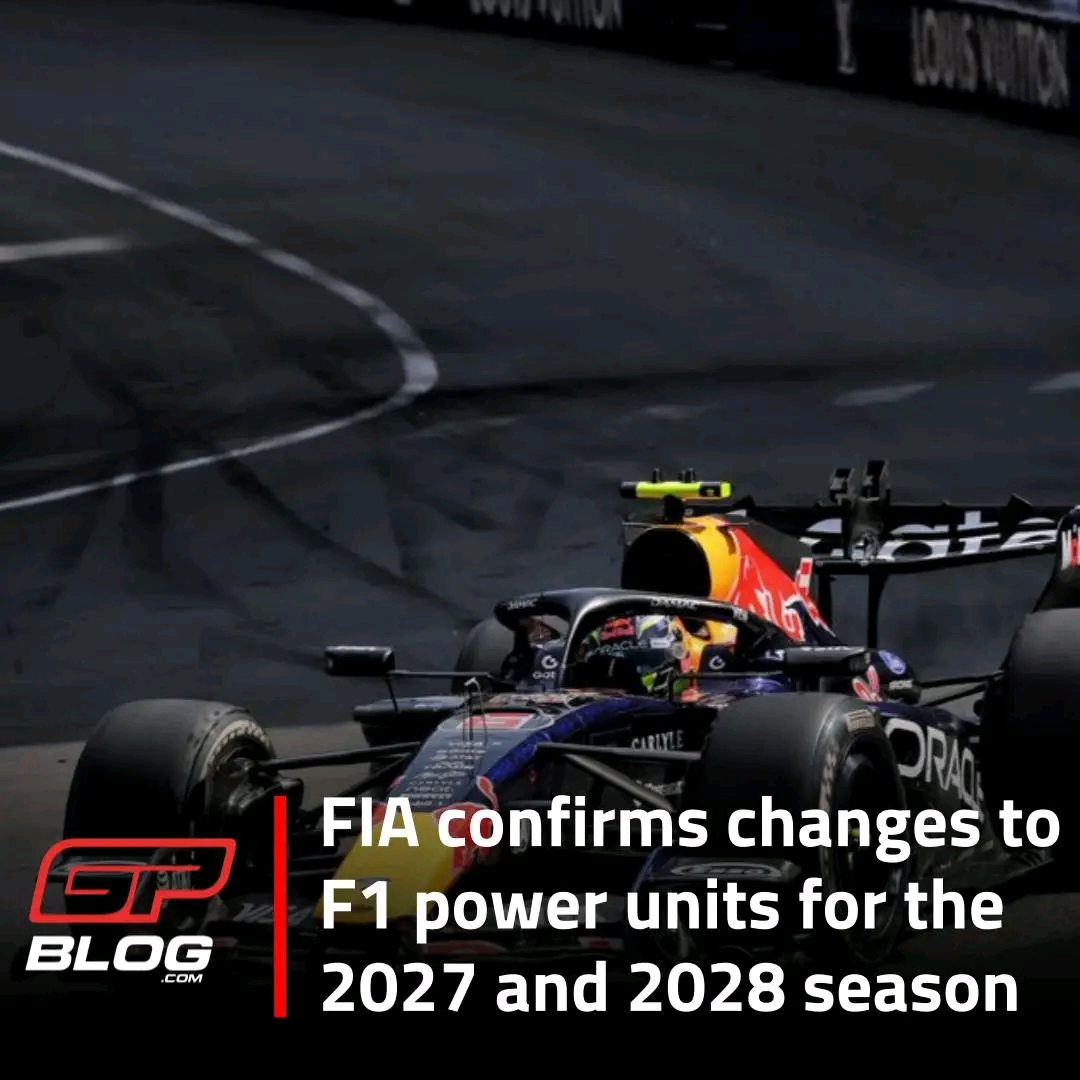
Formula 1 is heading into another major technical evolution after the FIA officially confirmed adjustments to the upcoming engine regulations for the 2027 and 2028 seasons. The move is part of a wider effort to refine the sport’s new hybrid era and address concerns raised by teams, drivers, and manufacturers about performance balance and raceability.
Under the revised direction, the sport will continue with the 1.6-litre turbo-hybrid V6 architecture introduced for the new regulations cycle, but with important tweaks aimed at improving how power is delivered on track and reducing some of the complications caused by the current energy split philosophy.
These updates may sound technical, but their impact could reshape the competitive order in Formula 1 over the next few seasons.
WHY THE FIA IS MAKING THESE CHANGES
The modern F1 power unit era has become increasingly focused on hybrid energy recovery systems, with a near 50-50 split between combustion and electric power in the latest regulations. While this was designed to improve efficiency and sustainability, it has also created challenges.
Drivers have complained about:
Complex energy management during races
Unnatural lifting and coasting strategies
Difficulty maintaining consistent push laps
Safety concerns from speed differentials in energy deployment
As a result, the FIA and stakeholders agreed that refinements were needed to make the racing more intuitive while still keeping the sport aligned with its sustainability goals.
Reports indicate the direction is now shifting toward a slightly stronger emphasis on the internal combustion engine compared to the initial hybrid balance, aiming for a more natural driving feel without abandoning electrification entirely. �
GRANDPRIX247 +1
WHAT ACTUALLY CHANGES IN 2027 AND 2028
The confirmed direction focuses on fine-tuning rather than a complete redesign of the power units. Key adjustments include:
Increased combustion engine contribution compared to the initial hybrid balance
Reduced reliance on electric deployment in specific phases of performance
Recalibration of energy recovery and deployment systems
Adjustments to fuel flow and power delivery mapping
The goal is not to reverse the hybrid era, but to rebalance it so drivers can race more aggressively without constant energy conservation.
In simple terms, Formula 1 wants cars that feel closer to “push flat-out” racing rather than energy budgeting machines.
WHAT THIS MEANS FOR TEAMS
For manufacturers like Mercedes-AMG Petronas Formula One Team, Red Bull Racing, Scuderia Ferrari, and McLaren Racing, these changes are far from minor.
Even small shifts in power distribution can have major consequences because:
Car aerodynamics are designed around energy deployment patterns
Race strategy depends heavily on electrical usage windows
Cooling and packaging are built around hybrid components
Driver driving style adapts to energy limits over a season
This means teams that interpret the regulations best could gain a significant advantage from 2027 onwards.
In Formula 1, regulation interpretation often matters more than raw speed development.
IMPACT ON DRIVERS AND RACING STYLE
One of the biggest talking points is how these changes could reshape driving behaviour.
Current hybrid systems require drivers to constantly manage energy harvesting and deployment. That often leads to:
Controlled throttle application on straights
Strategic lifting to recharge energy stores
Complex steering and throttle coordination mid-corner exits
With reduced reliance on electrical energy, drivers may finally return to a more aggressive, instinctive driving style.
For drivers, this could mean:
More wheel-to-wheel battles without energy limitations
Less strategic “saving” during races
More consistent qualifying laps
Increased emphasis on raw mechanical grip and racecraft
WHY THIS MATTERS FOR THE CHAMPIONSHIP
These changes are not just technical updates, they are competitive reset points.
Whenever Formula 1 introduces major regulation shifts, the competitive order often changes dramatically. We have seen this in:
2009 aerodynamic overhaul
2014 hybrid engine introduction
2022 ground effect regulations
The 2027 and 2028 adjustments could create a similar opportunity for reshuffling the grid.
Teams that adapt fastest could suddenly move from midfield contenders to podium challengers, while established front-runners risk losing their advantage if development slows.
LONG-TERM VISION: SIMPLER BUT STILL HYBRID
Despite speculation about radical engine shifts in the future, including potential V8 discussions beyond this cycle, the FIA’s current direction remains focused on controlled evolution rather than revolution.
The aim is to:
Keep Formula 1 relevant to road car technology
Reduce cost and complexity
Improve racing quality and driver control
Maintain sustainability goals
It is a balancing act between technology, entertainment, and manufacturer interests.
FINAL THOUGHTS: A CRUCIAL TURNING POINT
The confirmation of these changes for 2027 and 2028 marks another step in Formula 1’s ongoing attempt to refine its hybrid era rather than abandon it.
For teams, it means planning begins now. For drivers, it means adapting their expectations for how races will be fought. And for fans, it signals a possible shift toward more natural, aggressive racing in the years ahead.
One thing is certain: the teams that understand these regulations first will not just gain an advantage, they could define the next era of Formula 1.