R
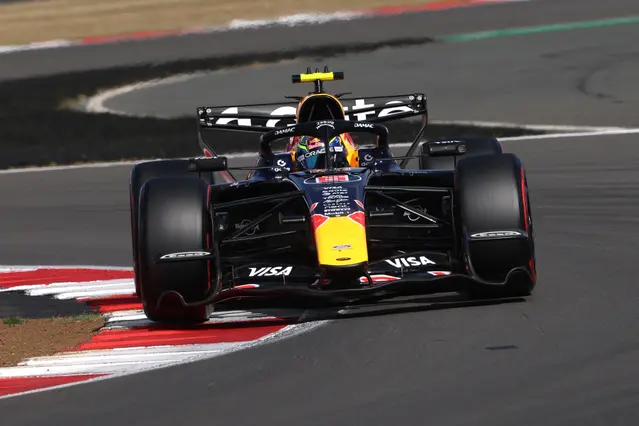
The Formula 1 paddock has arrived at Spa-Francorchamps with every upgrade under intense scrutiny, but Red Bull Racing has taken a surprisingly conservative approach. While several rivals continue refining their 2026 challengers, Red Bull has introduced just a single update for the Belgian Grand Prix. Ferrari, meanwhile, has chosen not to bring any new performance upgrades at all, signaling confidence in its current package as the championship battle intensifies.
The latest developments come shortly after Red Bull moved away from the controversial rear wing concept that had attracted attention in recent races, often nicknamed the “Macarena” wing by fans and observers. With that chapter seemingly behind them, the team appears focused on extracting maximum performance from a more stable aerodynamic package rather than introducing multiple new components.
RED BULL FOCUSES ON QUALITY OVER QUANTITY
Rather than arriving with an extensive list of upgrades, Red Bull’s decision to introduce only one new component highlights a strategic shift. At this stage of the season, teams are balancing the pursuit of outright performance with the need to prepare for future races and long-term development.
A single upgrade does not necessarily mean limited ambition. Modern Formula 1 cars are so finely optimized that even a small aerodynamic improvement can translate into valuable lap time, particularly at a circuit as demanding as Spa-Francorchamps. With its combination of high-speed corners, long straights, and dramatic elevation changes, Spa is one of the best tracks to evaluate whether a new component delivers measurable gains.
Red Bull will be hoping the update improves consistency across different sectors of the circuit while maintaining the car’s balance through iconic corners such as Eau Rouge, Raidillon, Pouhon, and Blanchimont.
FERRARI CHOOSES STABILITY OVER EXPERIMENTATION
Ferrari’s decision to arrive without any new upgrades may appear surprising, but it is far from unusual during this stage of the championship. Instead of chasing constant development, the Italian team is placing its trust in the package that has already demonstrated strong pace in recent events.
By avoiding unnecessary changes, Ferrari can dedicate its weekend to optimizing setup, tire management, and race strategy. That approach could prove particularly effective at Spa, where changing weather conditions often reward teams that understand their existing package rather than those still learning new components.
For Charles Leclerc and Lewis Hamilton, stability could be just as valuable as additional downforce. If Ferrari can maximize the potential of its current car, it may still challenge for podiums and victories without introducing fresh aerodynamic parts.
WHY SPA IS THE PERFECT TESTING GROUND
Spa-Francorchamps remains one of Formula 1’s ultimate engineering challenges. The circuit demands an ideal compromise between straight-line speed and cornering performance, making every aerodynamic decision especially important.
Cars that generate excessive drag may struggle on the Kemmel Straight, while those sacrificing too much downforce can lose significant time through the fast middle sector. This delicate balance means even a relatively small upgrade can produce meaningful improvements over an entire race distance.
Teams also have to account for Spa’s famously unpredictable weather, where dry and wet conditions can exist on different parts of the circuit simultaneously. Such variability often minimizes the advantage of large upgrade packages while placing greater emphasis on driver skill and strategic decision-making.
WHAT THIS MEANS FOR THE CHAMPIONSHIP
As the championship battle enters a crucial phase, every development decision carries greater importance. Teams are now carefully managing their remaining development budgets while preparing for the second half of the season.
For Red Bull, the limited upgrade suggests confidence that the current car already possesses a strong foundation. Rather than chasing dramatic redesigns, the team appears committed to fine-tuning its package and maximizing race execution.
Ferrari’s unchanged car sends a different but equally important message. The team believes it has reached a level of competitiveness where operational excellence may deliver larger gains than introducing new parts every weekend.
These contrasting philosophies could have a significant impact not only at Spa but throughout the remaining races as every point becomes increasingly valuable in both the Drivers’ and Constructors’ Championships.
PREDICTIONS FOR THE BELGIAN GRAND PRIX
Red Bull’s new component will immediately come under the spotlight during practice sessions as engineers compare data against previous races. If the upgrade performs as expected, it could strengthen the team’s competitiveness without requiring a major redesign.
Ferrari, meanwhile, will rely on extracting every ounce of performance from its existing package. If recent pace carries over to Spa, the lack of upgrades may prove irrelevant, especially if weather conditions create an unpredictable race.
With McLaren, Mercedes, and other frontrunners also continuing their own development programs, the Belgian Grand Prix promises another closely fought weekend where execution may matter more than the size of any upgrade package.
FINAL THOUGHTS
The latest technical declarations demonstrate that Formula 1 development is not always about bringing the largest number of new parts. Sometimes, a single carefully engineered update—or even no update at all—can be the smartest strategy.
Red Bull’s measured approach reflects confidence in its current direction following the replacement of its earlier rear wing concept, while Ferrari’s decision to stand still emphasizes belief in the strength of its existing car. As Formula 1 heads into one of its most iconic races, fans can expect the true impact of these decisions to become clear once the cars hit the legendary Spa-Francorchamps circuit.