George Russell and Carlos Sainz Split Over Formula 1 Qualifying Penalty Debate
FORMULA 1 FACES ANOTHER MAJOR RULES DEBATE
Formula 1 is once again debating one of its most controversial sporting regulations after the dramatic events of the 2026 Austrian Grand Prix qualifying session. What initially appeared to be another incident-filled Q3 has now sparked a wider conversation about fairness, safety, and whether drivers who trigger yellow or red flags during qualifying should automatically receive grid penalties.
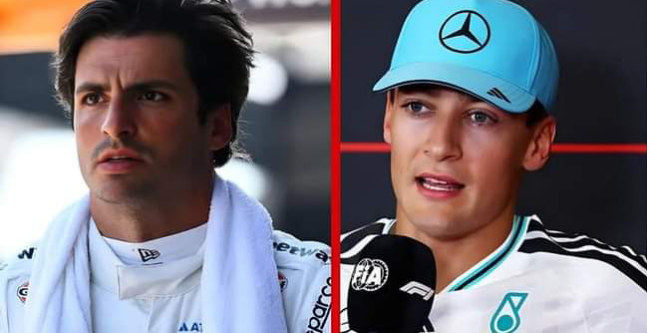
At the center of the discussion are Williams driver Carlos Sainz and Mercedes star George Russell. While both drivers acknowledge that the current system has flaws, they disagree on how Formula 1 should address them. Sainz believes automatic penalties would eliminate any incentive for drivers to benefit from causing interruptions, while Russell argues that the issue is far more complicated than introducing a blanket punishment.
The debate has quickly become one of the biggest talking points in the paddock because qualifying sessions often determine race victories in today’s ultra-competitive Formula 1, where mere hundredths of a second separate the fastest cars.
THE AUSTRIAN GRAND PRIX INCIDENT THAT REIGNITED THE DISCUSSION
The controversy traces back to qualifying at the Red Bull Ring.
Max Verstappen crashed during the closing moments of Q3, forcing marshals to wave yellow flags. George Russell was approaching the affected sector on what became his pole-winning lap and reduced his speed enough to comply with the regulations before continuing.
Mercedes rookie Kimi Antonelli interpreted the situation differently. Believing the incident required double yellow flags, he abandoned his lap entirely, costing him a chance to challenge for pole position.
Although FIA stewards later confirmed Russell had followed the regulations correctly, the differing reactions highlighted an uncomfortable reality. Drivers can interpret developing situations differently within seconds, potentially creating major competitive advantages or disadvantages.
That uncertainty has become the foundation of the current debate.
CARLOS SAINZ BELIEVES AUTOMATIC PENALTIES WOULD IMPROVE FAIRNESS
Carlos Sainz has proposed a simple but significant rule change.
His suggestion is that any driver responsible for bringing out a yellow or red flag during qualifying should automatically receive a three-place grid penalty, regardless of whether the incident was intentional.
The Williams driver argues that the consequences for rivals remain exactly the same whether a crash is deliberate or accidental. Drivers lose valuable laps, qualifying positions change, and championship points can ultimately be affected.
Sainz has also openly admitted something many fans rarely hear from drivers.
He revealed that during previous qualifying sessions, particularly at circuits like Baku, the thought has crossed his mind that crashing while holding provisional pole could protect his position. While he stressed that these are only split-second thoughts shared by many competitors, he believes Formula 1 should remove even the possibility of anyone benefiting from such situations.
His proposal focuses on eliminating temptation before it can influence driver behavior.
GEORGE RUSSELL SUPPORTS THE GOAL BUT QUESTIONS THE SOLUTION
George Russell agrees that qualifying interruptions can unfairly impact competitors, but he believes introducing automatic penalties could create even bigger problems.
According to Russell, Formula 1 qualifying is built around drivers pushing to the absolute limit. If every mistake automatically resulted in a grid penalty, competitors might begin driving more conservatively during crucial laps.
That would fundamentally change the character of qualifying.
Instead of witnessing drivers extracting every last fraction of performance from their cars, fans could see more cautious approaches designed to avoid punishment rather than maximize speed.
Russell also emphasized that every incident is unique. Mechanical failures, brake problems, unexpected oversteer, changing weather conditions, or simple driver mistakes cannot always be treated equally.
A one-size-fits-all punishment may appear fair on paper but could produce unfair outcomes in practice.
WHY FLAG PROCEDURES ARE MORE COMPLICATED THAN THEY APPEAR
One of Russell’s strongest arguments involves how yellow flags are actually deployed.
Contrary to popular belief, the first decision is not made by FIA race control but by volunteer marshals stationed around the circuit.
These marshals have only a few seconds to judge whether a stranded car represents a serious danger. They must decide if a single yellow flag is sufficient or if the situation immediately requires double yellows or even a red flag.
Only afterward does race control analyze multiple camera angles, onboard footage, telemetry, and communication before deciding whether to escalate the response.
Russell believes expecting perfect consistency under these circumstances is unrealistic.
Introducing automatic sporting penalties based on decisions made in those first critical seconds could place even greater pressure on marshals already performing one of Formula 1’s most demanding volunteer roles.
THE LESSONS FROM BAKU
Russell referenced the Azerbaijan Grand Prix as an example of how Formula 1 has gradually adapted its procedures.
Baku’s Turn 1 regularly sees drivers lock up and use the escape road without creating immediate danger.
Several years ago, these incidents frequently resulted in double yellow flags that ruined laps for other competitors despite the cars being safely off the racing line.
Over time, officials adopted a more balanced approach.
Unless a car blocks the circuit, leaves debris on track, or requires marshals to intervene immediately, single yellow flags have generally become the preferred response.
Russell argues that this evolution demonstrates Formula 1’s ability to refine regulations without introducing rigid automatic penalties.
THE MONACO 2006 PRECEDENT STILL SHAPES THE DEBATE
Whenever qualifying controversies arise, memories inevitably return to the 2006 Monaco Grand Prix.
Michael Schumacher stopped his Ferrari at Rascasse while holding provisional pole, bringing out yellow flags during the closing moments of qualifying.
Stewards concluded the incident was deliberate and removed all of Schumacher’s qualifying times, sending him to the back of the grid.
That case remains one of the clearest examples of Formula 1 punishing intentional manipulation.
However, it also demonstrated how difficult it can be to prove intent.
Mechanical failures, driver mistakes, and genuine accidents often appear remarkably similar on television, making consistent enforcement extremely challenging.
Sainz’s proposal would eliminate the need to determine intent altogether, but critics argue that innocent drivers could end up receiving severe penalties for unavoidable incidents.
DIFFERENT DRIVERS SEE THE ISSUE DIFFERENTLY
The paddock remains divided.
Charles Leclerc has acknowledged that street circuits such as Monaco and Baku naturally create more opportunities for controversial qualifying interruptions. However, he has questioned whether every circuit should be governed by exactly the same automatic penalty.
Max Verstappen has also distinguished between genuine mistakes and deliberate actions.
The reigning world champion has suggested intentional incidents deserve severe punishment, while also indicating that Formula 1 should review whether some dangerous situations warrant quicker deployment of double yellow or red flags.
The diversity of opinions illustrates just how difficult it will be for the GPDA and the FIA to reach a consensus.
HOW THIS COULD IMPACT THE 2026 CHAMPIONSHIP
This discussion extends far beyond a single qualifying session.
Modern Formula 1 is more competitive than ever. Grid positions often determine race strategy, tire management options, and overtaking opportunities.
An interrupted qualifying lap can cost a driver multiple championship points, while securing pole position frequently provides a decisive advantage on Sunday.
For teams battling for Constructors’ Championship positions, one controversial qualifying incident can influence millions of dollars in prize money by season’s end.
Drivers will therefore watch any regulatory changes closely, knowing they could directly affect championship outcomes.
POSSIBLE ALTERNATIVES TO AUTOMATIC GRID PENALTIES
Rather than adopting Sainz’s proposal exactly as presented, Formula 1 may explore more targeted solutions.
Possible alternatives include:
- Faster race control intervention using enhanced monitoring technology.
- Clearer FIA guidelines defining when double yellow or red flags should be deployed.
- Automatic deletion of qualifying laps for drivers responsible for incidents under certain conditions.
- Stronger penalties only when stewards determine an incident was deliberate or reckless.
- Improved communication systems between marshals and race control to reduce delays.
These options could improve consistency while preserving the aggressive nature of Formula 1 qualifying.
WHY THIS DEBATE MATTERS FOR THE FUTURE OF FORMULA 1
Formula 1 constantly balances three competing priorities: safety, fairness, and entertainment.
Every regulation must protect drivers while allowing fans to enjoy the spectacular qualifying laps that define modern Grand Prix weekends.
Sainz’s proposal raises legitimate concerns about competitive integrity. Russell’s response reminds the sport that simple solutions can sometimes create unintended consequences.
Neither driver is entirely right or wrong.
Instead, they represent two equally important philosophies: preventing unfair advantages versus preserving the fearless spirit that makes Formula 1 qualifying so compelling.
FINAL THOUGHTS
The debate surrounding qualifying penalties is unlikely to disappear anytime soon. As Formula 1 cars become increasingly competitive and the margins between drivers continue to shrink, every qualifying interruption will receive greater scrutiny.
Carlos Sainz deserves credit for forcing the conversation into the open, while George Russell has highlighted the practical realities that regulators must consider before making sweeping changes.
The FIA and the Grand Prix Drivers’ Association now face the challenge of finding a solution that strengthens fairness without reducing the excitement that makes qualifying one of Formula 1’s greatest spectacles.
Whether the sport ultimately adopts automatic penalties, introduces revised flag procedures, or develops an entirely new system, the decisions made over the coming months could reshape Formula 1 qualifying for years to come and potentially influence the outcome of future world championships.