Success in Formula 1 is often determined long before the cars reach the racetrack. Every team must carefully decide how to divide its resources between fighting for the current championship and preparing for the future. McLaren has now admitted that those decisions did not go according to plan, leaving the team chasing its rivals during the 2026 campaign.
After establishing itself as one of Formula 1’s strongest teams over the previous two seasons, McLaren has struggled to maintain that momentum. While Mercedes and Ferrari have made significant progress with their latest cars, McLaren has found itself several months behind in development, making it increasingly difficult to compete consistently for victories.
ANDREA STELLA EXPLAINS THE KEY DECISIONS
Team principal Andrea Stella acknowledged that McLaren’s intense championship battle against Red Bull and Max Verstappen heavily influenced the team’s priorities during the previous season.
According to Stella, the close fight for the drivers’ title forced McLaren to continue investing valuable engineering time into refining its existing challenger instead of fully committing resources to the all-new 2026 project. Even without introducing major upgrade packages, the team still needed to optimize performance from race to race in order to remain competitive against Verstappen.
Stella also admitted that the team’s initial interpretation of the new 2026 regulations proved to be less effective than expected. As engineers gained a better understanding of the technical rules, McLaren realized that several conceptual decisions needed to be reconsidered, forcing the team to redirect its development strategy.
THE COST OF CHASING SHORT-TERM SUCCESS
Formula 1 history is filled with examples of teams sacrificing future competitiveness while fighting for immediate success. With an entirely new generation of technical regulations arriving for 2026, every month of development became increasingly valuable.
McLaren’s decision to keep focusing on its previous championship campaign appears to have delayed progress on the MCL-40. Meanwhile, direct rivals such as Mercedes and Ferrari were able to dedicate more attention to understanding the new regulations and refining their concepts much earlier. That early investment now seems to be paying dividends as both teams continue to introduce stronger performance packages throughout the season.
The situation demonstrates just how unforgiving Formula 1 development has become. Even a relatively small delay in research and design can translate into significant performance deficits once the cars reach the circuit.
WHAT THIS MEANS FOR LANDO NORRIS AND THE TEAM
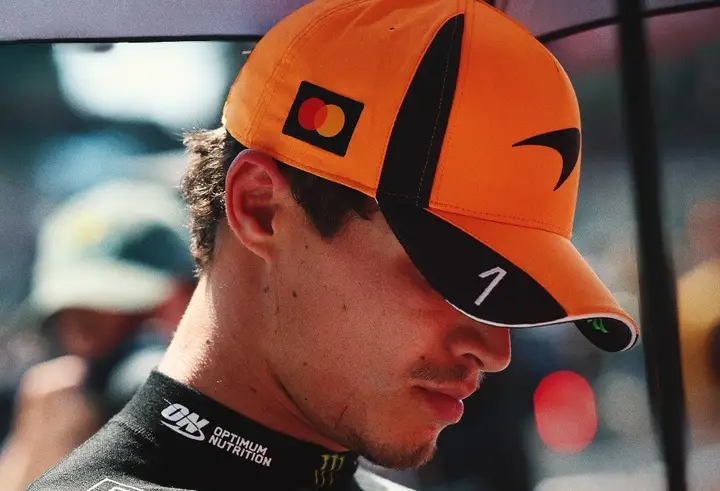
For Lando Norris, the current situation presents a major challenge. After enjoying championship-caliber machinery in recent seasons, he now finds himself driving a car that is struggling to match the pace of Formula 1’s front-runners.
While Norris remains one of the sport’s most talented drivers, consistently fighting for victories requires more than individual brilliance. Without substantial improvements to the car, his opportunities to compete for race wins and another championship campaign could become increasingly limited.
Oscar Piastri also faces a difficult task as the Australian continues his development against some of the strongest driver line-ups on the grid. Both drivers will rely heavily on McLaren’s engineering team to accelerate progress over the remainder of the season.
CAN MCLAREN RECOVER BEFORE THE NEXT TITLE FIGHT?
Despite the current setbacks, McLaren should not be written off. Formula 1 development is continuous, and teams can recover quickly if they identify the right technical direction. Stella’s willingness to openly acknowledge mistakes may also prove beneficial, allowing the team to focus entirely on correcting its approach rather than defending unsuccessful decisions.
The coming months will be critical. If McLaren can successfully implement its revised development philosophy, the team could gradually close the gap to Mercedes and Ferrari. However, every race that passes without meaningful gains makes the challenge even greater.
THE BIGGER PICTURE FOR THE 2026 CHAMPIONSHIP
McLaren’s admission highlights one of Formula 1’s biggest realities: winning championships requires perfect timing as much as outright speed. Balancing present-day success with future innovation is one of the hardest challenges any team faces.
Although McLaren’s championship ambitions have suffered because of its development choices, the team still possesses world-class engineers, talented drivers, and a proven ability to recover from adversity. Whether those strengths will be enough to return the team to the front remains one of the most intriguing storylines of the 2026 Formula 1 season.