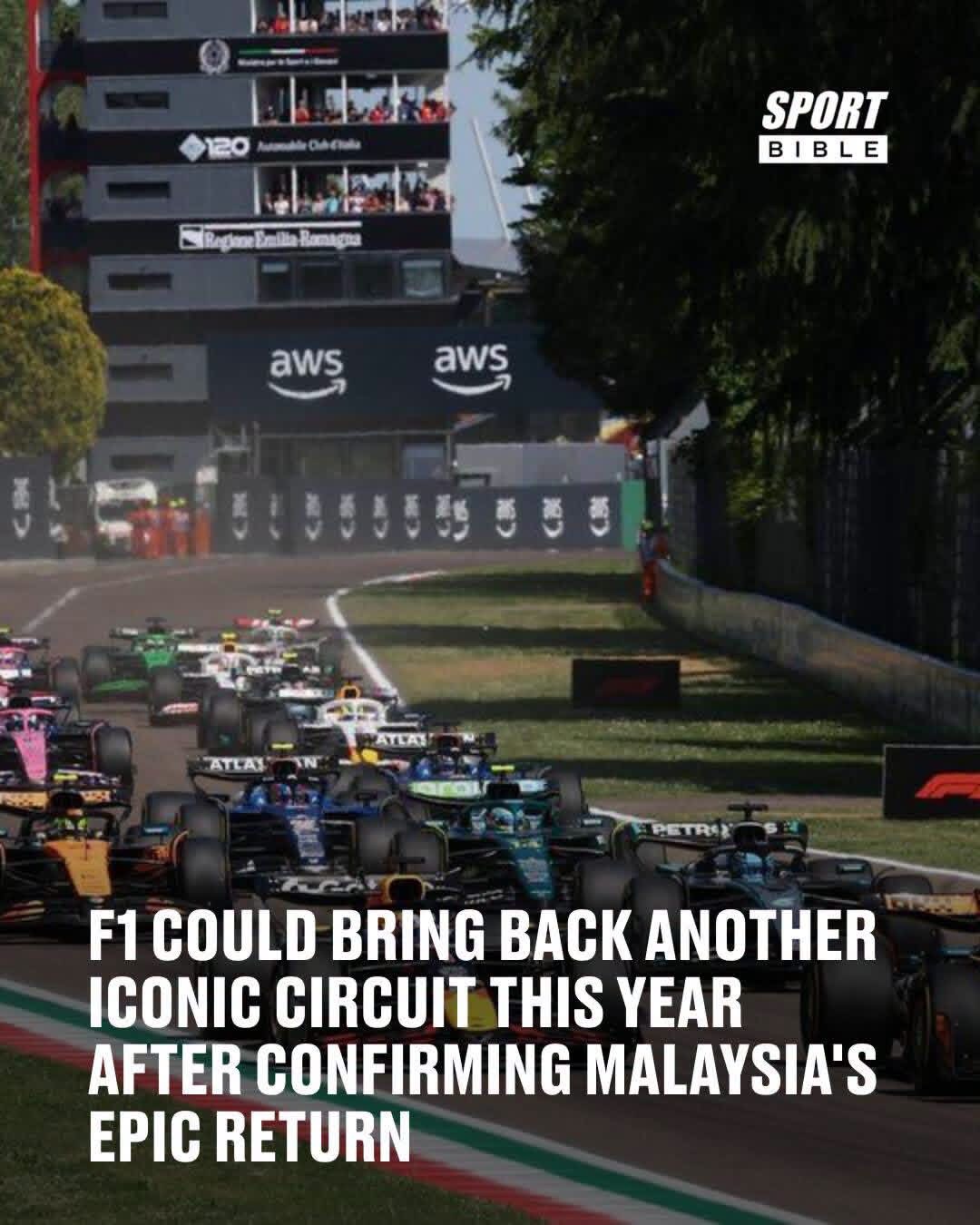
Formula 1’s 2026 calendar could be on the verge of another dramatic transformation, with the historic Imola circuit reportedly emerging as the leading candidate to replace the season-ending races in Qatar and Abu Dhabi if ongoing security concerns in the Middle East prevent those Grands Prix from taking place. The development comes shortly after reports confirmed that Malaysia’s legendary Sepang International Circuit is preparing for an unexpected return later this season, raising the possibility of one of the most nostalgic calendar shake-ups in recent F1 history.
If the changes receive final approval, Formula 1 fans could witness the return of two of the sport’s most celebrated venues in the same season—an outcome few would have predicted just months ago.
MIDDLE EAST CONFLICT FORCES FORMULA 1 TO PREPARE CONTINGENCY PLANS
The current situation stems from continued geopolitical instability affecting parts of the Middle East.
Earlier this season, Formula 1 was forced to cancel both the Bahrain and Saudi Arabian Grands Prix after escalating regional tensions made it impossible to stage the events safely. While officials initially hoped conditions would improve before the championship reached its final rounds, recent developments have reportedly increased concerns surrounding the planned races in Qatar and Abu Dhabi.
For Formula 1, losing additional races late in the season would create significant logistical, financial, and contractual challenges. Commercial agreements with teams, broadcasters, sponsors, and promoters require the championship to maintain a minimum number of events, meaning replacement venues have become an essential part of contingency planning.
IMOLA NOW LEADS THE LIST OF POSSIBLE REPLACEMENTS
According to multiple reports, Formula 1 has identified Italy’s Imola circuit as its preferred replacement should the Qatar and Abu Dhabi Grands Prix be canceled.
Officially known as the Autodromo Internazionale Enzo e Dino Ferrari, Imola was removed from the 2026 calendar despite remaining one of the most respected circuits among drivers and fans.
The track has hosted Formula 1 under different names throughout its history. Between 1981 and 2006 it staged the San Marino Grand Prix before returning to the championship in 2020 as the Emilia-Romagna Grand Prix.
Its challenging layout, old-school characteristics, and passionate Italian atmosphere have made it one of the sport’s most iconic venues.
PORTIMÃO REMAINS AN ALTERNATIVE OPTION
Portugal’s Algarve International Circuit, commonly known as Portimão, has also been discussed as a possible replacement.
However, reports suggest Imola currently holds the advantage because Portimão is preparing for extensive infrastructure upgrades ahead of its planned return to the Formula 1 calendar in 2027.
Rather than interrupt renovation work, Formula 1 appears more likely to rely on Imola should an emergency replacement become necessary.
Even so, Portimão remains an attractive backup option thanks to its modern facilities, dramatic elevation changes, and exciting racing characteristics.
SEPANG’S RETURN COULD SIGNAL A NEW ERA OF CALENDAR FLEXIBILITY
The possible return of Imola follows growing expectations that Malaysia’s Sepang International Circuit will host a Formula 1 event later this year.
Sepang has been absent from the championship since 2017 but remains one of the most popular venues among drivers because of its combination of long straights, technical corners, and unpredictable tropical weather.
Should both Sepang and Imola return within the same season, Formula 1 would demonstrate an unprecedented willingness to adapt its calendar while preserving the championship despite global disruptions.
It would also reward longtime fans eager to see classic circuits return alongside the sport’s newer destinations.
WHY ICONIC CIRCUITS STILL MATTER IN MODERN FORMULA 1
Formula 1 has expanded aggressively over the past decade, introducing new street races and emerging markets across North America and the Middle East.
While these events have boosted the championship’s global reach and commercial success, many fans continue to argue that historic permanent circuits provide the purest racing experience.
Tracks such as Imola, Spa-Francorchamps, Suzuka, Silverstone, Monza, and Sepang reward driver skill in ways that modern street circuits often cannot.
Bringing some of these legendary venues back—even temporarily—helps preserve the heritage that remains central to Formula 1’s identity.
CHAMPIONSHIP IMPLICATIONS COULD BE SIGNIFICANT
Any calendar change could have a direct influence on the title fight.
Mercedes currently controls both championships, with Andrea Kimi Antonelli leading the Drivers’ Championship while the team also tops the Constructors’ standings. Ferrari, McLaren, and Red Bull continue chasing the Silver Arrows, and introducing unfamiliar circuits late in the season could alter the competitive balance.
Teams spend months preparing for specific circuits, collecting simulation data and developing race strategies. Replacing races with venues like Imola or Sepang would force engineers to adapt quickly, potentially creating opportunities for rivals to close the gap.
Weather conditions would also become an important factor. Sepang’s intense heat and frequent rainstorms have historically produced unpredictable races, while Imola’s narrow layout places enormous emphasis on qualifying performance and strategic execution.
WHAT HAPPENS NEXT?
Despite the growing speculation, Formula 1 has not officially confirmed any further calendar revisions beyond ongoing contingency planning.
Any changes would still require approval from the FIA, Formula One Management, race promoters, broadcasters, and participating teams.
Nevertheless, the reports illustrate how seriously Formula 1 is preparing for every possible scenario as it protects the integrity of the 2026 championship.
If the current plans materialize, fans could witness one of the most memorable finishes to an F1 season in years—one featuring the return of legendary circuits that have shaped decades of Grand Prix history while ensuring the championship reaches its required race total.