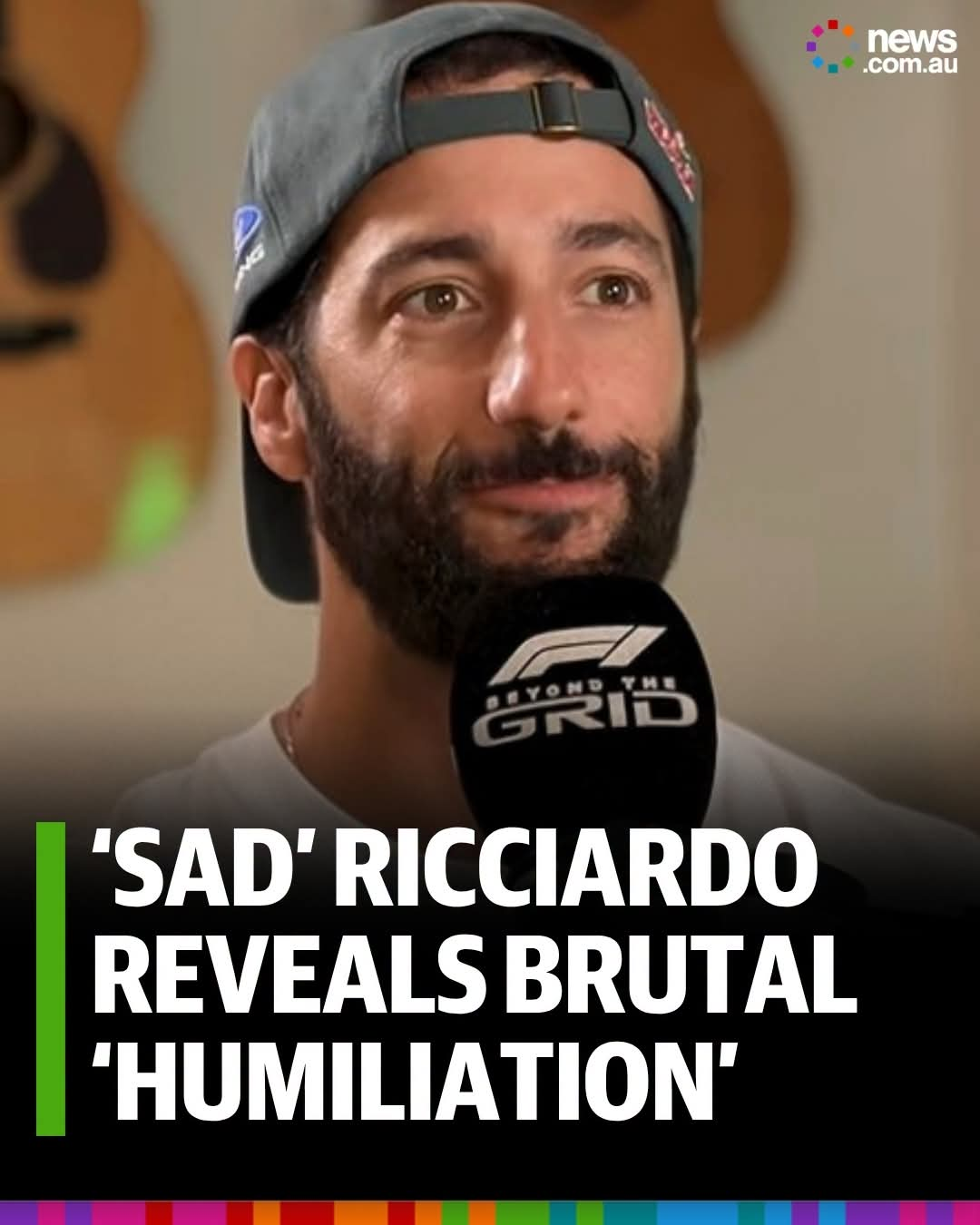
Daniel Ricciardo has opened up about the emotional toll of his unexpected Formula 1 departure, admitting that he felt deeply hurt, humiliated and sad after his racing career came to an abrupt end in 2024. The popular Australian driver has since begun rebuilding his life away from the sport, but his latest reflections reveal just how difficult it was to accept the end of a career that once brought him enormous success and recognition.
Ricciardo, now 37, made his final Grand Prix appearance for Racing Bulls at the 2024 Singapore Grand Prix before being replaced by Liam Lawson. The decision brought an unplanned conclusion to his Formula 1 journey, leaving the eight-time race winner facing difficult questions about his future. Despite collecting only 18 points across his final two seasons, Ricciardo had hoped to finish his career on better terms, making the circumstances surrounding his exit particularly painful.
RICCIARDO ADMITS HE WAS DEEPLY HURT AFTER SINGAPORE EXIT
Speaking on Formula 1’s Beyond The Grid podcast, Ricciardo described the different emotional stages he experienced after leaving the championship. Initially, he tried to appear strong and convince himself that everything was fine, even though he was struggling internally.
He explained that his first reaction was essentially a defence mechanism, an attempt to hide feelings of humiliation and protect himself from the reality of what had happened. Once the immediate aftermath settled, however, those emotions became harder to ignore.
The Australian said the experience forced him into a period of serious self-reflection. He began questioning what he wanted from life, what happiness meant to him and how he could move forward after losing the career that had defined so much of his adult life. His comments offer a reminder that an athlete’s departure from elite competition can involve far more than simply losing a job.
THE DIFFICULT REALITY BEHIND A SUCCESSFUL F1 CAREER
Ricciardo’s struggles also highlight the pressure that comes with competing at the highest level of motorsport. Formula 1 drivers are constantly judged by results, qualifying performances, championship positions and their ability to deliver under intense scrutiny. When performances decline, the consequences can be immediate, even for drivers who have previously achieved remarkable success.
For Ricciardo, the contrast between his earlier achievements and his eventual departure made the ending particularly difficult to process. He had become one of the most recognisable personalities in the paddock, known for his overtaking ability, infectious smile and memorable celebrations.
Yet his final seasons did not match the standards he had established earlier in his career. He struggled to consistently reproduce his best form, and the decision to replace him demonstrated how little security even an experienced driver can have in Formula 1.
Ricciardo also identified the 2015 British Grand Prix at Silverstone and the 2022 Monaco Grand Prix as races that contributed to his doubts about his future. Those moments became part of a wider reassessment of his place in the sport, showing that the uncertainty surrounding his career had developed over several years rather than appearing suddenly in Singapore.
EIGHT WINS AND 32 PODIUMS REMAIN PART OF HIS LEGACY
Although Ricciardo has been candid about the painful circumstances of his exit, he is now looking back on his career with greater pride. His Formula 1 record includes eight Grand Prix victories and 32 podium finishes, achievements that place him among the sport’s successful modern-era drivers.
His final victory came at the 2021 Italian Grand Prix at Monza, where he delivered a memorable win for McLaren. That result was especially significant because it ended McLaren’s long wait for a Grand Prix victory and gave Ricciardo one of the defining moments of his career.
The Monza triumph remains a reminder of what he could accomplish when circumstances and performance came together. While his later struggles inevitably shaped the final chapter of his career, they do not erase the victories, podiums and memorable performances that came before them.
Ricciardo acknowledged that words such as failure and humiliation might make his reflections sound overwhelmingly negative. However, he stressed that his perspective has changed with time and that he now feels much more comfortable appreciating what he achieved.
LIFE AFTER FORMULA 1 IS BRINGING A NEW SENSE OF FREEDOM
One of the biggest changes for Ricciardo has been the opportunity to reconnect with life outside the demanding Formula 1 calendar. He described spending more time with family, rebuilding friendships that had drifted over the years and enjoying a greater sense of normality.
Those changes have helped him recognise that leaving racing has also created opportunities. Although he still values the years he spent competing, he is increasingly comfortable letting go of certain aspects of the sport that once consumed his life.
His comments suggest that recovery has not been a simple process of moving on overnight. Instead, it has involved accepting disappointment, reassessing his priorities and gradually building a life that offers fulfilment beyond competition.
For a driver whose identity was closely connected to Formula 1, finding that balance represents a significant personal adjustment. The relief Ricciardo now describes does not mean the end of his career no longer hurts; it suggests that the experience has become easier to understand and live with.
A PAINFUL ENDING DOES NOT DEFINE DANIEL RICCIARDO’S CAREER
Ricciardo’s latest admission provides a more personal look at the reality behind one of Formula 1’s most recognisable careers. His departure from Racing Bulls was not the farewell many fans would have wanted, but his achievements across years of competition remain an important part of his legacy.
His experience also exposes a difficult truth about professional sport: a career can be filled with extraordinary highs and still end in disappointment. For drivers, the challenge is not only reaching the top but also accepting when opportunities begin to disappear.
Ricciardo says he is now able to reflect on his journey with a smile that was difficult to find in the immediate aftermath of his exit. That shift in perspective may be one of the most important signs of progress in his life after racing.
Rather than allowing the final chapter to overshadow everything that came before it, the Australian is learning to appreciate the victories, friendships and experiences that made his Formula 1 journey meaningful. His career may not have ended as he hoped, but his own assessment is becoming clearer: he has reasons to be proud, and there is still plenty of life beyond the cockpit.