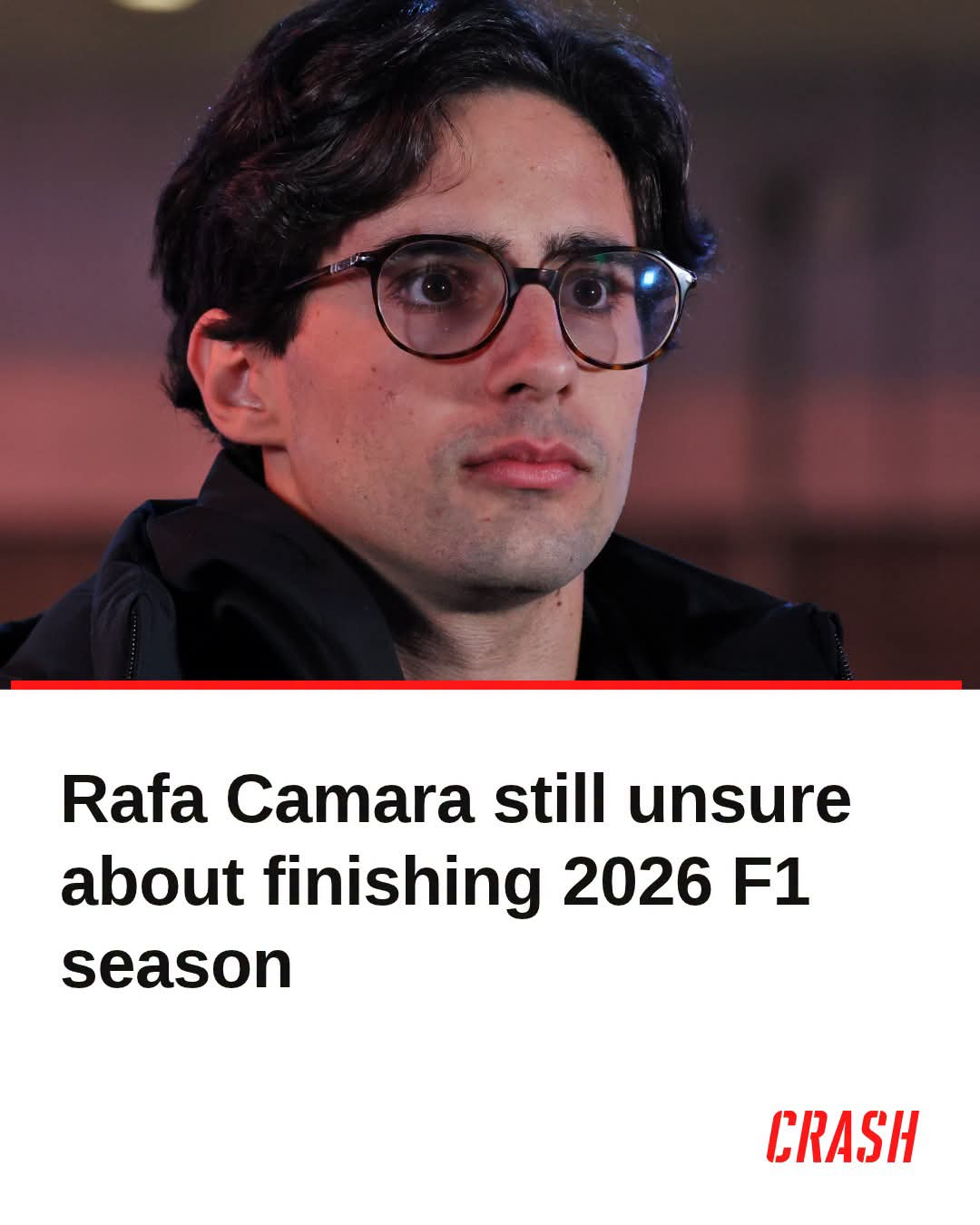
Rafael Camara finds himself at a crossroads few young drivers ever face so early. The 21-year-old Brazilian is already confirmed as a full-time Haas driver for 2027, yet he remains undecided about whether to complete the 2026 Formula 1 season with the American team or return to Formula 2 for the final two rounds in Qatar and Abu Dhabi.
That uncertainty, voiced ahead of his second Grand Prix appearance in Las Vegas, captures the high-stakes reality of modern junior formulas. Camara leads the F2 championship as a rookie with Invicta Racing. Securing that title would crown an already impressive rise. Continuing in F1, however, offers invaluable seat time in the machinery he will race full-time next year. Both paths carry real consequences.
FROM FERRARI ACADEMY PROSPECT TO HAAS ROOKIE UNDER PRESSURE
Camara’s trajectory has been rapid. A Ferrari Driver Academy member since 2021, he claimed the Formula 3 title in 2025 and entered 2026 as one of the standout F2 rookies. Multiple poles, feature-race victories, and consistent podiums put him atop the standings with two rounds remaining.
Haas signed him on a multi-year deal in mid-October to replace Esteban Ocon from 2027 onward. The decision followed a strong showing in a private evaluation test. When Ocon’s relationship with the team collapsed during the Mexico City weekend, Camara was thrust into the spotlight earlier than planned. He made his Formula 1 debut at Interlagos in front of his home crowd, navigating difficult wet-dry conditions to finish 20th.
The team retained him for Las Vegas, pairing him again with Ollie Bearman. Ryo Hirakawa, the reserve who scored a point on his own surprise debut in Mexico, will handle FP1 duties in Bearman’s car. For Camara, the Vegas street circuit represents a second chance to absorb F1 demands under more controlled circumstances than his chaotic Brazilian baptism.
THE IMPOSSIBLE BALANCING ACT AHEAD OF QATAR AND ABU DHABI
FIA regulations prevent a driver from competing in both Formula 1 and Formula 2 on the same weekend. Camara cannot simply split his time. Choosing F1 means walking away from a realistic shot at the F2 crown he has worked toward all season. Choosing F2 means surrendering further mileage in the Haas package before his official rookie campaign begins.
Camara himself has been open about the dilemma. He described both options as “very important,” noting that the entire F2 season has been building toward a strong finish, while also acknowledging that his strong junior form is precisely what created the F1 opportunity. He plans to focus fully on Las Vegas first, then sit down with the relevant parties—Haas, the Ferrari Academy, and his management—to decide.
WHY THIS DECISION MATTERS FAR BEYOND ONE DRIVER
For Camara, the choice is about long-term preparation versus short-term validation. Extra F1 races would accelerate his adaptation to the car’s characteristics, tire management, radio communication, and the unique pressures of a Grand Prix weekend. That experience could pay dividends throughout 2027 as he partners Bearman, another Ferrari Academy graduate.
An F2 title, however, carries lasting prestige. Championship winners often enter F1 with greater confidence and stronger commercial leverage. Walking away from a lead—even a modest one—can leave a psychological mark. History shows mixed outcomes for drivers who prioritized seat time over junior silverware, and those who chased titles at the expense of early top-category exposure.
Haas benefits either way. Keeping Camara through the final races provides continuity and deeper development data on their 2027 driver. Returning him to F2 allows the team to give further opportunities to Hirakawa or another reserve while Camara potentially arrives in 2027 as a freshly crowned champion. The Ferrari Academy also has skin in the game. Its dual investment in Camara and Bearman makes Haas a natural development pathway, and a successful transition strengthens the academy’s reputation for producing race-ready talent.
The broader industry is watching too. Midfield teams increasingly rely on academy graduates and late-season promotions. How Camara and Haas navigate this situation will serve as a case study for future young drivers caught between categories as calendars overlap more tightly.
WHAT TO EXPECT AFTER LAS VEGAS
Most observers expect the decision to lean toward additional F1 races. The multi-year Haas contract is already signed. Seat time in the actual car he will race next season is rare and highly valuable. Yet the emotional pull of closing out an F2 title challenge should not be underestimated, especially for a driver who has led for much of the year.
Camara has handled the sudden spotlight with notable maturity. His measured comments about learning from Brazil and preparing for the unique challenges of the Las Vegas Strip suggest a driver focused on process rather than distraction. Whatever path he chooses after this weekend, the outcome will shape the narrative of his 2027 rookie season and influence how teams and academies manage similar transitions in the years ahead.
The next few days in the Nevada desert will not decide everything. But they will set the stage for one of the more intriguing driver-management stories of the closing stretch of the 2026 season.