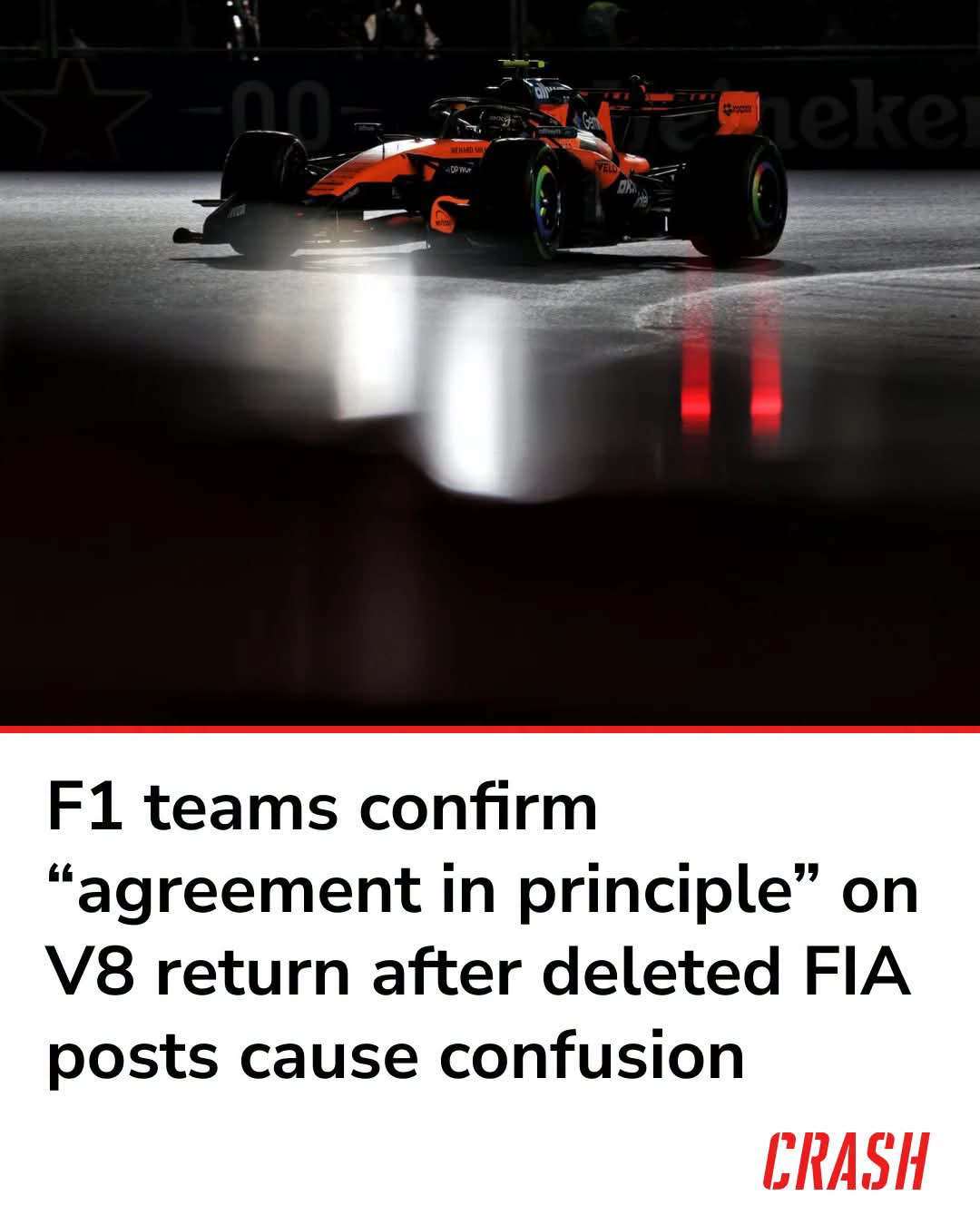
Formula 1 is preparing for one of its most significant technical pivots in more than a decade. Teams have confirmed an “agreement in principle” to return to V8 engines starting in 2030, marking a clear departure from the complex hybrid power units that have defined the sport since 2014.
This is not a casual rumor. The confirmation from the teams themselves signals that the manufacturers, the FIA, and Liberty Media are aligning on a future that prioritizes sound, spectacle, and relative simplicity over the current hybrid era’s efficiency-at-all-costs approach.
WHY THE V8 RETURN IS GAINING MOMENTUM
The current 1.6-liter V6 turbo-hybrid engines deliver remarkable performance and thermal efficiency, but they have also drawn consistent criticism. The muted sound, the extreme technical complexity, and the massive development costs have frustrated fans, teams, and even some manufacturers. A return to naturally aspirated or lightly assisted V8s addresses several of those pain points at once.
V8 engines historically delivered the high-revving, visceral soundtrack that defined Formula 1 for generations. Bringing that character back is expected to improve the product for television and live spectators. At the same time, a less complex architecture should lower barriers for new manufacturers and reduce the enormous annual spending required to stay competitive under the current hybrid regulations.
IMPACT ON TEAMS, DRIVERS, AND MANUFACTURERS
For the existing power unit suppliers—Mercedes, Ferrari, Red Bull Powertrains (with Ford), Renault/Alpine, and the incoming Audi and Honda efforts—the shift creates both opportunity and risk. Companies that have invested heavily in hybrid expertise will need to retool. Those with strong internal combustion heritage may find the transition more natural.
Drivers stand to benefit from a different power delivery and, crucially, from engines that produce more distinctive auditory feedback. Many current and former drivers have spoken about how the hybrid era’s reduced engine noise changes the sensory experience of racing. A return to V8s could restore some of that connection between driver and machine.
Smaller or independent teams could also gain. Lower development costs and potentially more standardized components would reduce the gap between the frontrunners and the midfield, supporting the championship’s long-term goal of closer racing.
THE BIGGER PICTURE FOR FORMULA 1 AND THE INDUSTRY
This decision arrives at a critical moment. Formula 1 is expanding its global footprint, chasing new audiences, and trying to balance sustainability messaging with pure entertainment. While the hybrid era helped the sport claim environmental credibility, the entertainment cost has been real. The 2030 V8 plan appears to be an attempt to rebalance those priorities.
It also sends a signal to the wider motorsport and automotive industry. Road-car manufacturers have spent years developing hybrid and electric technology. A high-profile return to high-revving combustion engines in Formula 1 could influence how manufacturers position performance cars and how fans perceive combustion technology in an electrifying world.
Sustainability concerns will not disappear. Any 2030 regulations will almost certainly include advanced sustainable fuels, strict efficiency targets, and possibly limited hybrid assistance. The “V8” label does not mean a complete rejection of modern technology; it means a recalibration toward a more exciting core architecture.
WHAT COMES NEXT
An agreement in principle is only the starting point. Detailed regulations covering displacement, maximum revs, fuel flow, hybridization level (if any), and cost caps still need to be written and ratified. Expect intense negotiations over the next 18–24 months as manufacturers protect their interests and the FIA tries to lock in a framework that works for 2030 and beyond.
The sport has changed engine formulas before—sometimes successfully, sometimes with growing pains. The move to V8s in 2006 and the later hybrid introduction both reshaped the competitive order. 2030 is likely to do the same.
For now, the message from the teams is clear: the future of Formula 1 power units is being rewritten, and the V8 is back on the table. Fans who have missed the sound and the drama of previous eras finally have a concrete reason for optimism.