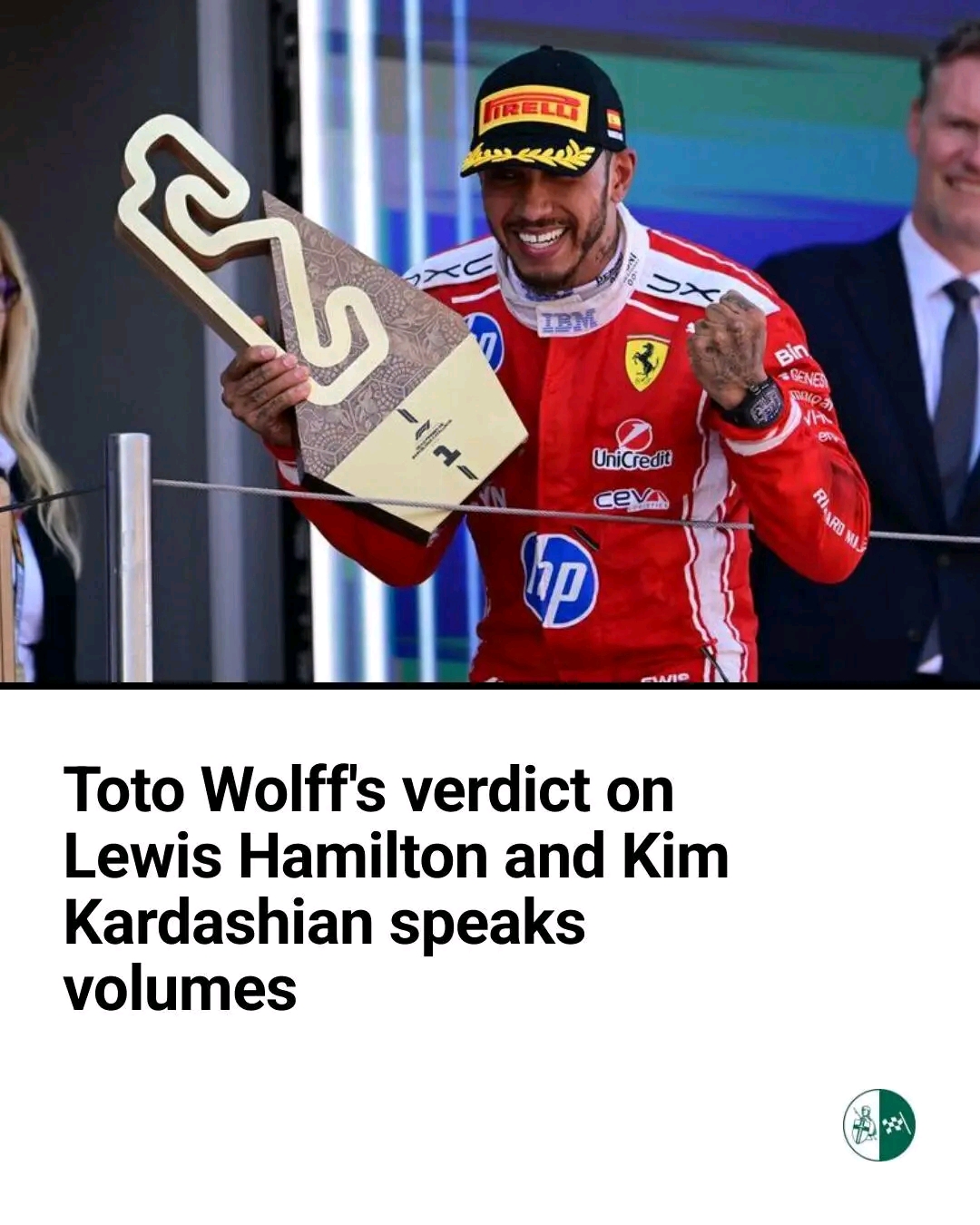
Formula 1 paddock conversations often move fast, but this one has gone viral for a different reason. Reports suggest that Mercedes team principal Toto Wolff made a lighthearted remark implying that celebrity attention around Lewis Hamilton, including his link to media personality Kim Kardashian, could be having a positive influence on his focus and performance on track.
While the comment has been widely shared on social media, it is important to understand the context. Wolff’s tone is reported to be more playful than analytical, but it has still triggered discussion about how off-track visibility, branding, and lifestyle narratives can intersect with elite motorsport performance.
WHY THIS STORY IS TRENDING IN FORMULA 1 CIRCLES
The modern F1 world is no longer just about lap times and tyre strategy. It is also about global branding, media presence, and psychological momentum. When a figure like Kim Kardashian is loosely linked in the conversation around a driver like Hamilton, it immediately expands beyond sport into pop culture.
Hamilton is already one of the most marketable athletes in the world, and any association with global celebrities amplifies attention even further. This is why Wolff’s remark has gained traction. It sits at the intersection of sport, entertainment, and perception.
DOES OFF-TRACK ATTENTION REALLY IMPACT PERFORMANCE?
In elite motorsport, performance is influenced by a combination of physical preparation, mental clarity, and team execution. External attention can either distract or motivate depending on the athlete.
For Hamilton, this is not unfamiliar territory. Throughout his career, he has balanced racing with fashion, music, activism, and celebrity interactions. Rather than being a distraction, he has often used visibility as fuel to maintain relevance and competitive edge.
From a technical standpoint, there is no direct evidence that celebrity associations improve lap times. However, confidence and mental state can indirectly affect performance consistency, especially under pressure.
MERCEDES’ POSITION AND INTERNAL DYNAMICS
Within Mercedes-AMG Petronas Formula One Team, the focus remains on performance recovery and championship competitiveness. The team has been in a transitional phase in recent seasons, working to close the gap to front-runners.
Wolff’s comment, whether serious or joking, reflects a broader reality: Mercedes is still heavily reliant on Hamilton’s experience, leadership, and ability to extract results even in difficult machinery.
If anything, the remark highlights how central Hamilton remains to the team’s identity, even amid evolving performance cycles.
THE BROADER IMPACT ON HAMILTON’S IMAGE
Hamilton’s brand extends far beyond Formula 1. He is a global figure whose influence spans fashion, social justice, and entertainment. The mention of Kim Kardashian simply reinforces how deeply embedded he is in global celebrity culture.
This level of visibility has two major effects:
It strengthens his commercial value and global reach
It increases scrutiny over every aspect of his personal and professional life
In the modern F1 era, drivers are not only athletes but also media entities. Hamilton is arguably the clearest example of this transformation.
WHAT THIS MEANS FOR THE CHAMPIONSHIP STORYLINE
While the remark itself does not change championship standings, it contributes to the narrative surrounding Mercedes and Hamilton. In a tightly contested F1 environment, narratives matter because they influence perception, pressure, and media momentum.
If Mercedes continues improving performance, stories like this will be seen as part of a wider resurgence narrative. If not, they risk being framed as distractions from on-track struggles.
FINAL THOUGHTS AND WHAT TO WATCH NEXT
The key takeaway from this story is not the celebrity connection itself, but what it reveals about modern Formula 1. The sport is now a blend of performance engineering and global entertainment storytelling.
Going forward, the focus will remain on whether Hamilton and Mercedes can convert attention and experience into consistent podium results. Wolff’s comment may fade quickly, but the spotlight on Hamilton will not.
In F1 today, everything from media presence to mindset becomes part of the competitive picture, even when it starts as a light remark in the paddock.