Ferrari fans may not enjoy hearing this one.
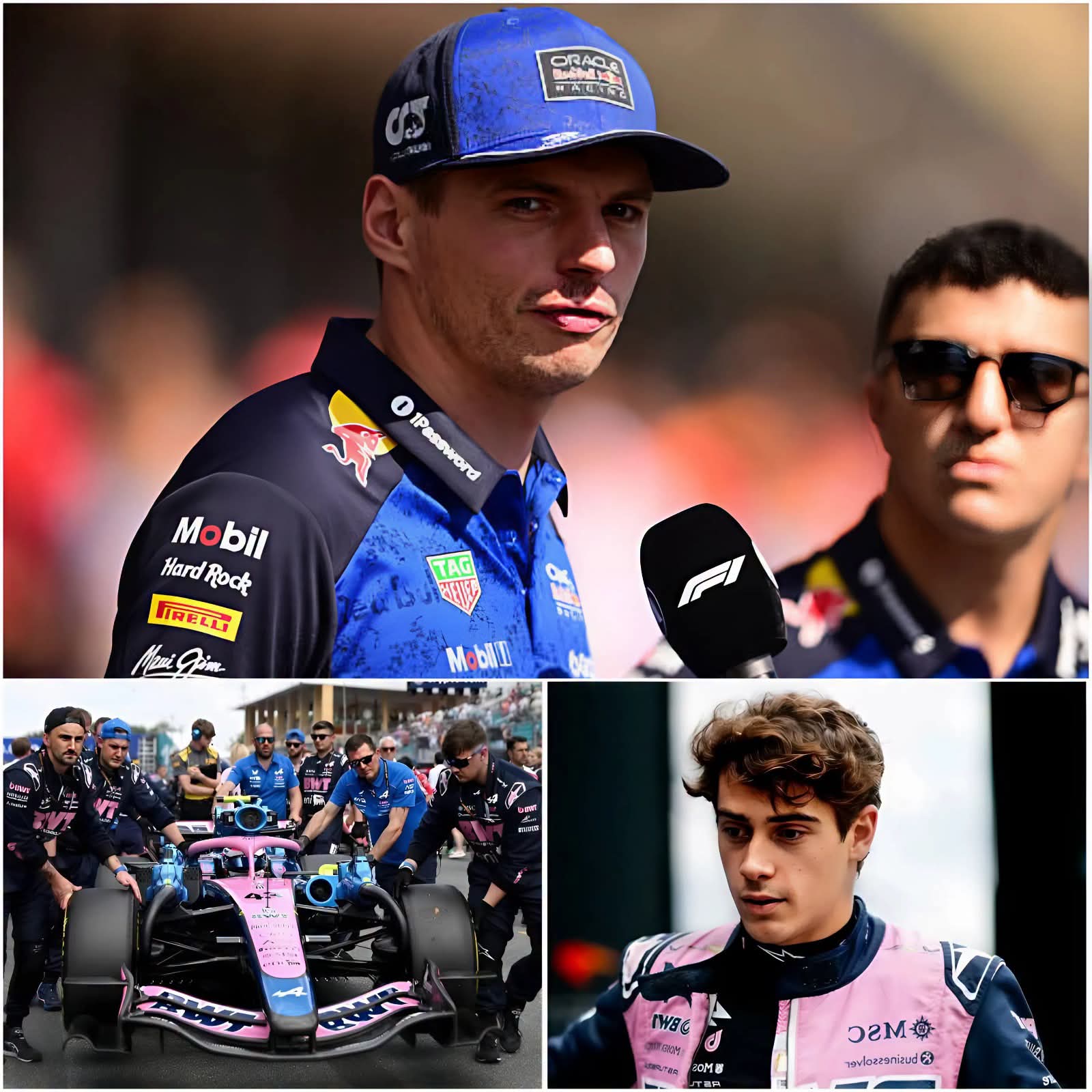
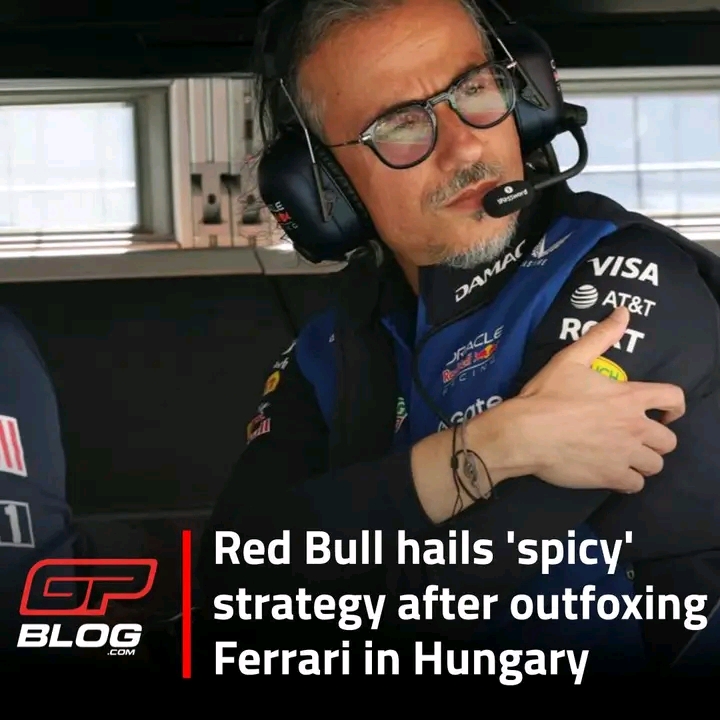
Laurent Mekies has revealed more about the strategic decisions that helped Max Verstappen and Red Bull turn a difficult Hungarian Grand Prix weekend into a remarkable second-place finish. While Ferrari appeared to have the stronger overall package at the Hungaroring, Red Bull’s ability to react to changing circumstances and take calculated risks ultimately helped Verstappen finish ahead of one of his biggest rivals.
The result was another reminder that in modern Formula 1, having the fastest car is not always enough. Strategy, tyre management, pit-wall decision-making and driver execution can completely change the outcome of a race.
For Ferrari, the result will be particularly frustrating because the Scuderia had shown strong pace across the weekend. Yet Red Bull found a way to maximise its opportunities when the race became increasingly unpredictable.
RED BULL TURNED A DIFFICULT WEEKEND INTO A PODIUM CHALLENGE
Going into the Hungarian Grand Prix, Red Bull did not look like the team to beat.
The Hungaroring traditionally places enormous emphasis on qualifying performance and aerodynamic efficiency because overtaking is notoriously difficult. However, Red Bull struggled to extract maximum performance from its car during qualifying, with Verstappen eventually starting sixth.
Laurent Mekies admitted that the team had been fighting to find the right balance throughout the weekend and that Red Bull simply did not have the pace to match Ferrari and McLaren over a single lap. Verstappen also reported aerodynamic losses, rear-end instability and tyre degradation issues.
That made the eventual result even more impressive.
Instead of allowing a compromised qualifying position to dictate the race, Red Bull focused on making the most of every opportunity. The team’s strategic choices, combined with Verstappen’s ability to manage difficult tyres, transformed what could have been a disappointing weekend into a second-place finish.
THE STRATEGY CALLS THAT CHANGED VERSTAPPEN’S RACE
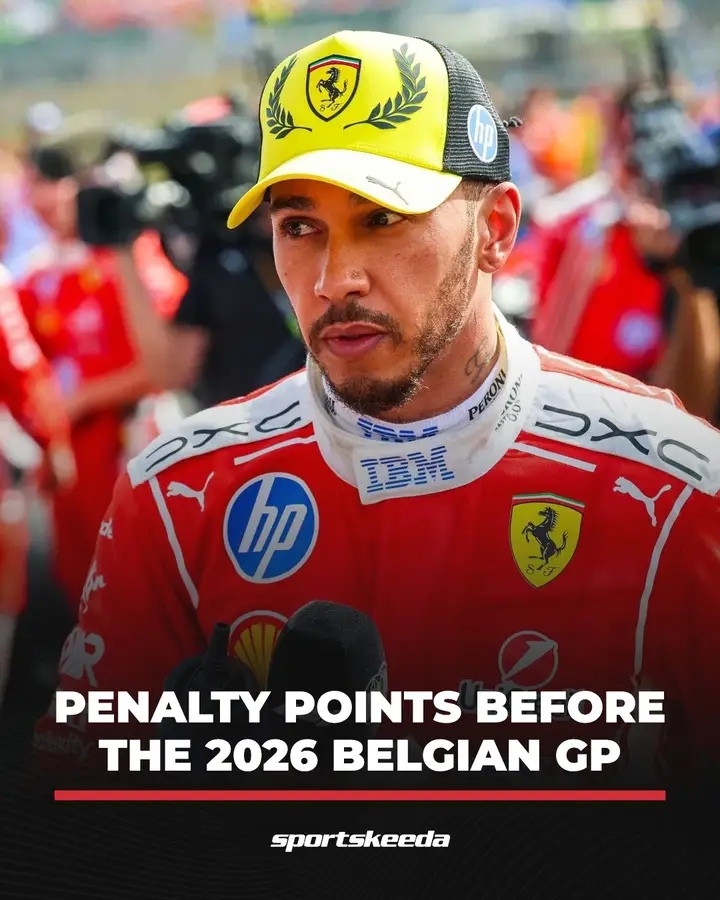
One of the biggest moments came during Verstappen’s battle with Lewis Hamilton.
After the first round of pit stops, Verstappen found himself behind the Ferrari driver. Rather than simply accepting the loss of track position, the Red Bull driver attacked when the opportunity presented itself, making an aggressive move to regain the position.
That was important because the Hungaroring is not a circuit where drivers can easily recover lost ground. Once a car becomes trapped behind another competitor, the race can quickly become a procession.
Red Bull also made a particularly bold decision with Verstappen’s final tyre stint. The team switched him onto the soft compound and then chose not to pit again when the Virtual Safety Car created an opportunity for some rivals to make another stop.
It was a calculated gamble.
The soft tyres needed to survive until the chequered flag, but Red Bull judged that the potential track-position gain was worth the risk. According to Formula 1’s official race analysis, that decision helped Verstappen jump ahead of several competitors and ultimately hold second place to the finish.
This is precisely the kind of strategic gamble that can separate a podium finish from an ordinary points haul.
VERSTAPPEN’S TYRE MANAGEMENT WAS JUST AS IMPORTANT
Strategy only works when the driver can execute it.
Red Bull’s decision to stay out under the Virtual Safety Car would have been disastrous if Verstappen had destroyed his soft tyres in the closing stages. Instead, the four-time world champion managed his pace effectively enough to bring the car home in second.
That is where Verstappen’s experience becomes such a valuable asset for Red Bull.
The Dutchman has repeatedly demonstrated an ability to understand tyre behaviour in real time and adjust his driving accordingly. Rather than chasing maximum lap time on every lap, he was able to balance performance with preservation when the situation demanded it.
Verstappen himself admitted that the result was somewhat surprising given how difficult the weekend had been for Red Bull. He credited the team’s calls and highlighted the strength of the second half of the race, particularly the way the car performed on older tyres.
In other words, Red Bull did not win the strategic battle by simply finding the perfect tyre combination. The team and driver worked together to make an aggressive plan viable.
FERRARI HAD THE PACE BUT RED BULL HAD THE BETTER RACE EXECUTION
This is the part Ferrari supporters will probably find most frustrating.
Ferrari had demonstrated impressive pace at the Hungaroring, particularly over the course of the weekend. Yet the race exposed the difference between having a competitive car and converting that competitiveness into the maximum possible result.
Pirelli’s post-race assessment highlighted how Ferrari’s decision to start on the soft tyre and pit Lewis Hamilton at the first available opportunity influenced the strategic sequence for several other front-running teams. The race ultimately featured everything from one-stop to three-stop approaches, with traffic and changing circumstances making the pit wall’s decisions especially important.
Red Bull, meanwhile, appeared more willing to embrace uncertainty.
That does not necessarily mean Ferrari made the wrong decisions. The Scuderia’s approach was shaped by the characteristics of its own car and the information available at the time. But the outcome demonstrates how quickly a race can move away from the team that appears to have the strongest baseline package.
For Ferrari, the lesson is clear: qualifying pace and Friday performance mean little if the team cannot consistently maximise Sunday execution.
ISACK HADJAR’S ROLE SHOULD NOT BE OVERLOOKED
Another interesting element of Red Bull’s race was the contribution of Isack Hadjar.
The French driver finished sixth, but his race was also strategically significant for his teammate. Hadjar spent long periods on extended stints, and his positioning on track helped influence the progress of Verstappen’s rivals.
In a championship where every point matters, teams need both cars to contribute strategically. Even when a second driver is not fighting for the podium, their position can affect the race of competitors around them.
Hadjar’s performance therefore represented more than simply a respectable sixth-place finish. It gave Red Bull another strategic tool to work with and helped Verstappen’s recovery effort.
That could become increasingly important as the season progresses and Red Bull continues its fight to close the gap to the teams at the front.
WHY THIS RESULT MATTERS FOR MAX VERSTAPPEN
For Verstappen, the Hungarian result is potentially more significant than the points alone suggest.
Red Bull entered the weekend with concerns about its ability to compete consistently with Ferrari and McLaren. The RB22 was not behaving perfectly, and Verstappen struggled with balance and degradation during the weekend.
Yet he still finished second.
That is the kind of result that can keep a championship challenge alive when a team does not have the fastest car every weekend.
The bigger question is whether Red Bull can turn these isolated examples of strategic excellence into consistent performance. The team has already shown signs of progress during the 2026 campaign, including a strong second-place result for Verstappen in Austria and a podium in Belgium.
If the technical development curve continues in the same direction, Red Bull could become a much more serious threat during the second half of the season.
FERRARI’S BIGGEST CONCERN MAY NOT BE RED BULL
Ferrari will obviously be disappointed to lose ground to Verstappen, but the bigger concern may be the wider championship picture.
The 2026 season is becoming increasingly competitive, with Mercedes, McLaren, Ferrari and Red Bull all capable of producing strong weekends under the right circumstances.
That means Ferrari cannot afford to rely solely on having the fastest car.
The Scuderia needs to be excellent in every department: qualifying preparation, tyre management, pit-stop timing, race strategy and driver execution. A small mistake or a conservative decision can suddenly turn a potential victory into a podium—or worse.
Red Bull’s Hungarian strategy showed exactly how quickly that can happen.
THE MAX VERSTAPPEN FACTOR IS STILL HUGE
There is also a wider storyline surrounding Verstappen’s future that makes every strong Red Bull result even more important.
Mekies has previously made it clear that Red Bull’s priority is to give Verstappen a competitive car, while speculation about his long-term future continues to attract attention. Verstappen remains under contract through 2028, although reports have continued to discuss performance-related clauses and potential interest from rival teams. Mekies has also acknowledged that other high-level drivers are showing interest in Red Bull’s available seats.
That creates an interesting dynamic.
Every time Red Bull demonstrates that it can compete at the front, it strengthens the argument that Verstappen should remain with the team. But every time the car falls significantly behind, questions about his future inevitably return.
For Mekies and Red Bull, therefore, results such as Hungary are about more than one weekend. They are part of the bigger project of convincing Verstappen that the team can build another championship-winning machine.
WHAT THIS COULD MEAN FOR THE REST OF THE 2026 SEASON
My prediction is that Red Bull will continue to be dangerous on Sundays even when it is not the fastest team on Saturday.
The team’s ability to adapt strategically, combined with Verstappen’s racecraft, gives it a weapon that rivals cannot ignore. However, Red Bull still needs to solve the underlying performance issues that made qualifying so difficult in Hungary.
If the RB22 becomes more predictable and competitive over one lap, Verstappen could suddenly find himself starting much closer to the front. That would make Red Bull’s strategic advantage even more powerful because the team would no longer have to spend the opening half of races recovering lost positions.
For Ferrari, the Hungarian Grand Prix should serve as a warning.
Having the pace is encouraging, but championship contenders are judged by how many points they collect when circumstances become complicated. Red Bull’s performance showed that a team can be beaten on raw pace and still emerge as the biggest winner strategically.
And if Verstappen continues to turn difficult weekends into podiums, Ferrari and the rest of the grid may soon discover that Red Bull is far from finished in the 2026 championship fight.