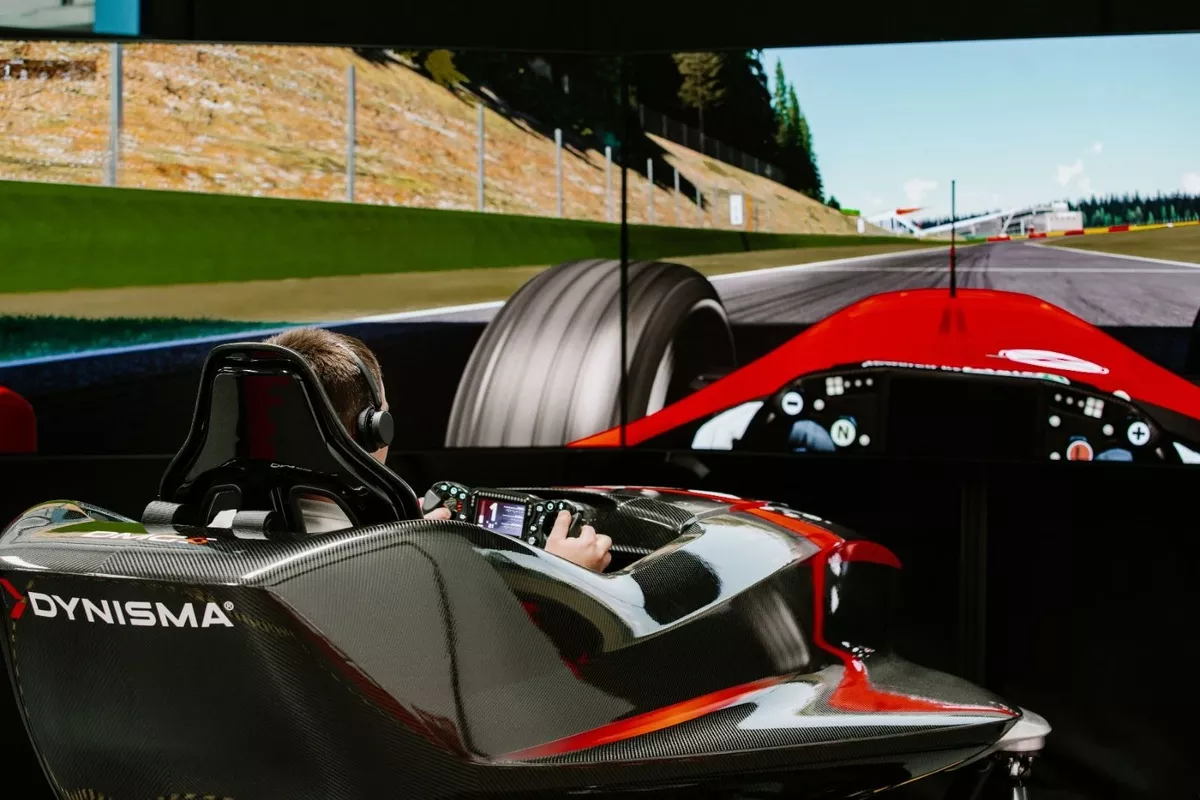
Formula 1 is often associated with cutting-edge engineering, advanced aerodynamics, and some of the world’s most talented drivers. However, behind every successful race weekend lies a crucial piece of technology that fans rarely see: the simulator.
As F1 teams continue searching for every possible competitive advantage, one company has rapidly become one of the most influential names in motorsport technology. Dynisma Motion Generators is emerging as a major force in the simulator industry, providing advanced motion simulation systems that are changing how teams prepare drivers, develop cars, and gain performance.
With the launch of its latest simulator platform, Dynisma is strengthening its position at the center of modern motorsport innovation.
WHY SIMULATORS HAVE BECOME ESSENTIAL IN FORMULA 1
Modern Formula 1 teams cannot simply test new parts on track whenever they want. Strict testing regulations, budget caps, and limited practice sessions mean teams must find alternative ways to develop their cars.
This is where simulators play a critical role.
Today’s simulators are far more sophisticated than video games. They replicate vehicle behavior, tire performance, suspension movement, aerodynamic characteristics, and circuit conditions with remarkable accuracy.
Drivers regularly spend countless hours in simulators before race weekends. Engineers also use them to evaluate setup changes, test upgrades, and predict race strategies.
In many cases, a significant percentage of a team’s development work happens virtually before a car ever reaches the track.
DYNISMA’S GROWING INFLUENCE ACROSS MOTORSPORT
Dynisma has quickly established itself as one of the leading companies in high-performance motion simulation.
The company’s technology focuses on delivering realistic motion feedback that closely mirrors what drivers experience inside an actual race car. This level of realism helps drivers adapt faster and allows engineers to gather more reliable data.
As motorsport increasingly relies on simulation-based development, companies capable of delivering highly accurate systems are becoming indispensable partners for racing organizations.
The launch of Dynisma’s latest simulator represents another step forward in the ongoing evolution of virtual vehicle testing.
THE COMPETITIVE ADVANTAGE OF BETTER SIMULATION
In Formula 1, tiny performance gains can determine championship outcomes.
A setup improvement worth just a few hundredths of a second per lap can be the difference between pole position and starting on the second row.
Because of this, teams are investing heavily in simulator technology.
A more accurate simulator allows drivers to:
- Learn circuits faster
- Test different setups efficiently
- Improve race preparation
- Adapt to changing conditions
- Refine driving techniques
Meanwhile, engineers can use simulator data to make informed decisions before arriving at a race weekend.
The result is better preparation, fewer surprises, and potentially improved on-track performance.
WHY SIMULATORS ARE MORE IMPORTANT THAN EVER
Formula 1’s current regulations have increased the value of simulation technology.
The cost cap limits spending in many areas, forcing teams to maximize efficiency. Every test session, engineering hour, and development decision must deliver value.
Simulators help teams reduce risk by identifying problems before expensive parts are manufactured.
They also allow teams to accelerate development cycles.
Instead of waiting weeks for track testing opportunities, engineers can immediately evaluate concepts in a virtual environment and make adjustments much faster.
This ability has become especially important during tight championship battles where development speed can influence title outcomes.
THE IMPACT ON DRIVERS
Modern F1 drivers are spending more simulator time than ever before.
Young drivers entering Formula 1 often arrive with extensive simulator experience, allowing them to adapt quickly to new machinery.
This trend is particularly visible among the sport’s newest generation of talent. Many rising stars have grown up using advanced simulation technology throughout their junior careers.
As simulator accuracy improves, the gap between virtual and real-world driving continues to shrink.
This creates a significant advantage for drivers who can effectively translate simulator performance into race-day results.
COULD SIMULATION SHAPE FUTURE CHAMPIONSHIPS?
There is growing evidence that simulator development could play an even larger role in future title battles.
As Formula 1 moves toward increasingly complex power units, sustainable technologies, and advanced vehicle systems, teams will rely heavily on simulation to understand performance characteristics.
The teams with the most effective simulator programs may gain a valuable edge over rivals.
In a championship often decided by fractions of a second, superior virtual development tools could influence everything from qualifying performance to race strategy execution.
CHALLENGES STILL REMAIN
Despite enormous technological progress, simulators are not perfect.
Drivers occasionally report differences between simulator behavior and real-world car performance. Factors such as tire degradation, weather conditions, track evolution, and driver feel can still be difficult to replicate perfectly.
Several experienced Formula 1 drivers have openly discussed situations where simulator findings did not fully translate to the racetrack.
This highlights the ongoing challenge for simulator manufacturers: closing the remaining gap between virtual and real-world performance.
Companies like Dynisma are focused on reducing these differences through improved motion systems and more sophisticated simulation models.
WHAT THIS MEANS FOR THE FUTURE OF FORMULA 1
The increasing importance of simulation reflects a broader transformation happening across Formula 1.
Technology is becoming just as important away from the track as it is on it.
Teams are investing in artificial intelligence, advanced data analytics, computational fluid dynamics, and simulation tools to gain every possible advantage.
Dynisma’s latest simulator launch demonstrates how rapidly this area of motorsport continues to evolve.
While drivers remain the stars of Formula 1, the technology supporting them is becoming more influential with every season.
FINAL THOUGHTS
Formula 1’s future will not be shaped solely by what happens on Sundays. Increasingly, races are being influenced by thousands of hours spent in highly advanced simulators long before cars reach the grid.
Dynisma’s growing presence within motorsport highlights the industry’s commitment to innovation and virtual development. As teams push for greater efficiency and performance under strict regulations, simulator technology is becoming one of the sport’s most valuable competitive weapons.
The next Formula 1 championship may not only be won by the fastest driver or the best car. It could also be won by the team with the most effective simulator program.
KEYWORDS:
Formula 1 simulator, Dynisma Motion Generators, F1 simulator technology, Formula 1 development, motorsport simulation, F1 engineering, racing simulators, Formula 1 innovation, F1 teams, motorsport technology
HASHTAGS:
#Formula1 #F1 #Motorsport #Dynisma #RacingTechnology