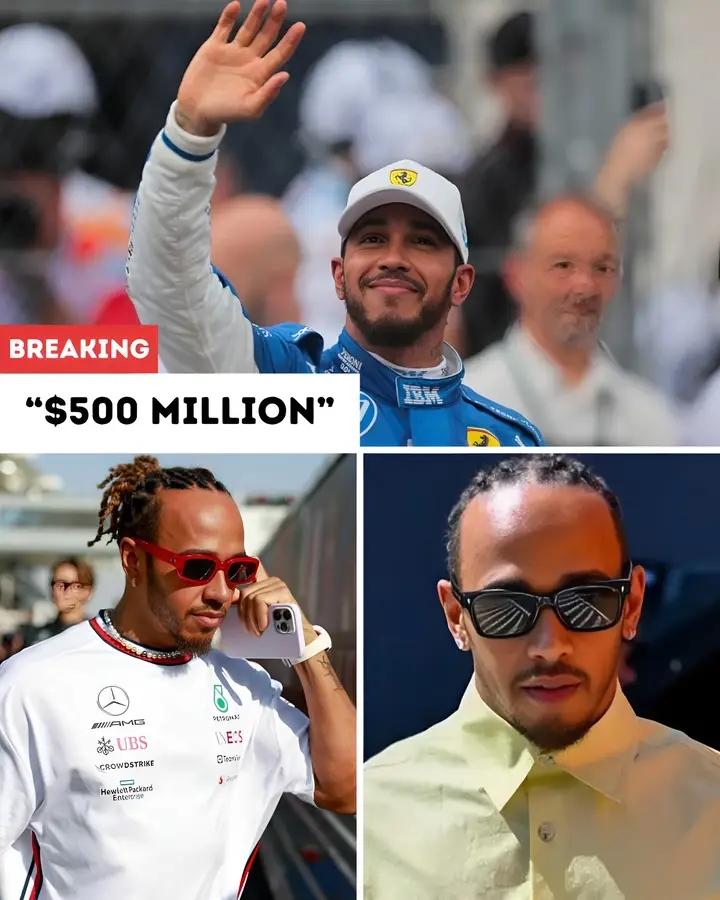
Seven-time Formula 1 World Champion Lewis Hamilton has built one of the most successful careers in motorsport history. With an estimated net worth of around $500 million, lucrative sponsorship deals, and a blockbuster move to Ferrari, Hamilton has achieved a level of financial success that few athletes will ever experience.
Yet despite being one of the richest drivers in Formula 1 history, Hamilton has recently expressed support for placing limits on extreme wealth accumulation—a stance that has sparked debate among fans, business leaders, and sports observers alike.
For many, the idea sounds surprising. Why would someone who has benefited enormously from professional sports and global endorsements advocate for restrictions on wealth? The answer reveals a broader conversation about inequality, responsibility, and the future of society that extends far beyond the Formula 1 paddock.
HAMILTON’S REMARKS GO BEYOND FORMULA 1
Hamilton’s comments are not simply about personal finances. Instead, they reflect a growing global discussion about the widening gap between the world’s richest individuals and everyone else.
Throughout his career, Hamilton has consistently used his platform to discuss issues beyond racing. Whether addressing diversity in motorsport, environmental concerns, or social justice initiatives, the British driver has never been afraid to speak on topics that divide opinion.
His latest remarks fit into that pattern.
Rather than celebrating unlimited wealth accumulation, Hamilton has suggested that there should be greater consideration of how enormous fortunes impact society and whether more resources should be directed toward solving larger global challenges.
For a driver worth hundreds of millions of dollars, that position naturally attracts attention.
HOW LEWIS HAMILTON BUILT A $500 MILLION FORTUNE
Hamilton’s financial success did not happen overnight.
After making his Formula 1 debut with McLaren in 2007, he quickly became one of the sport’s biggest stars. His move to Mercedes in 2013 transformed both his career and the modern F1 landscape.
The partnership produced six world championships, countless victories, and one of the most dominant eras the sport has ever witnessed.
Beyond race winnings and team salaries, Hamilton expanded his earning power through major endorsement partnerships with global brands. He also invested in fashion, entertainment, and business ventures that diversified his income streams beyond motorsport.
His recent move to Ferrari added another major chapter to his financial story. The Italian team remains one of the most iconic brands in world sport, and Hamilton’s arrival generated unprecedented commercial interest.
Today, his wealth places him among the richest athletes on the planet.
WHY HAMILTON’S COMMENTS ARE GENERATING DEBATE
The reaction to Hamilton’s stance has been mixed.
Supporters argue that his perspective demonstrates self-awareness. They believe that someone who has experienced extraordinary success firsthand may have valuable insights into how wealth can be distributed more effectively.
Critics, however, question whether wealthy individuals should advocate for limits on fortunes while continuing to benefit from the system that created their success.
The debate highlights a larger philosophical question: should there be a ceiling on personal wealth, or should individuals be free to accumulate as much as they can through talent, innovation, and hard work?
There is no simple answer, which is precisely why Hamilton’s comments have generated so much discussion.
WHAT THIS MEANS FOR HIS IMAGE AND BRAND
Interestingly, Hamilton’s remarks are unlikely to damage his commercial appeal.
In modern sports, athletes are increasingly expected to stand for something beyond performance alone. Fans often connect with personalities who express clear values and engage with social issues.
Hamilton has spent years cultivating an image that extends beyond racing. He is not just viewed as a Formula 1 driver but as a global celebrity, entrepreneur, and activist.
By speaking openly about wealth inequality, he reinforces a personal brand built around social awareness and responsibility.
While some fans may disagree with his viewpoint, others will appreciate his willingness to discuss uncomfortable topics.
THE FERRARI FACTOR MAKES HIS VOICE EVEN LOUDER
Hamilton’s move to Ferrari has dramatically increased the visibility of everything he says and does.
Ferrari is more than just a racing team—it is a global symbol of prestige, luxury, and sporting excellence. Every comment from a Ferrari driver receives intense scrutiny, especially when that driver happens to be one of the most recognizable athletes in the world.
As Hamilton continues his Ferrari journey, his opinions will likely attract even greater attention than they did during his Mercedes years.
That increased spotlight means discussions about wealth, sustainability, and social issues are likely to remain part of his public profile.
HOW THIS COULD INFLUENCE OTHER ATHLETES
One of the most interesting aspects of Hamilton’s comments is their potential impact on the wider sporting world.
Historically, many athletes avoided controversial social or political discussions out of concern for sponsorships and public backlash.
That trend is changing.
Modern sports stars increasingly use their influence to advocate for causes they believe in, regardless of potential criticism.
Hamilton has been one of the leading figures in that shift. His willingness to discuss wealth inequality could encourage other high-profile athletes to share their perspectives on economic and social issues as well.
WHAT IT MEANS FOR FORMULA 1
Formula 1 itself is often associated with luxury, exclusivity, and immense wealth.
The sport attracts billionaire team owners, multinational sponsors, and some of the highest-paid athletes in the world. As a result, conversations about wealth can sometimes feel particularly relevant within the F1 ecosystem.
Hamilton’s comments create an interesting contrast between Formula 1’s glamorous image and the social concerns he frequently highlights.
While his remarks are unlikely to influence the sport’s financial structure directly, they contribute to broader discussions about responsibility among elite athletes and global sporting organizations.
LOOKING AHEAD
Lewis Hamilton’s legacy will ultimately be defined by much more than his bank account.
His seven world championships, record-breaking performances, and impact on Formula 1 have already secured his place among the greatest drivers in motorsport history.
However, his willingness to engage with major social issues ensures that his influence extends far beyond the racetrack.
Whether fans agree with his views on wealth limits or not, Hamilton continues to demonstrate that modern athletes can shape conversations that reach well outside their sport.
As his Ferrari chapter unfolds, expect his voice to remain one of the most influential—not only in Formula 1 but in the wider world of sports, business, and society.
And if recent history is any indication, Lewis Hamilton will continue to spark debate both on and off the track.