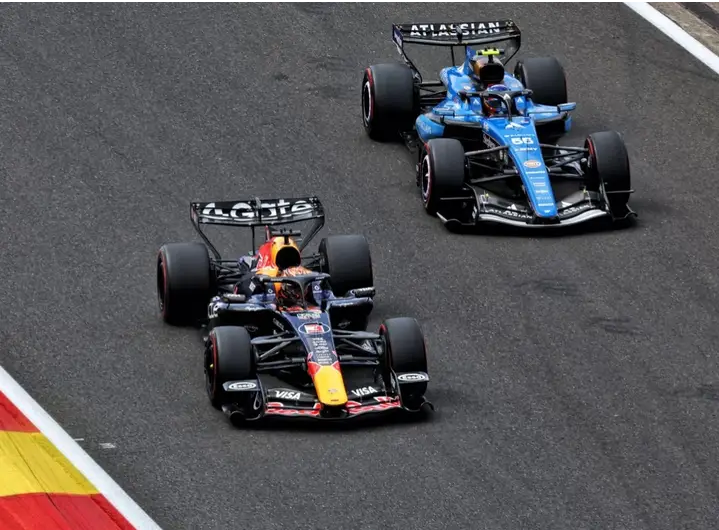
Formula 1 is once again under the spotlight as Carlos Sainz finds himself under investigation following qualifying at the Belgian Grand Prix. The Williams driver is being examined by FIA stewards for allegedly failing to slow sufficiently under double-waved yellow flags, one of the most serious safety-related regulations in motorsport.
While the outcome of the investigation remains uncertain, the case has the potential to reshape the Belgian Grand Prix starting grid and serve as another reminder of the FIA’s uncompromising stance on driver safety. In modern Formula 1, even a fraction of a second can separate success from disappointment, but safety regulations always take priority over lap times.
WHY DOUBLE-WAVED YELLOW FLAGS ARE TAKEN SO SERIOUSLY
Double-waved yellow flags represent one of the strongest warnings a driver can receive during a session. They indicate that there is a significant hazard on or near the circuit, such as a stranded car, debris, or marshals working close to the racing line.
Under FIA sporting regulations, drivers are expected to reduce their speed substantially and be prepared to stop if necessary. The purpose is straightforward: protect drivers, marshals, and recovery crews from potentially catastrophic accidents.
Unlike track limits or minor procedural infringements, yellow-flag violations are viewed primarily as safety issues. That is why the FIA consistently reviews telemetry, throttle traces, braking data, and onboard footage before reaching a verdict.
WHAT THE INVESTIGATION INVOLVES
According to the allegation, Sainz may not have slowed sufficiently while passing through a double-yellow sector during qualifying.
The stewards will carefully analyze multiple sources of evidence, including:
- Telemetry showing speed reduction.
- Throttle and brake application.
- GPS timing data.
- Onboard camera footage.
- Trackside video evidence.
- Information from race control.
The FIA typically compares a driver’s behavior before and during the yellow-flag zone to determine whether a meaningful reduction in speed occurred.
The investigation does not automatically mean Sainz committed an offense. It simply means officials believe the incident warrants closer examination before a final decision is made.
POSSIBLE PENALTIES IF SAINZ IS FOUND GUILTY
If the FIA concludes that Sainz breached the regulations, several penalties are available depending on the severity of the offense.
Possible sanctions include:
- A grid penalty for the Belgian Grand Prix.
- Deletion of the qualifying lap set during the yellow-flag period.
- A sporting reprimand.
- Penalty points on his FIA Super Licence.
- In particularly serious cases, additional sporting penalties.
Historically, Formula 1 has shown very little tolerance for drivers who fail to respect double-yellow flags because the consequences extend beyond competitive fairness—they directly affect safety.
WHY THIS COULD SHAKE UP THE STARTING GRID
Qualifying margins at Spa-Francorchamps are often incredibly tight, meaning even a small penalty can dramatically alter the starting order.
If Sainz receives a grid drop or loses a crucial qualifying lap, several drivers behind him would gain valuable positions. Those extra places can influence race strategy, tire management, and opportunities to score championship points.
For Williams, every point is becoming increasingly valuable in the Constructors’ Championship battle. Any setback could have significant implications as the midfield fight remains fiercely competitive throughout the season.
WHAT THIS MEANS FOR WILLIAMS
Williams has made encouraging progress during the 2026 Formula 1 season, with the team consistently fighting closer to the front of the midfield than many expected.
Sainz’s experience has played a major role in that progress, helping the team maximize race weekends while contributing valuable technical feedback.
A penalty would not erase the team’s recent improvements, but it could make Sunday’s race considerably more difficult. Starting further back at Spa often increases the risk of becoming trapped in midfield traffic, forcing teams to alter strategy and potentially compromising their chances of scoring points.
THE FIA’S CONSISTENT SAFETY MESSAGE
Over the past several seasons, the FIA has made it increasingly clear that safety violations will be judged with consistency regardless of a driver’s reputation or championship position.
Several high-profile drivers have previously received penalties for yellow-flag infringements, reinforcing the governing body’s determination to prioritize marshal and driver safety above competitive considerations.
That consistency helps maintain confidence in the regulations, even when decisions prove controversial among teams and fans.
COULD THIS AFFECT THE CHAMPIONSHIP PICTURE?
Although a single qualifying investigation may appear minor compared to a full championship campaign, Formula 1 titles are frequently decided by the smallest of margins.
Every grid position matters. Every point matters.
If Sainz loses ground because of a penalty, it could indirectly benefit rival teams fighting for valuable Constructors’ Championship points. As the season progresses, even seemingly isolated steward decisions can influence the competitive landscape.
FINAL VERDICT AWAITS
For now, Carlos Sainz remains under investigation, and no conclusions should be drawn until the FIA completes its review. The available evidence will determine whether the Williams driver complied with one of Formula 1’s most important safety regulations.
Whatever the verdict, the incident highlights the constant balance every Formula 1 driver must strike between extracting maximum performance and respecting safety procedures. At circuits as demanding as Spa-Francorchamps, split-second decisions are inevitable, but when double-waved yellow flags appear, safety always takes precedence over speed.
The FIA’s decision will not only determine Sainz’s immediate prospects for the Belgian Grand Prix but will also reinforce the standards every driver is expected to uphold whenever dangerous conditions arise on track.