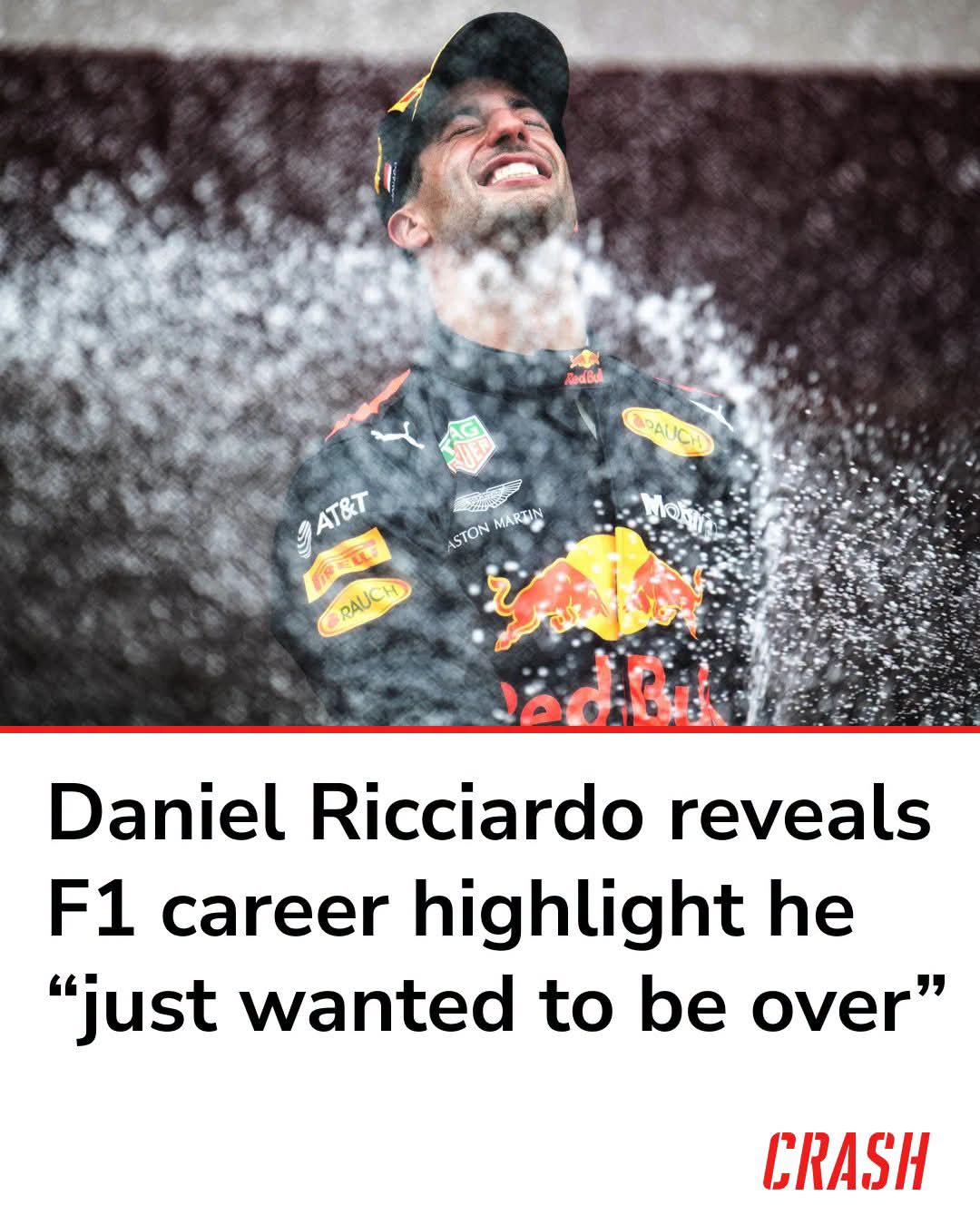
Daniel Ricciardo has never been one to hide behind polished corporate answers. The Australian, whose grin and “shoey” celebrations once lit up the Formula 1 paddock, recently sat down to revisit the moments that shaped his career. What emerged was a candid admission about one of his greatest triumphs: the 2018 Monaco Grand Prix. It was a victory he had long dreamed of, yet he approached the day itself with something close to dread.
Two years after his final race in Singapore, Ricciardo is in a reflective place. The eight-time race winner no longer carries the daily weight of performance pressure. That distance has allowed him to speak more openly about the emotional cost of chasing redemption on the sport’s most unforgiving street circuit.
THE SCAR FROM 2016 THAT NEVER FULLY HEALED
To understand why Monaco 2018 felt so heavy, you have to go back two years. In 2016 Ricciardo took pole position around the tight Monte Carlo streets and led the race with authority. A chaotic Red Bull pit stop — the wrong tyres prepared — handed the win to Lewis Hamilton. Ricciardo finished second. He has called it one of the darkest days of his career.
The pain was not just about losing a race. Monaco is the jewel. Winning there validates a driver in a way few other tracks can. Ricciardo had felt untouchable on those streets during that period of his career. The botched stop turned a near-certain highlight into a lingering wound. He later admitted that if he had never won Monaco after that, the disappointment would have stayed sharper for far longer.
THE PRESSURE OF A SECOND CHANCE
By 2018 the opportunity returned. Ricciardo was again on pole. The car was strong. History, however, was loud. Everyone around him — team, media, fans — understood the narrative. This was redemption weekend. Ricciardo felt it more than anyone.
He has described the day with striking honesty. He barely slept. He was not excited. He just wanted the race to be over. Well-meaning people offering luck and advice only added to the load. The higher the stakes of a second chance, the heavier the expectation became. What should have been pure anticipation turned into a mental grind before the lights even went out.
This is the part of elite sport that rarely makes the highlight reels. The public sees the podium. Drivers live with the weeks and months of internal pressure that precede it. Ricciardo’s willingness to admit he was not looking forward to one of the biggest races of his life humanises a figure many still remember primarily for the smile.
A WOUNDED CAR AND A MASTERCLASS IN SURVIVAL
The race itself delivered another layer of difficulty. Midway through, Ricciardo lost significant power. He was effectively racing with six gears instead of the usual seven or eight available on Monaco’s short straights. The car was wounded. Sebastian Vettel was closing. For more than 50 laps Ricciardo managed a compromised machine while protecting a lead that felt increasingly fragile.
He has said he hated nearly every lap of that race because of the issue. The outcome was everything he wanted. The process was exhausting. When the chequered flag finally fell, the dominant emotion was relief as much as joy. Two years of unfinished business were closed in the most dramatic fashion possible.
THE BELLY FLOP THAT BECAME LEGEND
Then came the celebration. Previous Red Bull winners at Monaco had performed flips into the team’s pool. Ricciardo decided against copying them. He wanted something that felt like him — a bit goofy, a bit irreverent. Inspired by a scene from the Jim Carrey film *Me, Myself & Irene*, he launched himself into a belly flop.
It was imperfect, joyful and instantly iconic. In that moment Ricciardo did more than celebrate a win. He reinforced the persona that made him one of the most popular drivers of his generation. Formula 1 is a serious, multi-billion-dollar business. Ricciardo consistently argued that it did not have to feel stiff. The pool dive, like the shoey, was his way of undoing a button on a very formal collar.
WHY THIS STORY STILL MATTERS IN 2026
Ricciardo’s reflection lands at a time when conversations about mental health and pressure in Formula 1 have become more open. Drivers today speak more freely about the psychological load of the calendar, the scrutiny and the relentless demand for results. Ricciardo’s experience shows that even a career highlight can carry dread when it is loaded with personal history and external expectation.
His story also highlights the value of personality in a sport that sometimes risks becoming overly corporate. Fans connected with Ricciardo because he allowed himself to be seen as human — capable of both ruthless racecraft and silly celebrations. That combination helped grow the sport’s audience during the Netflix *Drive to Survive* era and beyond.
For current and future drivers, there is a quiet lesson. Redemption arcs look clean from the outside. On the inside they are often messy, sleepless and full of self-doubt. Surviving that process, as Ricciardo did in Monaco, can produce some of the most meaningful moments of a career.
A CAREER NOW VIEWED WITH PRIDE RATHER THAN REGRET
Ricciardo left Formula 1 in 2024 after a difficult final chapter with the Red Bull junior team. The exit was not the fairytale ending many hoped for. In recent interviews he has spoken about the initial feelings of humiliation and the slow process of rebuilding a life outside the cockpit. Time has shifted his perspective. He now looks back on eight Grand Prix wins, 32 podiums and more than a decade at the highest level with genuine pride.
The 2018 Monaco victory sits near the top of that list, not because it was the most dominant or the most straightforward, but because it required him to confront the thing he feared and still deliver. That combination of vulnerability and resilience is what makes the story land so strongly years later.
Formula 1 will always produce spectacular racing. The drivers who stay with us longest are often the ones who let us see the cost of chasing those spectacles. Daniel Ricciardo’s admission that one of his greatest days began with dread does not diminish the achievement. It makes it more real — and, in the end, more impressive.