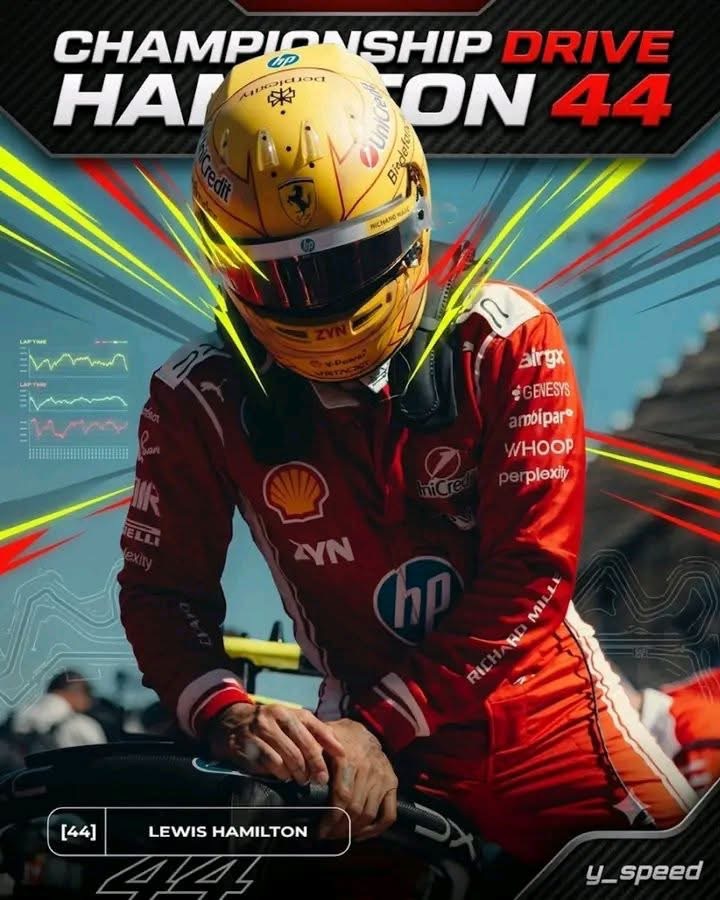
Charles Leclerc has revealed that his partnership with Lewis Hamilton at Ferrari is continuing to transform his approach to Formula 1, admitting that he has accumulated more notes than ever since the seven-time world champion joined the Scuderia. Despite being one of the most established drivers on the grid, Leclerc believes there is still an enormous amount he can learn from Hamilton, particularly when it comes to understanding car behaviour, analysing performance data and adapting to the unusual demands of the 2026 regulations. The Monegasque’s latest admission offers a fascinating insight into the relationship between Ferrari’s two drivers, showing that their rivalry is not simply about competing for victories but also about extracting valuable lessons from each other’s strengths.
The revelation is particularly significant because Leclerc has spent several years establishing himself as Ferrari’s leading driver, developing a reputation for exceptional qualifying speed, aggressive racing and an ability to extract impressive performance from difficult machinery. Hamilton, meanwhile, arrived at Ferrari with seven world championships, extensive experience across different regulations and a reputation for adapting his driving style to changing circumstances. Their partnership has therefore created an unusual situation in which two highly accomplished drivers are simultaneously competing against each other while benefiting from the experience and expertise available within the same garage. According to Leclerc, that relationship has become especially valuable during the 2026 season, when the latest generation of Formula 1 cars has forced drivers to rethink several familiar approaches.
LECLERC REVEALS HOW MUCH HE IS LEARNING FROM HAMILTON
Leclerc made it clear that Hamilton’s influence at Ferrari extends far beyond simply pushing him to perform better during race weekends. The Monegasque explained that studying his teammate’s data has become an important part of his preparation and analysis, particularly when Hamilton demonstrates exceptional speed or manages a difficult car in a way that Leclerc wants to understand.
“When I’m doing a good job, I still learn a huge amount from Lewis in just looking at the data and trying to understand the way he works and the way he just dealt with the car, because he’s incredibly good at it,” Leclerc explained.
That statement is particularly revealing because Leclerc is not suggesting that Hamilton only teaches him when Ferrari’s seven-time champion is clearly faster. Even during weekends when Leclerc believes he has performed strongly, he continues to identify opportunities to improve by examining Hamilton’s driving techniques and decisions.
The Monegasque also admitted that his notebook has become increasingly valuable since Hamilton arrived at Ferrari.
“There’s always something to take after each weekend. I’ve got my notebook with a lot of notes and probably more notes than ever since Lewis joined the team.”
For a driver already regarded as one of Formula 1’s most naturally talented competitors, that admission highlights the importance of continuous development. Leclerc understands that talent alone is not enough to remain competitive in a championship where technological changes, tyre management and technical understanding can determine the difference between winning and losing.
Hamilton’s experience provides Ferrari with another important source of information, and Leclerc appears determined to make the most of it.
WHY THE 2026 FORMULA 1 REGULATIONS ARE CHANGING EVERYTHING
Leclerc also explained that the 2026 regulations have forced drivers into unfamiliar situations, creating a learning environment unlike anything they have experienced during previous seasons.
The new generation of cars has introduced different technical demands, particularly concerning energy management, power delivery and the way drivers approach acceleration and corner exits. These changes have required competitors to adapt their driving styles rather than simply relying on techniques that worked successfully under previous regulations.
According to Leclerc, some of the approaches required by the current machinery are unusual and not necessarily enjoyable from a driver’s perspective.
“These cars are making us do things that we’ve never done before in our career,” he said.
The Ferrari driver believes that the experience could ultimately benefit competitors over the long term, even if the immediate adjustment is uncomfortable.
“I think for the versatility of the driver, this is always a good thing because in a career you’ve got to drive different cars in order to kind of add tools to your driving and being able to manage every situation.”
His comments highlight an important reality about Formula 1. The most successful drivers are often those who can adapt quickly when the sport changes its technical direction. A competitor who becomes too comfortable with one particular style of car can struggle when regulations force a different approach.
Leclerc’s willingness to embrace that learning process suggests that he sees the 2026 season as an opportunity to expand his abilities rather than simply a challenge to overcome.
LEWIS HAMILTON’S EXPERIENCE IS BECOMING A VALUABLE FERRARI ADVANTAGE
Hamilton’s arrival at Ferrari was always expected to bring enormous attention, but his influence on Leclerc may prove to be one of the most important long-term benefits of the partnership.
The British driver has competed under several different technical eras, experienced championship battles against some of the greatest names in the sport and developed a reputation for understanding how to extract performance from changing machinery.
That experience is particularly relevant during a season in which drivers must constantly adjust their approaches to energy deployment and car behaviour.
Leclerc’s comments suggest that Hamilton’s greatest contribution is not necessarily limited to the points he scores or the races he wins. His ability to analyse the car, recognise opportunities and respond to unfamiliar situations can also provide Ferrari with valuable information.
For Leclerc, the opportunity to study that process directly is an advantage that would be difficult to replicate outside the team.
There is also a psychological dimension to their partnership. Competing against a seven-time world champion every weekend creates an environment in which complacency becomes almost impossible. Hamilton’s presence forces Leclerc to maintain a high level of performance while also giving him a benchmark against which he can measure his own progress.
That combination of rivalry and learning could become one of Ferrari’s strongest assets as the team continues developing its machinery.
FERRARI’S INTERNAL BATTLE IS BECOMING MORE COMPETITIVE
The 2026 season has also produced a much closer contest between Ferrari’s two drivers compared with Hamilton’s difficult first campaign in red.
Both Leclerc and Hamilton have recorded one Grand Prix victory apiece, while Hamilton holds an eight-point advantage in the Drivers’ Championship according to the figures cited in the report.
That narrow difference reflects how competitive the partnership has become. Hamilton is no longer simply adjusting to Ferrari’s environment, while Leclerc is increasingly being challenged by a teammate who possesses extraordinary experience and technical understanding.
The result is a rivalry that could have significant consequences for Ferrari’s championship ambitions.
Neither driver can afford to assume that the other will automatically accept a supporting role, particularly when both have demonstrated the ability to win races. Their competition will inevitably create pressure within the team, but it can also encourage the kind of performance improvement Ferrari desperately needs.
The challenge for team principal Fred Vasseur will be ensuring that the rivalry remains productive rather than becoming a source of unnecessary conflict.
Leclerc’s willingness to acknowledge Hamilton’s influence is an encouraging sign that the relationship still contains considerable room for collaboration, even as their individual ambitions remain important.
WHY LECLERC’S ADMISSION COULD MATTER MORE THAN A SINGLE RACE RESULT
One of the most interesting aspects of Leclerc’s comments is that they reveal how Formula 1 drivers continue learning long after establishing themselves as elite competitors.
At 29, Leclerc is already an experienced driver with years of Ferrari experience behind him. Yet he has openly acknowledged that Hamilton continues to provide lessons that can improve his performance.
That attitude could prove especially important as Formula 1 moves deeper into its new technical era. The regulations are forcing competitors to reconsider how they manage their cars, and drivers who remain willing to learn could gain a decisive advantage.
Hamilton’s influence may also extend beyond Leclerc’s personal development. The data collected from both drivers gives Ferrari an opportunity to compare different approaches and identify which techniques produce the strongest results under specific conditions.
If the team can successfully combine Hamilton’s experience with Leclerc’s familiarity with Ferrari’s development process, the partnership could become considerably more effective.
The biggest advantage may therefore be the knowledge shared between the two drivers rather than simply the points they collect individually.
FERRARI’S CHAMPIONSHIP AMBITIONS REMAIN WITHIN REACH
Ferrari’s position in the 2026 Constructors’ Championship also makes the development of its driver partnership particularly important.
The Scuderia currently occupies second place, sitting 119 points ahead of Red Bull and McLaren according to the figures provided in the report. That advantage gives Ferrari a strong position in the battle for the runner-up spot, although the team will still be looking to improve its performance against Mercedes.
For Leclerc and Hamilton, the immediate objective will be converting their growing understanding of the car into stronger results during the remaining races.
The Mexican Grand Prix demonstrated how quickly Ferrari’s internal dynamics can become complicated when its drivers are fighting for positions on track. Hamilton and Leclerc’s collision and subsequent disagreement over the team’s approach exposed the difficulties of managing two competitive drivers with different racing instincts.
However, their willingness to learn from each other remains a potentially important strength.
Leclerc’s latest admission suggests that he recognises Hamilton as more than a teammate standing in his way. He sees the British driver as a source of knowledge capable of helping him become a more complete competitor.
That could ultimately be one of the most significant developments of their Ferrari partnership.
LECLERC AND HAMILTON COULD MAKE EACH OTHER BETTER IN 2027
The relationship between Leclerc and Hamilton is entering an interesting phase as Ferrari prepares for the next Formula 1 season.
Hamilton has already demonstrated that his experience remains valuable, while Leclerc continues to show that he is willing to study and improve rather than rely entirely on his established strengths.
If Ferrari can provide a competitive car and maintain a constructive environment between its drivers, their partnership could become one of the most formidable combinations on the grid.
Leclerc’s notebook may contain more lessons than ever, but the real question is how effectively he can translate those observations into results when the pressure rises.
For Hamilton, the challenge will be proving that his experience can help Ferrari return to championship-winning form while continuing to compete against one of the team’s most talented drivers.
For Ferrari, the potential reward is enormous: two race-winning drivers who are capable of pushing each other forward while sharing valuable technical knowledge.
And if Leclerc’s latest comments are anything to go by, the seven-time world champion’s influence inside Ferrari is far from finished. The Monegasque is still learning from Hamilton—and that could make their rivalry even more dangerous for the rest of Formula 1.