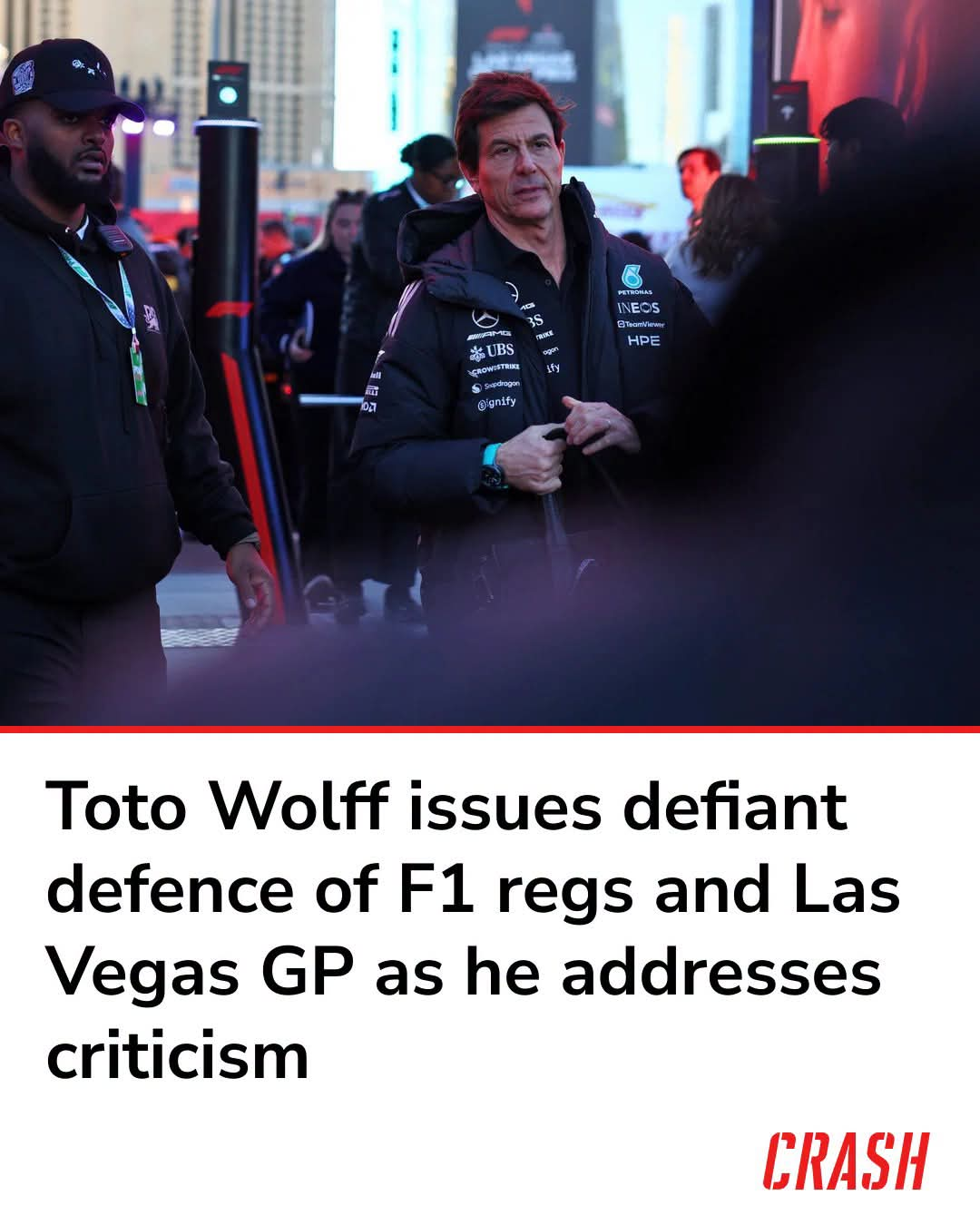
Mercedes team principal Toto Wolff has offered a fresh perspective on the Las Vegas Grand Prix, comparing the spectacular Formula 1 event to a combination of NASCAR, the Indianapolis 500 and traditional F1 racing.
Wolff’s comments come as the Las Vegas Grand Prix continues to attract attention, not only for its entertainment value and glamorous surroundings but also for the debate surrounding its place on the Formula 1 calendar.
Rather than dismissing the criticism directed at the event, the Mercedes boss has encouraged people to approach the race with an open mind and appreciate the different elements that make it unique.
His comparison highlights an important reality about modern Formula 1: the championship is increasingly trying to balance its traditional sporting identity with the demands of a rapidly expanding global entertainment industry.
TOTO WOLFF SAYS LAS VEGAS GRAND PRIX OFFERS SOMETHING DIFFERENT
The Las Vegas Grand Prix has become one of Formula 1’s most recognisable events since its introduction to the calendar in 2023.
Unlike many traditional circuits, the race takes place on a temporary street circuit that runs through the heart of Las Vegas, with famous landmarks, illuminated hotels and the city’s entertainment atmosphere providing an unmistakable backdrop.
For Wolff, the event should not necessarily be judged by the same standards as every other Grand Prix.
By describing it as a mixture of NASCAR, the Indianapolis 500 and Formula 1, he appears to recognise the different characteristics that make American motorsport attractive to fans.
NASCAR brings close racing and a strong entertainment culture, while the Indianapolis 500 represents one of the most historic and prestigious events in global motorsport.
Formula 1, meanwhile, contributes its technological sophistication, international competition and elite driver line-up.
Combining these elements creates an event with a distinct identity, even if it does not appeal to every traditional F1 supporter.
WHY THE LAS VEGAS GRAND PRIX DIVIDES FORMULA 1 FANS
The Las Vegas Grand Prix has generated considerable discussion since its arrival on the calendar.
Some fans appreciate the spectacle, the nighttime setting and the opportunity to introduce Formula 1 to a wider American audience.
Others remain concerned that the sport is placing too much emphasis on entertainment, celebrity appearances and commercial opportunities.
There are also legitimate sporting questions surrounding the event, including the challenges of racing on a temporary street circuit and the unusual cold conditions that can affect tyre performance.
These concerns demonstrate that the debate is not simply about whether Las Vegas looks impressive on television.
For traditional supporters, the defining qualities of Formula 1 remain competitive racing, technical innovation and the importance of circuit characteristics.
However, Formula 1’s commercial ambitions require it to reach audiences who may not have previously followed the championship.
This is where Las Vegas becomes particularly important.
The event provides an opportunity to attract new spectators while presenting Formula 1 as a major international sporting and entertainment attraction.
THE NASCAR AND INDY 500 CONNECTION EXPLAINS F1’S AMERICAN AMBITIONS
Wolff’s comparison is particularly interesting because NASCAR and the Indianapolis 500 have enormous cultural significance in the United States.
For decades, NASCAR has built its popularity around intense competition, passionate supporters and a distinctive sporting atmosphere.
The Indianapolis 500, meanwhile, is deeply connected to American motorsport history and remains one of the most prestigious races in the world.
Formula 1 has traditionally struggled to achieve the same level of mainstream popularity in the United States that it enjoys in several European markets.
However, that situation has changed significantly in recent years.
The arrival of the Las Vegas Grand Prix, alongside races in Miami and Austin, reflects a deliberate effort to strengthen F1’s American presence.
Wolff’s comments suggest that Formula 1 does not necessarily need to copy existing American motorsport traditions. Instead, it can borrow elements of their appeal while maintaining its own identity.
That distinction will be important as the championship continues expanding its commercial influence.
WHY WOLFF WANTS CRITICS TO REMAIN OPEN-MINDED
As one of the most influential figures in the paddock, Wolff understands that Formula 1 cannot afford to ignore its traditional supporters.
However, he also recognises that the championship must continue evolving if it wants to attract younger audiences and expand into new markets.
The Las Vegas Grand Prix represents that ambition.
Its location, presentation and international exposure make it different from traditional European races, but that does not automatically make it less valuable.
In fact, having events with different identities could help Formula 1 appeal to a wider variety of motorsport fans.
The challenge is ensuring that commercial growth does not come at the expense of the sporting product.
Ultimately, fans may be willing to accept more entertainment if the racing remains competitive and the event delivers genuine excitement.
WHAT WOLFF’S COMMENTS MEAN FOR THE FUTURE OF FORMULA 1
Wolff’s defence of Las Vegas reflects a broader transformation taking place within Formula 1.
The championship is no longer focused exclusively on established motorsport markets. It is increasingly positioning itself as a global entertainment property capable of attracting audiences far beyond traditional racing communities.
The United States is central to that strategy.
However, Formula 1 must be careful not to create a situation where the spectacle becomes more important than the competition.
The success of the Las Vegas Grand Prix should ultimately be measured by more than celebrity attendance, television audiences or commercial partnerships.
The quality of the racing, the atmosphere for spectators and the long-term enthusiasm of supporters will determine whether the event becomes a genuine classic.
There is also an opportunity for Formula 1 to use Las Vegas as an example of how different racing environments can coexist within one championship.
Traditional circuits can preserve the sport’s heritage, while modern street races can introduce new audiences to the competition.
CAN THE LAS VEGAS GRAND PRIX BECOME A FORMULA 1 CLASSIC?
The Las Vegas Grand Prix still has plenty to prove to some sections of the F1 fanbase.
Unlike historic venues such as Monaco, Monza and Silverstone, it does not have decades of racing history behind it.
Building that reputation will require time, memorable races and genuine sporting moments.
Wolff’s comparison provides an interesting way of looking at the event. Rather than expecting Las Vegas to replicate the atmosphere of a traditional European Grand Prix, supporters could appreciate it for the different experience it offers.
Nevertheless, entertainment alone will not guarantee long-term acceptance.
Formula 1 needs the circuit to produce memorable racing and give drivers opportunities to demonstrate their abilities.
If that happens consistently, the Las Vegas Grand Prix could gradually establish its own place in the championship’s history.
FINAL THOUGHTS
Toto Wolff’s comparison of the Las Vegas Grand Prix to NASCAR, the Indianapolis 500 and Formula 1 highlights the changing identity of modern motorsport.
His message to critics is straightforward: the event deserves to be judged with an open mind rather than dismissed simply because it looks different from traditional Grand Prix weekends.
There is little doubt that Las Vegas represents an important part of Formula 1’s American expansion strategy.
However, the championship must continue finding the right balance between entertainment, commercial success and competitive racing.
Ultimately, the strongest argument in favour of the Las Vegas Grand Prix will not come from its glamorous surroundings or high-profile guests.
It will come from the racing itself.
And if Las Vegas can consistently deliver exciting competition alongside its spectacular presentation, even some of its biggest critics may eventually change their minds.