The future of Max Verstappen could be creating an unexpected power struggle inside Mercedes, with reports suggesting that senior figures at the German manufacturer are increasingly questioning the decision to resist a move for the four-time Formula 1 world champion.
The speculation comes at a fascinating moment for Mercedes. The team entered the new 2026 regulations as one of the strongest forces on the grid, while Kimi Antonelli has emerged as a genuine championship contender alongside George Russell. Yet the possibility of Verstappen becoming available has continued to hover over the team, creating a difficult strategic question: should Mercedes trust its current young driver pairing, or make room for arguably the most accomplished driver of his generation?
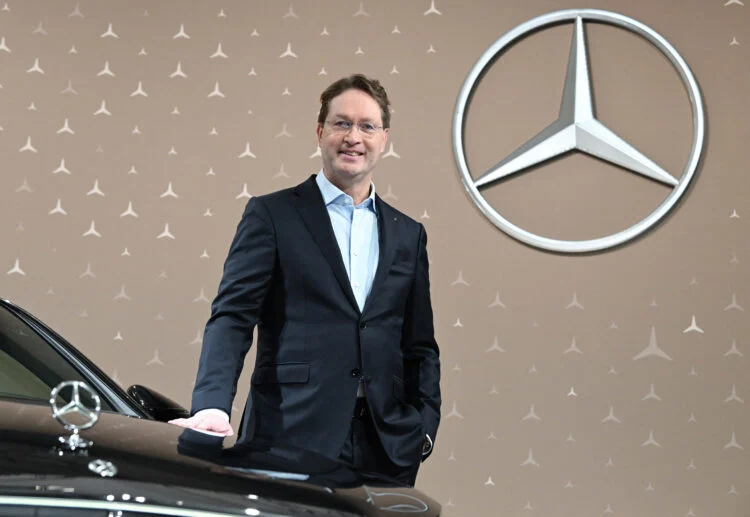
According to a report published by F1Oversteer, Mercedes chairman Ola Källenius is facing increasing pressure over the team’s position on Verstappen. The report suggests that the internal debate could have consequences for Mercedes’ future approach to the Dutchman. However, this should be treated as a developing report rather than confirmation of an imminent leadership change or a guaranteed Verstappen transfer.
WHY MAX VERSTAPPEN REMAINS SUCH A BIG ISSUE FOR MERCEDES
The Verstappen question is not new at Mercedes.
Toto Wolff has previously acknowledged Mercedes’ interest in the Red Bull driver, while the team has repeatedly been linked with the possibility of bringing him to Brackley. More recently, however, Wolff has publicly insisted that Mercedes is happy with its current driver combination of Russell and Antonelli and does not want to make unnecessary changes.
That position makes sense on paper.
Antonelli is only 19 and has already demonstrated the speed expected from a future world champion. Russell, meanwhile, has established himself as one of the most consistently competitive drivers on the grid. Replacing either driver with Verstappen would therefore represent a major gamble, particularly if Mercedes is already fighting for championships with its existing lineup.
But Formula 1 is rarely about simply choosing the best available option today.
It is about anticipating where the sport will be two, three or five years from now.
That is where Verstappen becomes almost impossible to ignore.
MERCEDES MAY BE ASKING THE BIGGEST QUESTION IN F1
From a purely performance perspective, signing Verstappen would be extremely difficult to reject.
The Dutchman has already demonstrated that he can extract championship-winning performances from different generations of Red Bull machinery. If Mercedes believes its technical organization can consistently produce title-winning cars, putting Verstappen behind the wheel could potentially create the most formidable driver-team combination on the grid.
The counterargument is equally compelling.
Mercedes has invested heavily in Antonelli, and the Italian represents the kind of long-term project that manufacturers traditionally want to build around. Pairing him with Russell also gives the team two drivers who understand the organization’s culture and have grown within its system.
Bringing Verstappen into that environment could disrupt the balance.
The biggest question is therefore not whether Verstappen is good enough for Mercedes. He obviously is.
The question is whether Mercedes believes the opportunity cost of not signing him is greater than the potential disruption his arrival could cause.
THE RUSSELL AND ANTONELLI FACTOR
The current Mercedes lineup is arguably the strongest reason for the team to stay out of the Verstappen market.
Russell has been part of Mercedes’ long-term plans for years, and the team has already placed significant faith in his ability to lead the organization into the future. Antonelli, meanwhile, is viewed as one of the sport’s most exciting young talents.
Recent 2026 championship developments have only increased the pressure on the pairing. Mercedes has enjoyed a highly competitive campaign, although its advantage has not been completely secure. Reuters reported that McLaren’s Lando Norris ended Mercedes’ run of 10 consecutive qualifying poles at the Hungarian Grand Prix, while Antonelli remained a major championship figure despite receiving a grid penalty.
That creates an interesting dilemma.
If Antonelli is genuinely capable of winning the world championship, removing him to accommodate Verstappen would make little sense. The same argument applies to Russell if he continues to deliver strong results.
However, if Mercedes begins to believe that neither driver can consistently beat Verstappen over a full season, the pressure from the board could become much more difficult to resist.
THE CHAMPIONSHIP COULD CHANGE THE ENTIRE CONVERSATION
The outcome of the 2026 championship could ultimately determine how seriously Mercedes revisits the Verstappen question.
If Antonelli wins the title, Mercedes will have a powerful argument for maintaining its current structure. The team would have proven that its young driver program can produce a world champion without recruiting an established superstar.
If Russell wins, the case for stability would also become stronger.
But if Mercedes loses the championship despite having the fastest car, the discussion could quickly shift.
Imagine a scenario in which Verstappen remains competitive at Red Bull while Mercedes’ drivers split points between themselves. Suddenly, the argument for signing the Dutchman becomes much more persuasive.
This is why driver lineups cannot be judged solely by individual race results. The strategic value of Verstappen lies partly in his ability to consistently convert a championship-caliber car into maximum points.
THE BIGGEST OBSTACLE MAY NOT BE MONEY
Interestingly, reports earlier this month suggested that Mercedes and Verstappen’s camp had discussed a potential move but that contract length became a significant sticking point.
According to the report, Verstappen was reportedly willing to accept a reduced salary of around €50 million per year, but wanted a three-year commitment. Mercedes has traditionally preferred shorter-term flexibility, with its current driver contracts structured around shorter deals and options.
If accurate, that detail reveals just how complicated the negotiations could be.
Verstappen is not simply looking for the highest salary.
He would want guarantees about Mercedes’ long-term competitiveness, technical direction and commitment to winning championships. Mercedes, on the other hand, would want to retain the flexibility to manage its driver program and avoid being locked into an expensive long-term commitment.
That is a classic F1 power struggle.
The driver wants security.
The team wants flexibility.
And the manufacturer wants to make sure its investment produces championships.
WHAT THIS MEANS FOR TOTO WOLFF
Any internal disagreement over Verstappen would inevitably put the spotlight on Toto Wolff.
Wolff has been one of the most influential figures in modern Formula 1, helping Mercedes dominate the sport during the turbo-hybrid era. His decision-making has generally been defined by long-term thinking rather than emotional reactions to individual results.
That makes the Verstappen situation particularly intriguing.
If Wolff continues to back Russell and Antonelli, he is effectively betting on Mercedes’ own development system. If the board begins pushing for Verstappen, the debate becomes much bigger than one driver signing.
It becomes a question of who ultimately controls Mercedes’ sporting strategy.
The important point, however, is that reports of pressure on senior executives should not automatically be interpreted as evidence that someone is about to be removed. Boardroom disagreements and strategic debates are common within major manufacturers, particularly when billions of dollars and global brand reputation are involved.
For now, the Verstappen speculation appears to be more about Mercedes’ future direction than an immediate change in leadership.
VERSTAPPEN’S RED BULL FUTURE ADDS ANOTHER LAYER
The situation is also complicated by Verstappen’s relationship with Red Bull.
While he remains tied to the team beyond the immediate future, reports have continued to discuss performance-related exit mechanisms that could potentially give him greater freedom depending on championship circumstances. That possibility has ensured that Mercedes cannot completely ignore the situation, even if the team publicly insists that it is happy with its current drivers.
For Red Bull, that creates a significant strategic challenge.
The team cannot simply assume Verstappen will remain forever, particularly if Mercedes continues to produce competitive cars under the new regulations.
For Mercedes, meanwhile, the temptation is obvious.
If Verstappen ever becomes genuinely available, the opportunity may not come around again.
MY VERDICT AND PREDICTION
My view is that Mercedes should not rush into signing Max Verstappen simply because he is available.
The team has something many F1 organizations would desperately want: two highly talented drivers who are already delivering at the front of the grid. Disrupting that structure could create more problems than it solves.
However, Mercedes would be making a mistake if it completely closed the door.
The smart strategy would be to maintain a strong relationship with Verstappen’s camp while allowing the 2026 championship to provide more evidence. If Antonelli establishes himself as a genuine title winner and Russell continues to perform at the highest level, Mercedes can confidently stay with its current lineup.
But if the team falls short when it has the dominant machinery, the pressure to reconsider Verstappen will become enormous.
My prediction is that the Verstappen-Mercedes story will continue throughout the next driver-market cycle, regardless of whether a deal eventually happens. The more competitive Mercedes becomes, the more attractive the team will be to Verstappen. And the more successful Antonelli and Russell become, the stronger Mercedes’ argument for keeping them will be.
That makes this a fascinating battle between proven greatness and future potential.
THE BIGGER PICTURE FOR FORMULA 1
The real significance of this story goes beyond one potential driver transfer.
Formula 1 is entering an era where manufacturers are becoming increasingly strategic about their long-term investments. Mercedes has already demonstrated that it can build a competitive car under the latest regulations, while Verstappen remains one of the few drivers capable of changing the balance of power almost single-handedly.
If Mercedes ultimately signs him, the consequences could be enormous.
A Verstappen-Mercedes partnership could reshape the championship fight, potentially creating a new superteam at exactly the moment when McLaren, Ferrari and Red Bull are all fighting to establish their own dominance.
If Mercedes refuses the opportunity and Antonelli or Russell goes on to become a world champion, the decision could instead be remembered as one of the smartest examples of a team trusting its own talent.
Either way, the debate is unlikely to disappear.
For now, Mercedes has publicly backed its current driver lineup. But Formula 1 has a long history of proving that today’s certainty can become tomorrow’s negotiation.
And if Max Verstappen becomes available, the pressure inside Mercedes may become impossible to ignore.
Note: The reported boardroom pressure is based on current media reporting and has not been independently confirmed by Mercedes. The team has publicly stated that it is happy with George Russell and Kimi Antonelli and does not currently want to change its lineup.