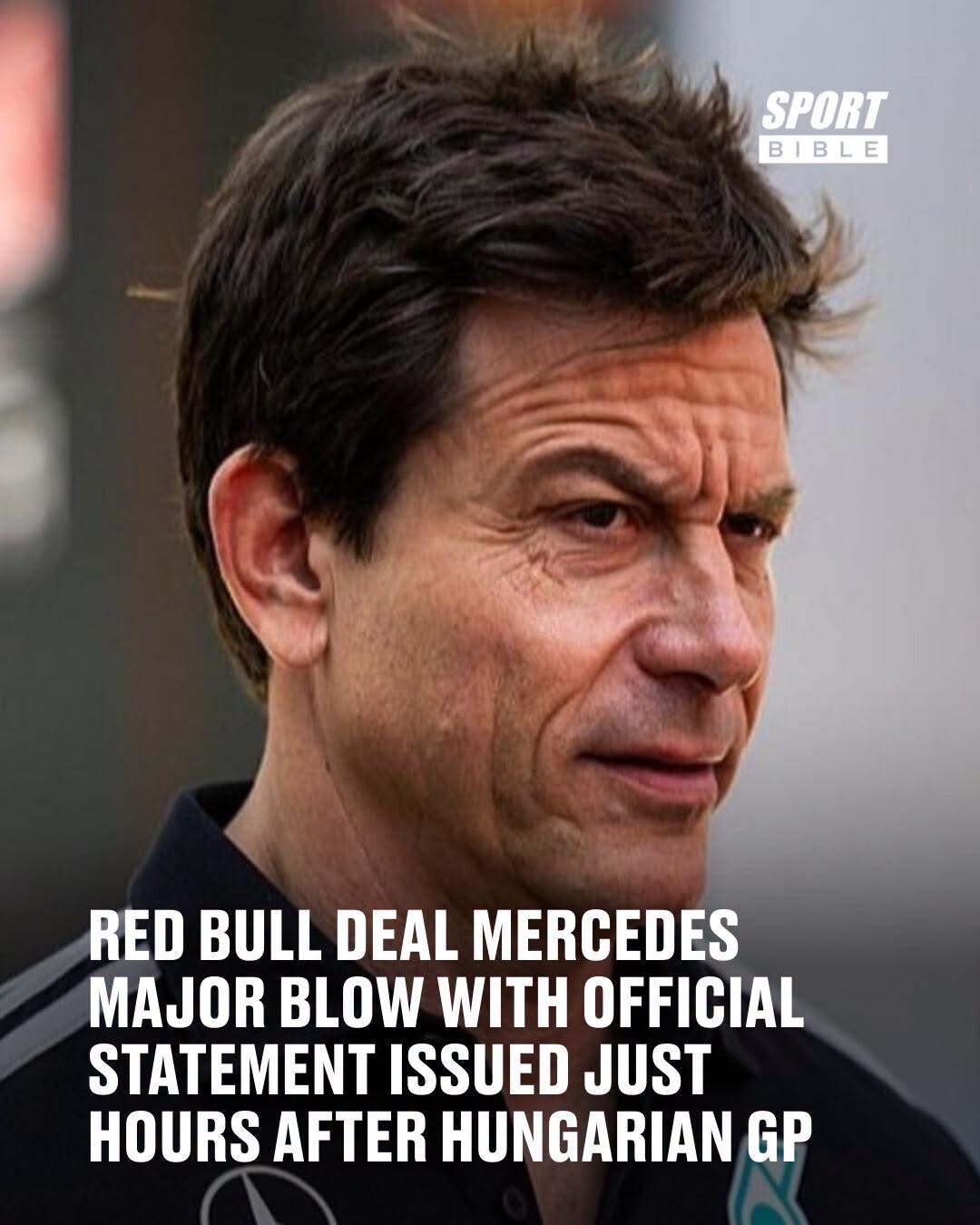
Red Bull Racing wasted little time making headlines after the 2026 Hungarian Grand Prix, announcing one of the most significant off-track moves of the Formula 1 season. Just hours after the checkered flag fell at the Hungaroring, the Milton Keynes-based outfit confirmed the appointment of one of Mercedes’ most respected talent developers, Gwen Lagrue, in a move that could shape the future of Red Bull’s driver academy for years to come.
While the Hungarian Grand Prix delivered drama on the circuit, Red Bull’s latest signing may prove to be equally important in the long run. By securing the services of the man widely credited with identifying several of Mercedes’ brightest stars, including championship leader Kimi Antonelli, Red Bull has reinforced its commitment to building the next generation of Formula 1 champions.
RED BULL APPOINTS ONE OF FORMULA 1’S LEADING TALENT SCOUTS
Red Bull officially confirmed that Gwen Lagrue will become Director of the Red Bull Junior Programme beginning in 2027. Reporting directly to Team Principal Laurent Mekies, Lagrue takes over leadership of one of Formula 1’s most successful young driver academies following Helmut Marko’s retirement in 2025.
The appointment represents far more than a routine staffing change.
Over the past decade, Lagrue has established a reputation as one of motorsport’s finest talent evaluators. During his 11-year spell at Mercedes, he played a key role in identifying and nurturing several promising drivers, including George Russell and Kimi Antonelli, who has rapidly emerged as one of Formula 1’s brightest young stars.
His arrival signals Red Bull’s intention to maintain its reputation as the sport’s premier developer of elite racing talent.
WHY THIS IS A MAJOR LOSS FOR MERCEDES
Although Mercedes remains one of Formula 1’s strongest organizations, losing Lagrue represents the departure of a figure whose influence extended far beyond recruitment.
Talent identification has become one of the most valuable competitive advantages in modern Formula 1. Spotting future champions before rival teams can secure them often determines long-term success, especially as the cost cap limits opportunities to outspend competitors in other areas.
Lagrue’s work helped build Mercedes’ modern junior structure and contributed to the development of drivers who now compete at the highest level.
His ability to recognize potential at an early age was perhaps best illustrated by his role in discovering Antonelli when the Italian was just 11 years old. Antonelli’s rapid rise through junior categories and current position at the top of the Drivers’ Championship only strengthens Lagrue’s reputation as an exceptional judge of talent.
Replacing that experience will not be easy for Mercedes.
RED BULL IS INVESTING IN ITS FUTURE, NOT JUST ITS PRESENT
For Red Bull, this appointment reflects a broader long-term strategy rather than an immediate performance upgrade.
The team’s junior academy has consistently produced Formula 1 race winners and world-class drivers over the past two decades. Max Verstappen, Daniel Ricciardo, Carlos Sainz, Alex Albon, Pierre Gasly, Yuki Tsunoda, Liam Lawson, and Isack Hadjar all benefited from Red Bull’s development pathway before reaching Formula 1.
With Helmut Marko stepping away last year, finding someone capable of continuing that legacy became one of the organization’s highest priorities.
Laurent Mekies emphasized exactly that in Red Bull’s official announcement, describing Lagrue as one of Formula 1’s leading talent developers and highlighting the academy’s importance to the team’s long-term success.
Rather than rebuilding the system, Red Bull appears focused on evolving an already successful model by placing one of the industry’s most respected figures at its helm.
LAGRUE EMBRACES A NEW CHALLENGE
After more than a decade with Mercedes, Lagrue explained that he felt the time was right for a fresh opportunity.
He described the Red Bull Junior Programme as one of motorsport’s most respected development systems and expressed enthusiasm about helping shape its next chapter.
His comments suggest he views the position not simply as a career move but as an opportunity to influence Formula 1’s future by identifying and developing the next generation of race winners and world champions.
That challenge aligns perfectly with Red Bull’s philosophy of investing in youth rather than relying solely on experienced stars.
MERCEDES RESPONDS WITH CLASS
Despite losing a key member of its leadership team, Mercedes handled the announcement with professionalism.
The Silver Arrows publicly thanked Lagrue for his years of service, praising his contribution to rebuilding the Mercedes junior programme and acknowledging the role he played in developing both George Russell and Kimi Antonelli.
Rather than expressing disappointment, the team wished him success in his new role while emphasizing the strong working relationship they had built over the years.
Such a respectful farewell reflects the close-knit nature of Formula 1, where competition on the track often coexists with mutual respect behind the scenes.
WHAT THIS MEANS FOR THE FUTURE OF FORMULA 1
The significance of Lagrue’s appointment may not become fully apparent for several years.
Unlike a star driver’s arrival or a major aerodynamic upgrade, investing in young talent is a long-term strategy whose rewards often emerge gradually. Drivers entering karting or Formula Regional today could eventually become Formula 1 race winners under Red Bull’s guidance later in the decade.
For Red Bull, strengthening its junior programme ensures a continuous pipeline of talent capable of replacing departing drivers and sustaining championship ambitions well into the future.
For Mercedes, the challenge now becomes identifying a successor capable of maintaining the high standards established during Lagrue’s tenure.
RED BULL CONTINUES TO THINK SEVERAL YEARS AHEAD
Formula 1 success is built on more than designing the fastest car.
The sport’s most successful organizations understand that championships are also won through strategic planning, technical innovation, and talent development. Red Bull’s latest recruitment demonstrates that philosophy perfectly.
While rivals focus on maximizing results in the current championship battle, Red Bull has simultaneously strengthened one of the foundations that has underpinned its dominance for years.
The immediate headlines may belong to Lando Norris’ victory in Hungary and Max Verstappen’s impressive second-place finish, but Red Bull’s biggest victory of the weekend may ultimately have come away from the racetrack.
If Gwen Lagrue can replicate at Red Bull the same success he enjoyed at Mercedes, this appointment could shape the Formula 1 grid for the next decade, ensuring Red Bull remains one of the sport’s leading producers of world-class driving talent long after the current generation has moved on.