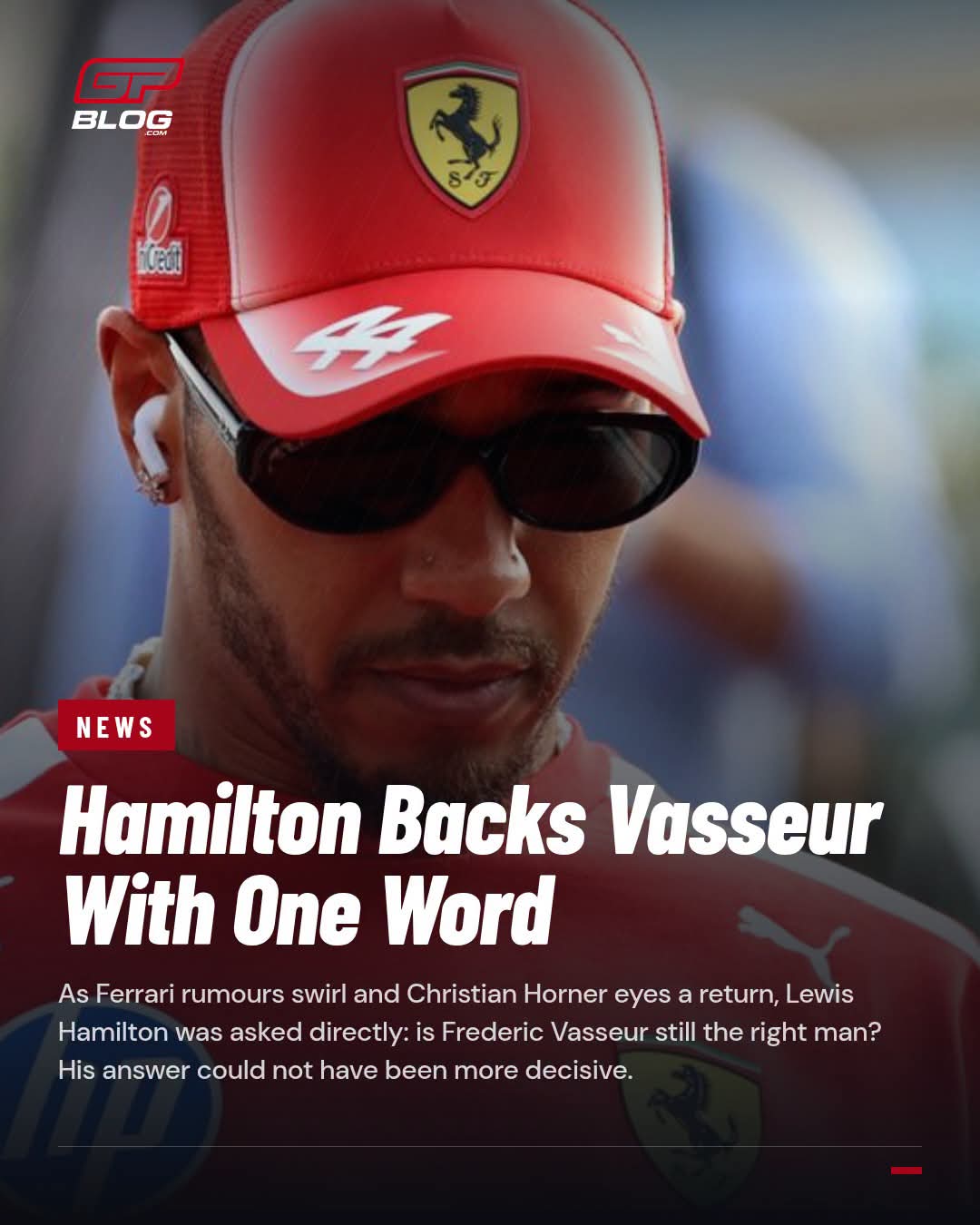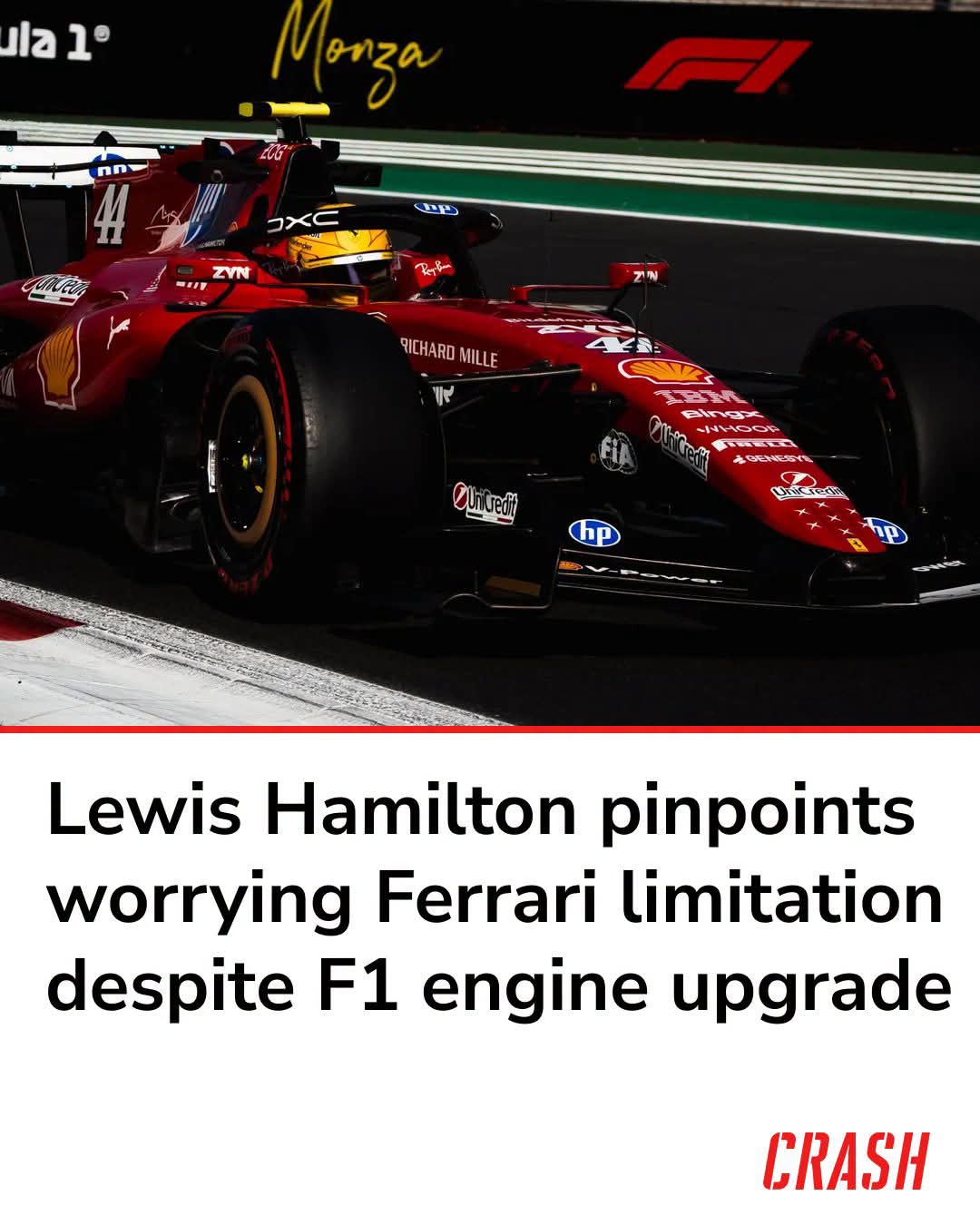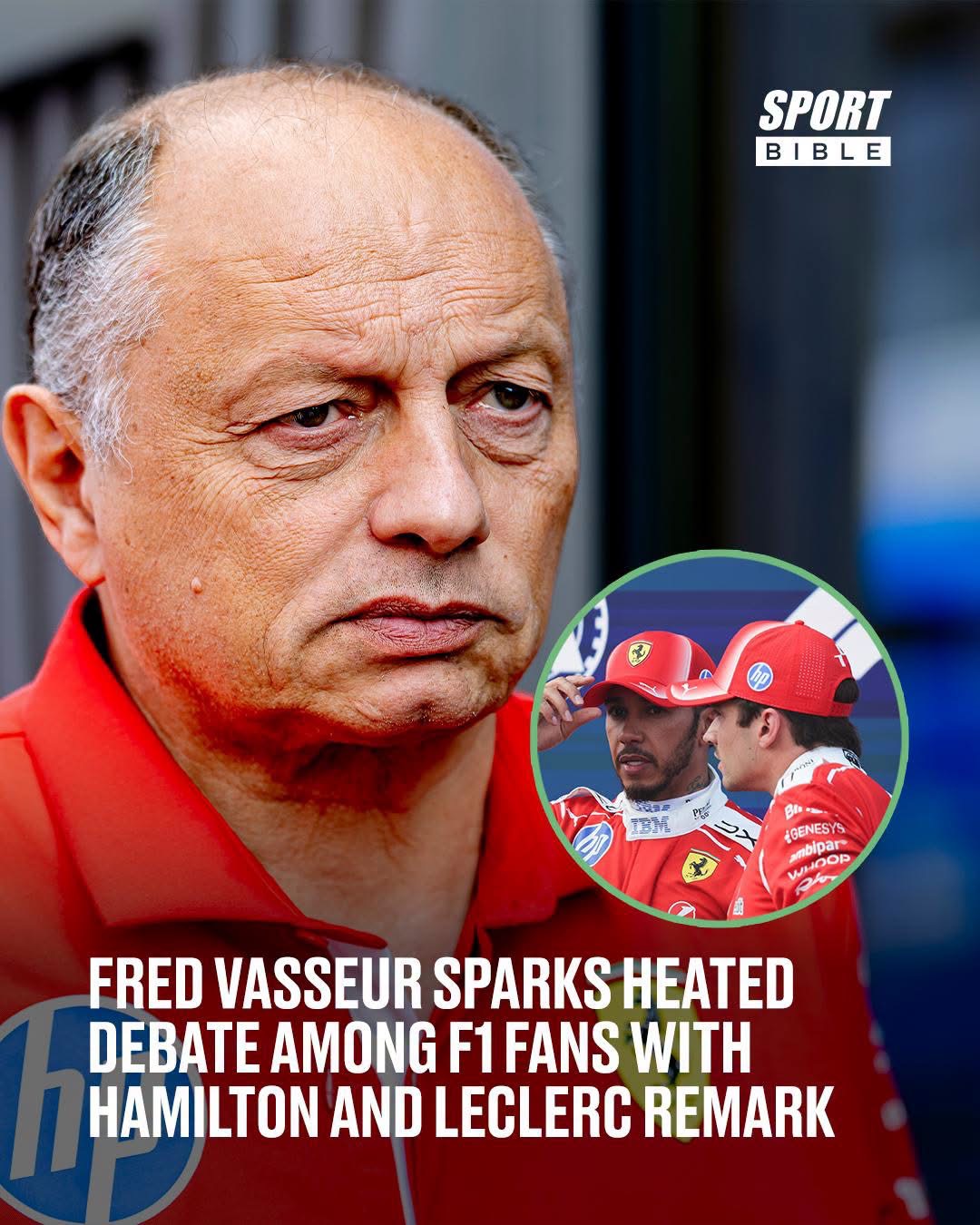
Ferrari Team Principal Fred Vasseur has found himself at the center of a heated Formula 1 debate after explaining why the Scuderia refused to alter the finishing order between Lewis Hamilton and Charles Leclerc at the 2026 Hungarian Grand Prix. His comments have divided Ferrari supporters, with some believing the team missed a crucial opportunity to strengthen Hamilton’s championship challenge, while others argue Ferrari made the only fair decision.
The controversy has reignited one of Formula 1’s oldest questions: should a team prioritize its highest-placed championship contender, or allow both drivers to race on equal terms? As Ferrari continues its pursuit of Mercedes in both championships, the discussion could become increasingly important as the season progresses.
A COSTLY PENALTY CHANGED FERRARI’S FINAL RESULT
The Hungarian Grand Prix proved to be a frustrating afternoon for Ferrari despite showing promising pace throughout the weekend.
Charles Leclerc started near the front and initially looked capable of fighting for a podium, while Lewis Hamilton recovered strongly after serving a three-place grid penalty. The seven-time world champion displayed impressive race pace, climbing into second place after Oscar Piastri’s retirement and briefly putting himself in position for one of Ferrari’s best results of the season.
However, Ferrari’s decision to pit Hamilton during the late Virtual Safety Car proved costly. Although fresh soft tyres appeared to offer a strategic advantage, the Briton lost valuable track position and was later handed a five-second time penalty for exceeding the pit lane speed limit by just 0.1 km/h.
That seemingly tiny mistake dropped Hamilton behind his teammate in the final classification, leaving Leclerc fourth and Hamilton fifth despite the Briton having spent much of the race ahead.
WHY FERRARI REFUSED TO SWAP THE DRIVERS
After the race, Vasseur addressed the situation that quickly became one of the biggest talking points of the weekend.
Asked why Ferrari did not instruct Leclerc to slow down and allow Hamilton to retain fourth place after the time penalty, Vasseur reportedly explained that doing so would have been unfair to Leclerc.
From Ferrari’s perspective, Leclerc had earned his finishing position on merit. Asking him to sacrifice points because of Hamilton’s own pit-lane speeding penalty would have punished one driver for an error committed by another.
It was a stance based on sporting fairness rather than championship calculations—a philosophy Ferrari has often attempted to maintain when both of its drivers remain competitive.
Yet not everyone agreed with that approach.
THE CHAMPIONSHIP STANDINGS HAVE FUELED THE DEBATE
The disagreement among Ferrari fans largely centers on the championship picture.
Following the Hungarian Grand Prix, Hamilton sits second in the Drivers’ Championship with 169 points, trailing Mercedes rookie Kimi Antonelli, who leads the standings on 219 points. George Russell occupies third, while Leclerc remains fourth with 138 points.
Because Hamilton is Ferrari’s highest-ranked driver and closest challenger to Antonelli, many supporters believe the team should already be focusing its efforts on maximizing Hamilton’s title chances.
Those fans argue that every point could become decisive later in the season, particularly if Ferrari continues closing the performance gap to Mercedes.
Others strongly disagree.
They point out that Leclerc has also suffered significant misfortune this season, including reliability issues that cost him valuable points in Monaco and Spain. Without those setbacks, the championship gap between Ferrari’s two drivers could have been much smaller.
From that perspective, imposing team orders halfway through the season would have been both premature and unfair.
FERRARI FACES A DELICATE BALANCING ACT
Managing two elite drivers has always been one of Formula 1’s greatest leadership challenges.
Hamilton arrived at Ferrari with seven world championships and the expectation of fighting for another title. Leclerc, meanwhile, remains one of the fastest qualifiers on the grid and has spent years carrying Ferrari’s championship ambitions.
Both drivers expect equal opportunities.
Vasseur’s handling of the situation suggests Ferrari is not yet ready to declare an official number-one driver. Maintaining harmony inside the garage may ultimately prove more valuable than gaining a single extra point in July.
However, Formula 1 history shows that championship-winning teams often shift strategy once the title battle becomes clearer.
If Hamilton remains Ferrari’s only realistic championship contender later in the season, pressure for more decisive team orders is almost certain to increase.
WHAT THE HUNGARIAN GRAND PRIX REVEALED ABOUT FERRARI
Beyond the debate over finishing positions, Hungary offered encouraging signs for Ferrari’s overall competitiveness.
The SF-26 demonstrated genuine race pace capable of challenging McLaren, Mercedes, and Red Bull throughout the weekend. Hamilton’s recovery drive and Leclerc’s speed during key phases of the race showed Ferrari possesses one of the strongest overall packages on the grid.
The disappointment came from execution rather than outright performance.
A questionable Virtual Safety Car strategy, Hamilton’s pit-lane speeding penalty, and missed opportunities ultimately prevented Ferrari from converting pace into a podium finish.
Those operational details continue to separate championship-winning teams from consistent race contenders.
COULD TEAM ORDERS BECOME INEVITABLE?
For now, Ferrari appears committed to treating Hamilton and Leclerc equally whenever possible.
That approach protects team morale while avoiding accusations of favoritism. It also reflects confidence that both drivers remain capable of delivering victories when circumstances align.
But Formula 1 seasons have a habit of reaching turning points.
Should Hamilton continue to outscore Leclerc over the coming races while remaining Ferrari’s closest challenger to Antonelli, the team’s philosophy may come under increasing scrutiny. At some stage, every title contender must decide whether individual fairness outweighs championship strategy.
Red Bull did it during Sebastian Vettel’s era. Mercedes did it with Hamilton during several championship campaigns. Ferrari may soon face the same difficult decision.
LOOKING AHEAD TO THE SECOND HALF OF THE SEASON
The Hungarian Grand Prix may ultimately be remembered less for the finishing order and more for the questions it raised about Ferrari’s championship approach.
Vasseur’s refusal to interfere demonstrated consistency in team management, but consistency alone does not guarantee championships. Every lost point becomes more significant as the calendar progresses, especially with Mercedes continuing to lead both title races.
The upcoming rounds will reveal whether Ferrari can continue balancing equal treatment with championship ambition—or whether circumstances eventually force the Scuderia to choose a clear leader.
One thing is already certain: Hamilton and Leclerc remain one of Formula 1’s strongest driver pairings, but managing two world-class competitors under the same roof will continue to test Ferrari’s leadership. If the Scuderia genuinely intends to end its long wait for championship glory, every strategic decision—including those involving its drivers—will face intense scrutiny until the final race of the season.