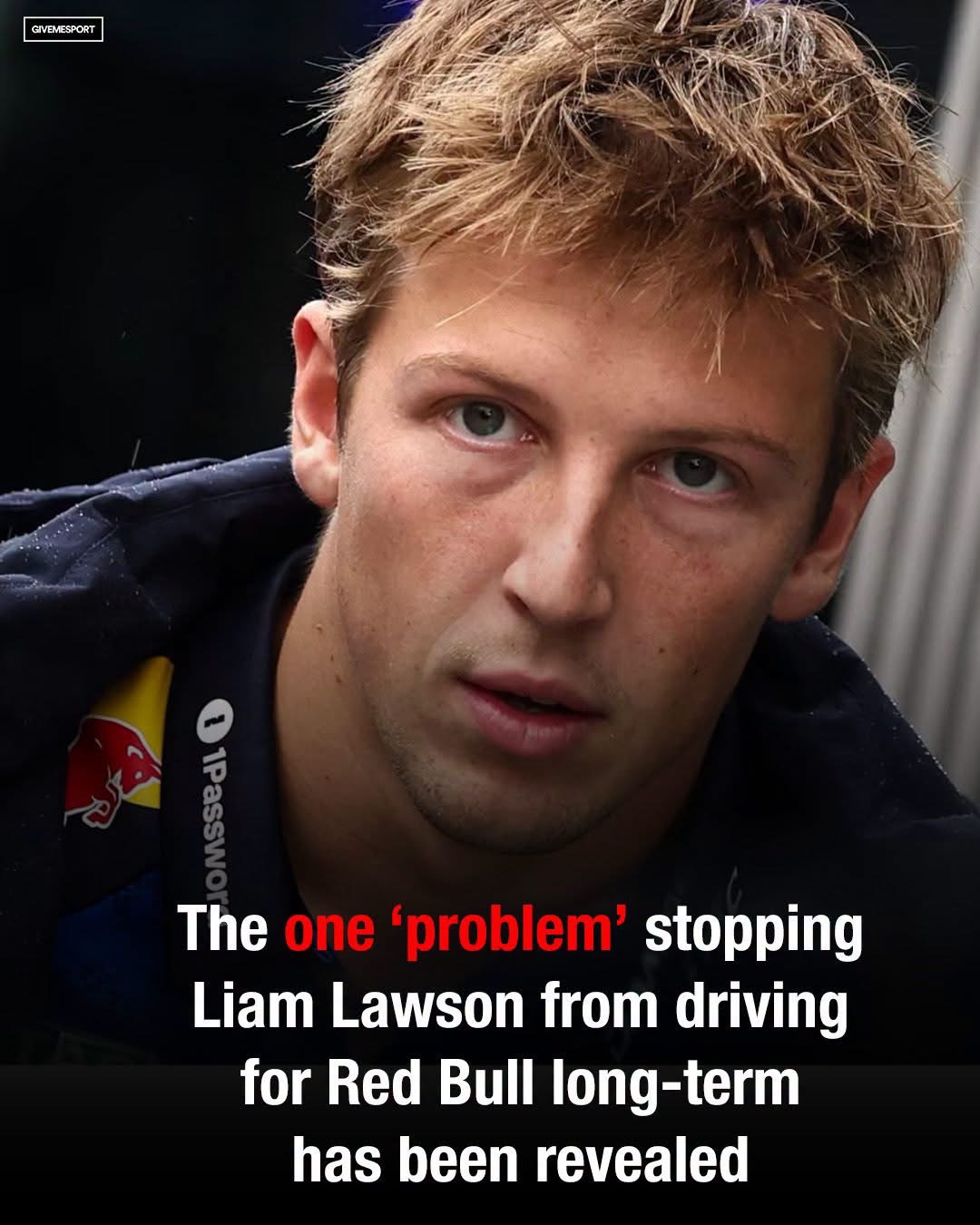
Liam Lawson’s return to Red Bull Racing may have gone better than many expected, but former Formula 1 driver Ralf Schumacher still has serious doubts about whether the New Zealander can eventually establish himself as a permanent teammate to Max Verstappen.
Lawson was unexpectedly promoted from Racing Bulls to replace the injured Isack Hadjar at the Dutch Grand Prix, while Yuki Tsunoda moved in the opposite direction to fill Lawson’s seat. The unusual driver swap immediately created questions about Red Bull’s longer-term plans, particularly given the uncertainty surrounding the team’s second seat.
LAWSON MADE THE MOST OF HIS RED BULL RETURN
Lawson certainly did little to damage his reputation at Zandvoort. The 24-year-old immediately found himself involved in an intense battle with Verstappen before the Dutchman’s race ended in a crash.
More importantly, Lawson recovered from the drama to finish seventh and score Red Bull’s only points of the Dutch Grand Prix. Considering he had been dropped by the senior team after only two races during the previous season, the performance represented a significant opportunity to remind Red Bull of what he can offer.
His result also makes the decision to overlook Tsunoda even more intriguing. Red Bull reportedly wanted Lawson in the RB22 partly because his experience with Racing Bulls could provide a useful comparison between the two cars.
RALF SCHUMACHER STILL HAS HIS DOUBTS
Despite Lawson’s promising weekend, Schumacher remains unconvinced that he possesses the qualities required to become a genuine top-level Red Bull driver.
Speaking alongside F1 journalist Peter Hardenacke on the Backstage Boxengasse podcast, Schumacher questioned how strong the current pool of Red Bull-affiliated drivers actually is.
His concern is particularly significant because Red Bull will eventually need to identify a driver capable of supporting Verstappen at the highest level—or potentially replacing him if the team’s circumstances change further down the line.
Schumacher believes Lawson’s performances against teammates have not yet provided enough evidence that he belongs in that category.
THE BIG QUESTION IS LAWSON’S TRUE CEILING
The central issue isn’t whether Lawson can produce a strong weekend. He has already demonstrated that he can.
The bigger question is whether he can consistently perform at the level expected from a driver competing for a championship-calibre team.
Red Bull has historically placed enormous pressure on its second drivers, and Verstappen’s extraordinary benchmark makes that challenge even more difficult. A driver can look excellent in midfield machinery but struggle when placed alongside one of the fastest drivers of his generation.
Lawson’s temporary promotion therefore gives him something extremely valuable: an extended opportunity to prove whether his ceiling is genuinely higher than Schumacher believes.
RED BULL’S DRIVER SITUATION REMAINS FASCINATING
The situation involving Lawson, Tsunoda and Arvid Lindblad could become increasingly important for Red Bull’s future.
Tsunoda remains under contract with the organisation, Lawson has now demonstrated that he can score points in the senior car, while Lindblad continues to be viewed as one of the team’s highly rated young prospects.
That creates a fascinating internal competition. Red Bull doesn’t simply need a driver capable of finishing races—it needs someone who can consistently extract performance from a notoriously demanding car and contribute heavily to the Constructors’ Championship.
Lawson’s Dutch GP performance has strengthened his case, but one race is unlikely to settle the argument.
LAWSON NOW HAS SOMETHING TO PROVE
Schumacher’s criticism could ultimately become an important motivation for Lawson.
The New Zealander has already experienced the frustration of being promoted to Red Bull and then losing his seat almost immediately. His latest opportunity is different because every session provides additional evidence that could influence Red Bull’s future decision-making.
If he continues to perform strongly while deputising for Hadjar, the conversation around his career could change dramatically.
But if his performance drops away over the coming races, Schumacher’s argument that Lawson may not have the consistency required to become a genuine Red Bull star will become much harder to dismiss.
For now, Lawson has done exactly what he needed to do: he has put himself back into the conversation. The next challenge is proving that Zandvoort was not simply a one-off.