Max Verstappen’s victory at the 2026 Las Vegas Grand Prix may have been more strategically sophisticated than it initially appeared. While spectators watched drivers repeatedly exchange positions in an extraordinary 50-lap battle, the reigning champion was apparently gathering crucial information and carefully preparing for the moment that mattered most.
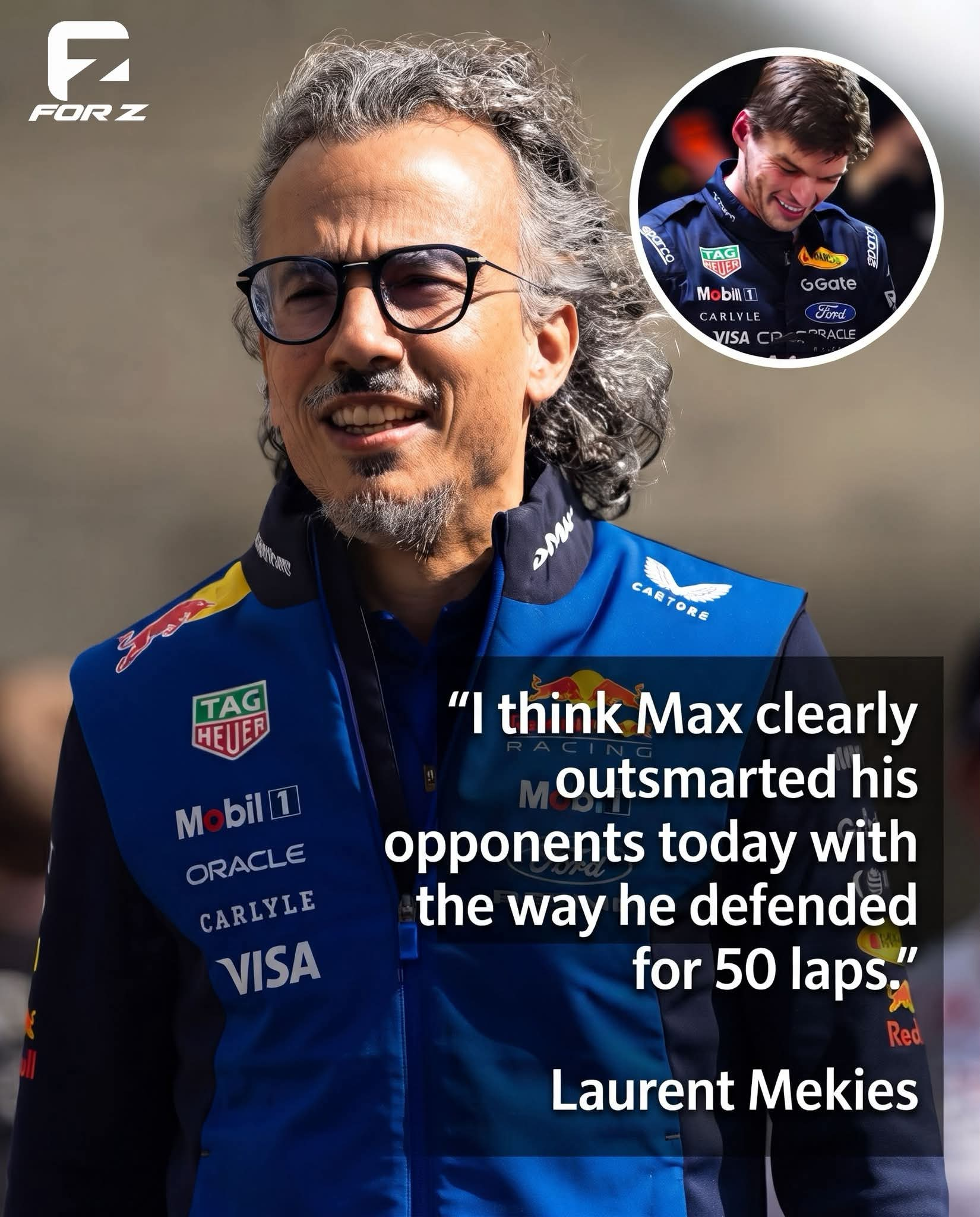
Red Bull team principal Laurent Mekies has now suggested that Verstappen deliberately allowed his competitors to overtake him on certain occasions, using those moments to understand the advantages and disadvantages of different energy deployment strategies.
What looked like an unpredictable battle for the lead may therefore have been an intelligent exercise in race management from one of Formula 1’s most accomplished drivers.
And with Verstappen ultimately beating Lando Norris by just 0.639 seconds, the strategy proved remarkably effective.
LAURENT MEKIES REVEALS VERSTAPPEN’S UNUSUAL RACE STRATEGY
The Las Vegas Grand Prix presented a particularly interesting challenge because of the circuit’s long straights and significant slipstream effect.
Drivers could gain substantial speed by following closely behind another car before launching an overtaking attempt into Turn 14. However, taking the lead did not necessarily mean having the advantage.
In several situations, Verstappen’s rivals managed to get ahead of him, only for the Dutchman to reclaim the position through the final corners or at the beginning of the following lap.
According to Mekies, Verstappen quickly recognised that understanding the final-lap dynamics would be essential.
The Red Bull driver reportedly explored different possibilities between the final chicane and the finish line, paying particular attention to energy deployment and how much advantage a driver could gain by following another car.
Mekies suggested that Verstappen may have allowed some overtakes to happen deliberately while gathering information about the different scenarios.
The Red Bull boss was particularly impressed by the Dutchman’s ability to defend his position throughout the race while simultaneously preparing for the decisive moment.
He described Verstappen’s performance as an example of how the champion had outsmarted his competitors through 50 laps of racing.
WHY TURN 14 WAS SO IMPORTANT IN LAS VEGAS
One of the biggest strategic factors in the 2026 Las Vegas Grand Prix was the relationship between Turn 14 and the finish line.
The long straight approaching Turn 14 provided an excellent overtaking opportunity because drivers could benefit from the aerodynamic tow of the car ahead.
However, the battle did not end when a driver completed an overtake.
The positioning of the cars through the final section of the circuit created another opportunity for the driver behind to respond.
This produced a fascinating pattern throughout the race.
A driver could move ahead under braking at Turn 14, only for Verstappen to use his positioning, traction and available electrical energy to recover the lead before the next timing line.
Rather than treating every position change as an immediate setback, Verstappen appeared to understand the bigger strategic picture.
His priority was not necessarily to remain ahead at every moment. It was to ensure he understood how to finish the race in front.
That distinction is what makes Mekies’ explanation particularly interesting.
RUSSELL’S LATE CRASH CHANGES THE FINAL STAGES
Despite Verstappen’s impressive strategic awareness, the race was far from straightforward.
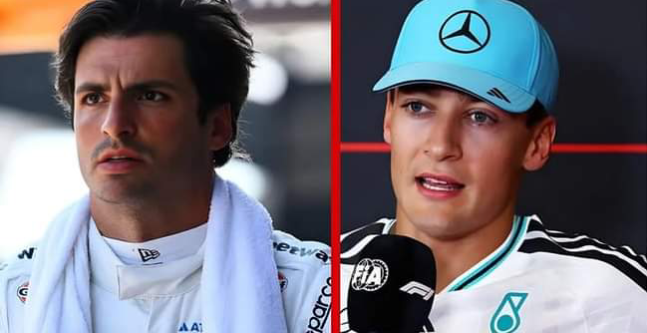
George Russell remained one of his biggest challengers and continued putting pressure on the leading Red Bull.
Mercedes also had Kimi Antonelli involved in the fight, creating additional uncertainty about which driver would emerge as Verstappen’s biggest threat.
However, Russell’s race took a dramatic turn on Lap 48 when he hit the barrier while attempting to challenge Antonelli.
The incident significantly affected Mercedes’ chances of fighting for victory.
Russell subsequently experienced an energy deployment problem, further reducing his ability to challenge Verstappen during the closing stages.
That development helped the Red Bull driver approach the final lap with a more manageable situation.
Norris, meanwhile, emerged as the biggest remaining threat.
The McLaren driver pushed hard but could not close the gap sufficiently, allowing Verstappen to cross the finish line 0.639 seconds ahead.
It was a narrow victory, but one that highlighted the importance of preparation, decision-making and execution under pressure.
LANDO NORRIS COULD NOT FIND A WAY PAST VERSTAPPEN
For Norris, the Las Vegas Grand Prix represented another opportunity to challenge Verstappen directly.
McLaren had the speed to remain competitive, and the British driver stayed within striking distance during the closing stages.
However, defeating Verstappen required more than simply having a fast car.
The Red Bull driver had spent the race understanding how the circuit’s overtaking opportunities worked. By the time the final lap arrived, he had already experienced several different scenarios involving the slipstream and energy deployment.
Norris needed to find a way to overcome that advantage.
Although he delivered a strong final lap, Verstappen had enough performance available to protect his position.
The result demonstrated an important reality about modern Formula 1: outright speed is only one part of winning a Grand Prix.
Drivers must also understand energy management, positioning, tyre behaviour, aerodynamic effects and the timing of their attacks.
Verstappen combined those elements effectively when it mattered most.
WHAT VERSTAPPEN’S PERFORMANCE SAYS ABOUT HIS RACECRAFT
Verstappen’s Las Vegas performance provides another example of why his reputation extends beyond his ability to drive quickly.
His greatest strength is often his capacity to understand how a race is developing and adjust his approach accordingly.
Some drivers respond to an opponent’s overtake by immediately attempting to recover the position. Verstappen appeared willing to consider whether doing so was actually the best decision.
That approach requires confidence, patience and an exceptional understanding of the car.
It also demonstrates the importance of communication between a driver and the engineering team.
Verstappen reportedly asked Red Bull to examine whether alternative energy management settings could improve his chances on the final lap.
The engineers considered the available scenarios before concluding that he had already identified the most effective approach.
This interaction highlights how modern F1 victories increasingly depend on collaboration between the driver, engineers and strategists.
The driver may be making decisions at extraordinary speeds, but the information supporting those decisions comes from an entire technical operation.
RED BULL’S STRATEGIC ADVANTAGE COULD MATTER IN THE REMAINING RACES
Although the Las Vegas victory was an important achievement, Mekies also acknowledged that the race did not provide Red Bull with a completely clear understanding of its competitive position on energy-limited circuits.
The unusually strong slipstream effect made it difficult to establish an accurate comparison of the cars’ underlying race pace.
That is an important distinction.
Winning a race does not automatically mean a team has solved every performance problem.
Red Bull will still need to understand how its RB22 performs at circuits with different characteristics, particularly those where energy management plays a major role.
Nevertheless, Verstappen’s ability to extract the maximum from the circumstances provides encouragement for the team.
If Red Bull can combine that level of driver execution with consistent car performance, it could remain a serious threat throughout the remainder of the championship.
WAS IT BRILLIANT STRATEGY OR A LITTLE BIT OF LUCK?
There is another side to the discussion.
While Mekies deserves credit for highlighting Verstappen’s strategic intelligence, it would be unfair to suggest that the entire victory was guaranteed by a carefully planned masterplan.
Russell’s late crash changed the competitive picture, and Mercedes’ subsequent energy difficulties reduced the pressure on Verstappen.
Without those developments, the final lap could have been considerably more complicated.
Norris was also close enough to take advantage of any mistake.
However, acknowledging those circumstances does not diminish Verstappen’s achievement.
The ability to recognise an opportunity, gather information during a race and execute a plan under pressure is precisely what separates exceptional drivers from the rest.
Perhaps the most impressive aspect of his performance was that he understood the importance of the final lap long before his rivals could fully appreciate what was happening.
WHAT HAPPENS NEXT FOR VERSTAPPEN AND RED BULL?
The Las Vegas victory gives Verstappen and Red Bull another major confidence boost as the 2026 season approaches its conclusion.
More importantly, it provides another demonstration of how much influence driver intelligence can have when performance differences between competing teams are relatively small.
McLaren, Mercedes and Red Bull will continue searching for every possible advantage, particularly as the championship battle enters its decisive stages.
For Norris, the challenge will be finding ways to turn competitive performances into victories against a driver who rarely makes unnecessary mistakes.
For Mercedes, Russell’s late incident will be something to analyse carefully, especially given the team’s potential to challenge for the win.
And for Red Bull, the biggest takeaway is that Verstappen remains capable of turning complicated racing situations into opportunities.
His Las Vegas performance was not simply about defending the lead. It was about understanding when to attack, when to respond and when to think several corners ahead.
FINAL VERDICT: VERSTAPPEN PLAYED THE LONG GAME
Laurent Mekies’ comments have added another fascinating dimension to Max Verstappen’s Las Vegas Grand Prix victory.
What initially looked like a series of unpredictable overtaking battles may have involved a much deeper strategic calculation from the Red Bull champion.
His understanding of the slipstream, energy deployment and final-lap positioning allowed him to approach the decisive moments with valuable information.
Russell’s late crash undoubtedly made the closing stages easier, but Verstappen still had to deliver when Norris came charging towards the finish.
Ultimately, the Dutchman demonstrated why experience, intelligence and racecraft remain essential ingredients for winning in Formula 1.
But the biggest question remains: Did Verstappen deliberately allow his rivals to overtake him as part of a calculated masterplan, or did he simply understand the Las Vegas circuit better than everyone else?
One thing is certain: Red Bull’s champion gave his competitors plenty to think about.
What is your verdict? Was this one of Verstappen’s smartest strategic performances, or did Russell’s late misfortune play a bigger role than Mekies suggests?
Share your thoughts in the comments!SEO KEYWORDS: Max Verstappen Las Vegas GP 2026, Laurent Mekies, Red Bull F1, Verstappen race strategy, Las Vegas Grand Prix results, Lando Norris, George Russell crash, Formula 1 news, F1 energy management.
SEO META DESCRIPTION: Laurent Mekies reveals how Max Verstappen outsmarted his rivals at the 2026 Las Vegas GP with clever energy management and a potential final-lap masterplan.
Sources for factual verification: