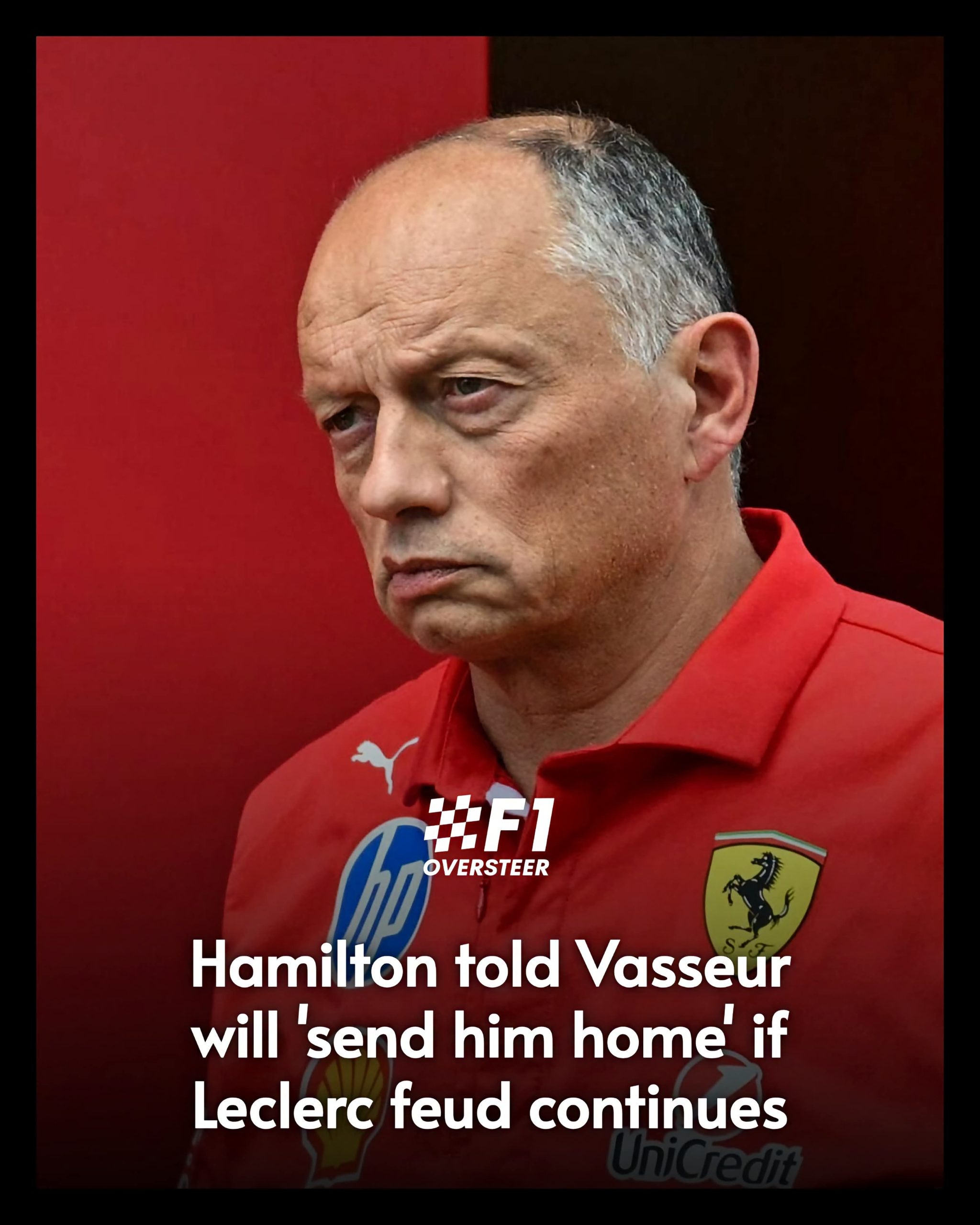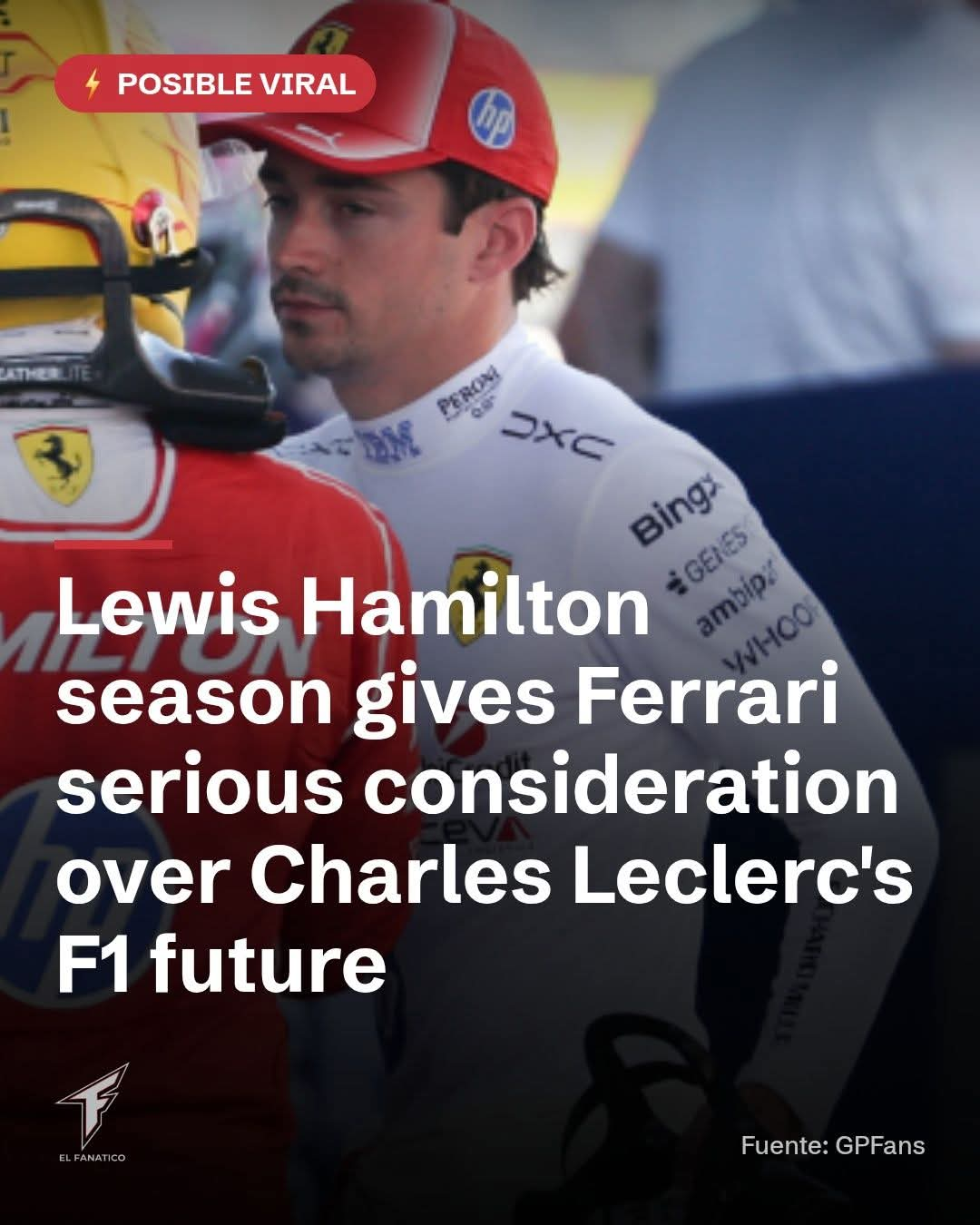
The Las Vegas Grand Prix delivered another chapter in Ferrari’s internal soap opera. Charles Leclerc dived for the inside of Lewis Hamilton at Turn 7 on lap 38, made contact, and spun his teammate. The stewards handed Leclerc a 10-second penalty for causing the collision, dropping him from sixth on the road to 10th. Hamilton recovered to seventh after serving his own earlier 10-second penalty for leaving the track while battling Lando Norris. Team principal Fred Vasseur called the incident “completely unacceptable” and a “lack of respect” for the team, the sponsors, and the people working in Maranello.
This was not an isolated moment. Similar friction appeared at the Italian Grand Prix and, more damagingly, in Mexico, where the pair compromised a strong result and handed Max Verstappen a gift. Clear-the-air talks followed in Brazil. In Las Vegas the message was repeated on the radio. The outcome stayed the same.
THE PATTERN THAT IS HURTING FERRARI’S TITLE HOPES
Ferrari arrived in Las Vegas with a car that had shown competitive pace on paper. Qualifying disappointments left both drivers starting outside the top ten. Race pace and the chaos of a high-attrition event still gave them a chance to score heavily. Instead the team left with single-digit points and a public airing of grievances. Vasseur had already stressed after Mexico that drivers must think about the two-thousand-plus people in the factory and the commercial partners who fund the operation. The same speech returned in the Nevada desert.
The damage is measurable. Every contact costs championship points in both the drivers’ and constructors’ tables. It also erodes trust inside the garage. Engineers and strategists cannot plan optimally when they must constantly manage two highly competitive drivers who appear unwilling to yield even for a few corners. In a season where Ferrari has been in the hunt, those lost points and the accompanying media storm become expensive.
WHY SOME VOICES ARE CALLING FOR A CLEAR NUMBER ONE
A section of the Ferrari support base and parts of the Italian media have begun arguing that the team should pick a side. Some want Leclerc removed or demoted so that the entire organisation can line up behind Hamilton. The logic is straightforward: Hamilton is a seven-time champion with unmatched experience in title fights and a proven ability to extract maximum performance from a competitive car. Backing him fully might stabilise the garage and maximise results in the remaining races and into 2027.
That argument, however, rests on a questionable premise. It assumes the two drivers cannot coexist without calamity and that Hamilton is automatically the better long-term choice. Neither claim is as clean as it first appears.
LECLERC’S CASE REMAINS STRONG
Charles Leclerc is still in his prime. He has been Ferrari’s standard-bearer for years, possesses exceptional qualifying speed, and has repeatedly shown the ability to extract performance from cars that were not always the class of the field. Ferrari has already invested heavily in him with a multi-year extension that runs beyond 2027. Removing or sidelining him would waste that investment and risk alienating a driver who knows the organisation intimately.
Hamilton, for all his greatness, is in the later stages of his career. His contract is understood to run through 2027. The new regulations arriving in the coming years will demand a long-term programme built around a driver who can still be at the peak of his powers when the next generation of cars arrives. Leclerc fits that profile more naturally.
History also shows that simply installing a clear number one does not always solve internal tension. Teams that have tried rigid hierarchies sometimes create resentment that leaks into performance in other ways. The better path is usually clear racing rules, consistent enforcement, and drivers mature enough to prioritise the team when the situation demands it.
THE REAL PROBLEM IS NOT WHO DRIVES THE RED CARS
The deeper issue is cultural. Ferrari has historically struggled to manage two alpha drivers. The 2026 pairing of Hamilton and Leclerc was always going to test that ability. Vasseur has tried the collaborative approach, the post-race meetings, and the in-race reminders. The results suggest the current framework is insufficient.
Hamilton himself has placed the responsibility back on the team, noting that such incidents should never happen and that the question is now Ferrari’s to answer. Leclerc has expressed embarrassment and accepted the stewards’ decision while still defending the intention behind the move. Both men are elite competitors. Expecting them to suddenly become passive is unrealistic. Expecting them to race each other with the same aggression they show against rivals, while the team loses points, is equally unsustainable.
WHAT COMES NEXT AND WHY IT MATTERS BEYOND ONE RACE
The final races of 2026 and the planning for 2027 will reveal Ferrari’s true priorities. Imposing stricter team orders is the most immediate option. A formal number-one designation is more drastic and carries political cost. Doing nothing risks further collisions and more public frustration from the factory floor.
The broader industry is watching. Formula 1 teams are multi-hundred-million-euro operations. Sponsors and shareholders expect professional management of talent. A prolonged internal war damages the brand’s image as a well-run organisation capable of delivering championships. It also affects recruitment. Top engineers and future drivers notice when a team cannot keep its two stars from taking each other out.
Predictions are always risky, but the most likely near-term path is tighter operational control rather than a dramatic sacking. Ferrari will remind both drivers of their contractual obligations, tighten the rules of engagement, and hope the remaining races produce cleaner results. Longer term, the organisation will almost certainly prioritise Leclerc’s continuity while managing Hamilton’s final seasons productively. The alternative—jettisoning the younger driver to appease short-term frustration—would represent a significant strategic error.
The Las Vegas incident was costly, avoidable, and embarrassing. It does not, however, prove that Ferrari must choose between two elite drivers. It proves that the current system for managing them is broken. Fixing that system, rather than discarding one of the protagonists, is the more intelligent and more valuable path for a team that still harbours genuine championship ambitions.