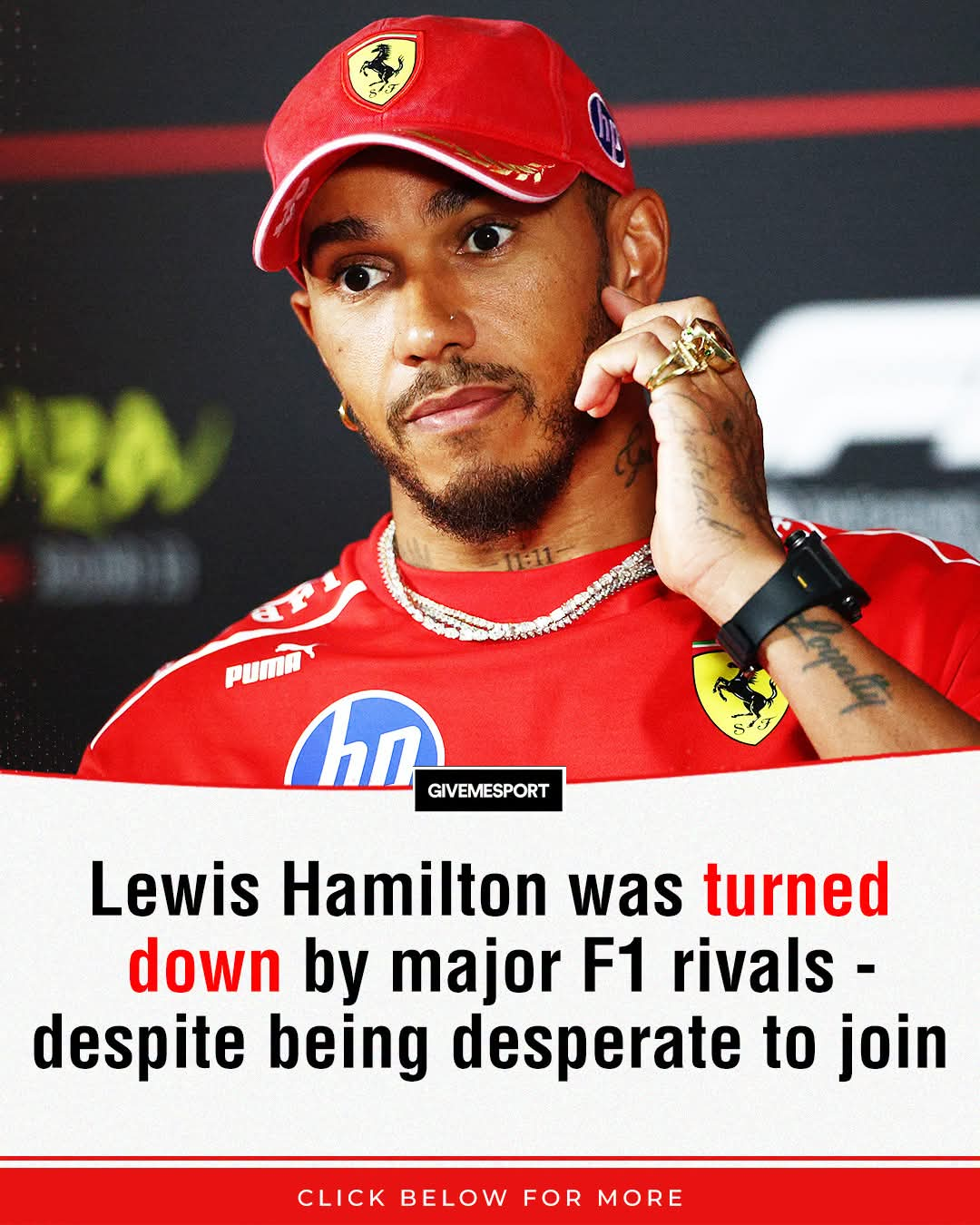
Lewis Hamilton could have taken a very different path in Formula 1, potentially joining Red Bull Racing years before the team became one of the sport’s dominant forces. According to former Red Bull team principal Christian Horner, the seven-time world champion held a secret meeting with legendary designer Adrian Newey to discuss a possible switch from McLaren. However, despite the appeal of signing one of F1’s most talented drivers, the proposed move never materialised, with financial considerations playing a significant role in the discussions.
The revelation offers a fascinating glimpse into an alternative version of Formula 1 history. Hamilton ultimately left McLaren for Mercedes ahead of the 2013 season, a decision that helped shape one of the most successful partnerships the sport has ever seen. Had he joined Red Bull instead, he could have lined up alongside Sebastian Vettel during the German driver’s championship-winning years, potentially changing the competitive balance of the entire grid.
CHRISTIAN HORNER REVEALS DETAILS OF HAMILTON’S SECRET RED BULL MEETING
Horner recounted the episode in his memoir, Drive: A Memoir of Speed, describing how Hamilton appeared to be considering his future at McLaren during the 2012 season.
According to Horner, Hamilton had experienced a difficult period involving mechanical problems, while his relationship with teammate Jenson Button appeared strained from the outside. Those circumstances reportedly prompted the British driver to explore whether another team could offer him a better opportunity.
Horner said he received a call from Hamilton’s father before a private meeting was arranged at Newey’s home near Ascot. During the discussion, Hamilton allegedly made his intentions clear by asking what it would take to join Red Bull.
The possibility immediately caught Newey’s attention. Pairing Hamilton with Vettel would have created an extraordinary driver lineup, bringing together two competitors who would go on to win multiple world championships.
However, the meeting did not lead to a deal. Although the account suggests Hamilton was interested in exploring the opportunity, it does not establish that a completed agreement was ever close to being signed.
WHY RED BULL DID NOT COMPLETE THE DEAL
According to Horner’s recollection, the financial implications became a major obstacle as the discussions progressed. Hamilton was already receiving substantial support from McLaren, which had invested in his development from a young age.
That backing extended well beyond his Formula 1 salary. Horner recalled asking Hamilton to explain the assistance McLaren had provided throughout his junior career, including funding for karting, Formula Renault and Formula Three.
Hamilton also reportedly received educational support, including a tutor, alongside a salary and access to other benefits. Horner’s reaction highlighted the scale of McLaren’s commitment to developing the young British driver.
The situation illustrated a challenge facing teams attempting to recruit established or highly promising drivers: the cost of a potential move can involve much more than agreeing on a new salary. Existing contractual arrangements, sponsorship commitments and the financial value of a development programme can all influence negotiations.
In Hamilton’s case, Red Bull would have needed to assess whether bringing him into its organisation made financial and strategic sense. Ultimately, the proposed move did not happen, leaving Hamilton to pursue a different route through the sport.
HAMILTON AND VETTEL COULD HAVE FORMED A HISTORIC RED BULL PARTNERSHIP
One of the most intriguing aspects of Horner’s account is the possibility of Hamilton and Vettel becoming teammates during Red Bull’s championship-winning era.
Vettel won four consecutive drivers’ championships with Red Bull between 2010 and 2013, establishing himself as the leading figure of the team’s early dominance. Hamilton, meanwhile, won his first world championship with McLaren in 2008 before becoming the central figure in Mercedes’ success during the hybrid era.
Putting both drivers in the same garage would have presented Red Bull with an exceptional level of talent. It could also have created difficult decisions over team leadership, development priorities and how to manage two drivers capable of fighting for the championship.
Their partnership might have strengthened Red Bull even further, but it could also have produced intense internal competition. Formula 1 history has repeatedly shown that two elite drivers do not automatically guarantee a harmonious team environment.
There is also no certainty that Hamilton would have achieved the same results in a different environment. His eventual success at Mercedes was shaped by the team’s technical direction, its competitiveness during the hybrid era and his own adaptation to changing regulations.
The counterfactual remains fascinating precisely because so many variables would have changed.
HAMILTON’S DECISION TO JOIN MERCEDES CHANGED HIS CAREER
Hamilton’s move from McLaren to Mercedes before the 2013 season initially attracted considerable attention. Mercedes had not yet established the overwhelming competitive advantage it would enjoy in the years that followed, making the switch a significant gamble.
That decision ultimately paid off. Hamilton won six drivers’ championships with Mercedes, adding to the title he had secured with McLaren and cementing his position among Formula 1’s most successful drivers.
His career also demonstrated the importance of timing in the championship. Mercedes became the leading force when the sport introduced its new hybrid power-unit regulations in 2014, and Hamilton was ideally placed to take advantage of that transformation.
Had he joined Red Bull instead, he would have entered a team built around Vettel and a different technical philosophy. Whether that would have produced more championships, fewer titles or a similar level of success is impossible to establish.
What is clear is that Hamilton’s actual move to Mercedes became one of the defining driver decisions of the modern era.
THE RED BULL REVELATION SHOWS HOW CLOSE F1 HISTORY CAN COME TO CHANGING
Horner’s account highlights how Formula 1 careers can be shaped by private conversations that never become public until years later. A single meeting can expose the ambitions of a driver, the recruitment plans of a rival team and the financial calculations that determine whether a deal progresses.
For Red Bull, signing Hamilton would have meant securing a driver who later became a multiple world champion during Mercedes’ dominant period. For Hamilton, joining the Milton Keynes-based outfit could have offered a direct route into Vettel’s championship-winning team, but it would also have placed him in a very different competitive environment.
The episode also underlines the importance of McLaren’s early investment in Hamilton. The team’s support helped him progress through junior racing and reach Formula 1, even though he eventually left to pursue opportunities elsewhere.
Ultimately, the secret meeting did not produce a transfer, and Hamilton’s move to Mercedes became the defining turning point in his career. Yet Horner’s revelation leaves fans with a compelling question about what might have happened if one of Formula 1’s biggest stars had chosen a different team at a crucial moment in the sport’s history.