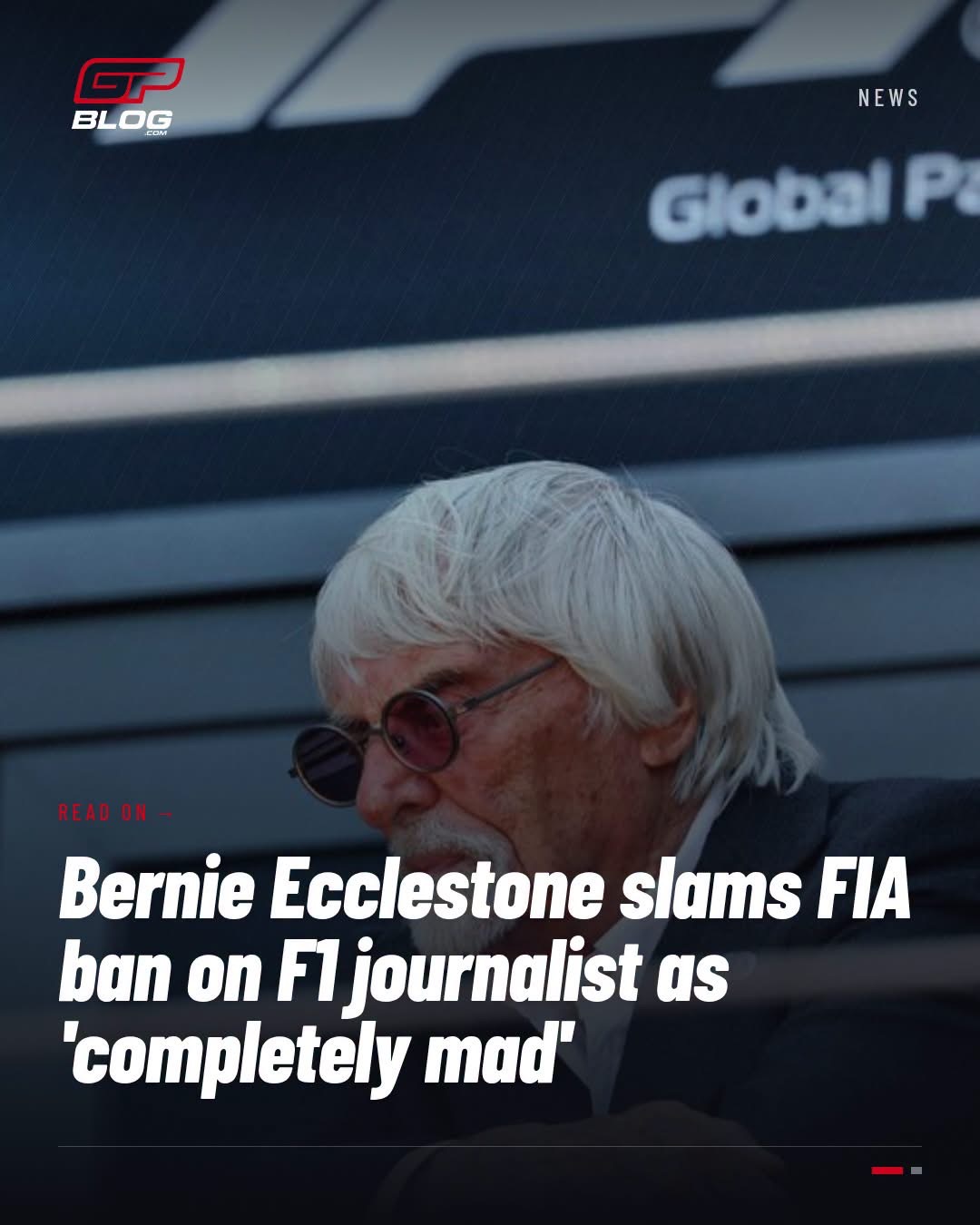
Former Formula 1 boss Bernie Ecclestone has entered the growing controversy surrounding the FIA’s decision to revoke the accreditation of British journalist Jonathan McEvoy, describing the governing body’s move as “completely mad.”
The decision has triggered a significant debate about press freedom, media access and the relationship between Formula 1’s governing body and journalists covering the championship. With the Daily Mail announcing a boycott of the remaining races in solidarity with its correspondent, the situation has developed into a major off-track talking point during the closing stages of the 2026 season.
Ecclestone’s intervention adds another influential voice to the criticism, particularly given his decades of involvement in the sport and his understanding of the relationship between Formula 1’s commercial interests, media coverage and public perception.
WHY THE FIA REVOKED JONATHAN MCEVOY’S ACCREDITATION
The controversy began after the FIA withdrew McEvoy’s accreditation for the final three rounds of the 2026 Formula 1 season.
The British journalist, who works for the Daily Mail, reportedly lost his access following a column he wrote about Ferrari driver Charles Leclerc.
Although the precise details surrounding the FIA’s decision remain central to the dispute, the action has raised questions about how the governing body handles critical media coverage and whether journalists should face professional consequences for expressing opinions in published columns.
Accreditation is particularly important in Formula 1 because it provides journalists with access to designated media areas, press conferences and other official activities. Losing that access can significantly affect a reporter’s ability to cover the championship directly.
BERNIE ECCLESTONE DELIVERS BLUNT VERDICT
Ecclestone did not hide his disagreement with the FIA’s decision.
Speaking to the Daily Mail, the former Formula 1 supremo described the move as “completely mad”, expressing disbelief that the governing body would take such action against a journalist over an opinion column.
His reaction carries particular significance because Ecclestone spent decades overseeing Formula 1’s commercial operations and played a major role in transforming the championship into a global sporting and entertainment business.
Throughout his time in the sport, media coverage was an important part of Formula 1’s international growth. Journalists help create public interest, scrutinise teams and drivers, and bring stories from the paddock to millions of fans.
Ecclestone’s criticism therefore adds weight to the wider discussion about how the FIA balances its authority with the media’s role in reporting on the championship.
DAILY MAIL BOYCOTT ADDS PRESSURE ON THE FIA
The Daily Mail responded to the accreditation decision by announcing that it would boycott the remaining races in solidarity with McEvoy.
That response has taken the dispute beyond an individual disagreement between a journalist and the governing body. It has become a broader media confrontation that could attract further attention if other publications or journalists decide to comment.
The boycott also creates an unusual situation for the final rounds of the season, with a major British newspaper choosing to withdraw its coverage in protest.
For Formula 1, maintaining strong relationships with international media outlets is important. The championship relies on extensive reporting to reach audiences across different countries, particularly during major race weekends when stories extend beyond the action on track.
WHAT THE CONTROVERSY MEANS FOR FORMULA 1
The dispute raises an important question about the boundaries between media accreditation and editorial independence.
The FIA has responsibilities to manage access to its events and establish rules for accredited journalists. However, media organisations also have a responsibility to scrutinise decisions made by sporting authorities, teams and championship officials.
The central issue is whether the action against McEvoy was justified under the FIA’s accreditation rules and whether the circumstances surrounding the decision could have been handled differently.
That distinction matters because Formula 1 benefits from independent journalism. Critical reporting, disagreement and uncomfortable questions are part of the wider sporting environment, particularly in a championship where decisions can affect drivers, teams and millions of supporters.
FIA FACES GROWING SCRUTINY AS 2026 SEASON APPROACHES ITS CONCLUSION
With only the final stages of the 2026 campaign remaining, the accreditation dispute has created another major talking point away from the circuit.
Ecclestone’s public criticism and the Daily Mail’s boycott have increased attention on the governing body’s handling of the situation. The FIA’s response and any further clarification could prove important in determining whether the disagreement escalates or moves towards a resolution.
For now, the controversy remains a reminder that Formula 1’s biggest battles do not always happen between the barriers.
The championship is built around speed, competition and entertainment, but its relationship with the media remains an essential part of its global identity.
And with a former F1 supremo now openly questioning the FIA’s decision, the governing body faces further scrutiny over how it handles one of the sport’s most important relationships.