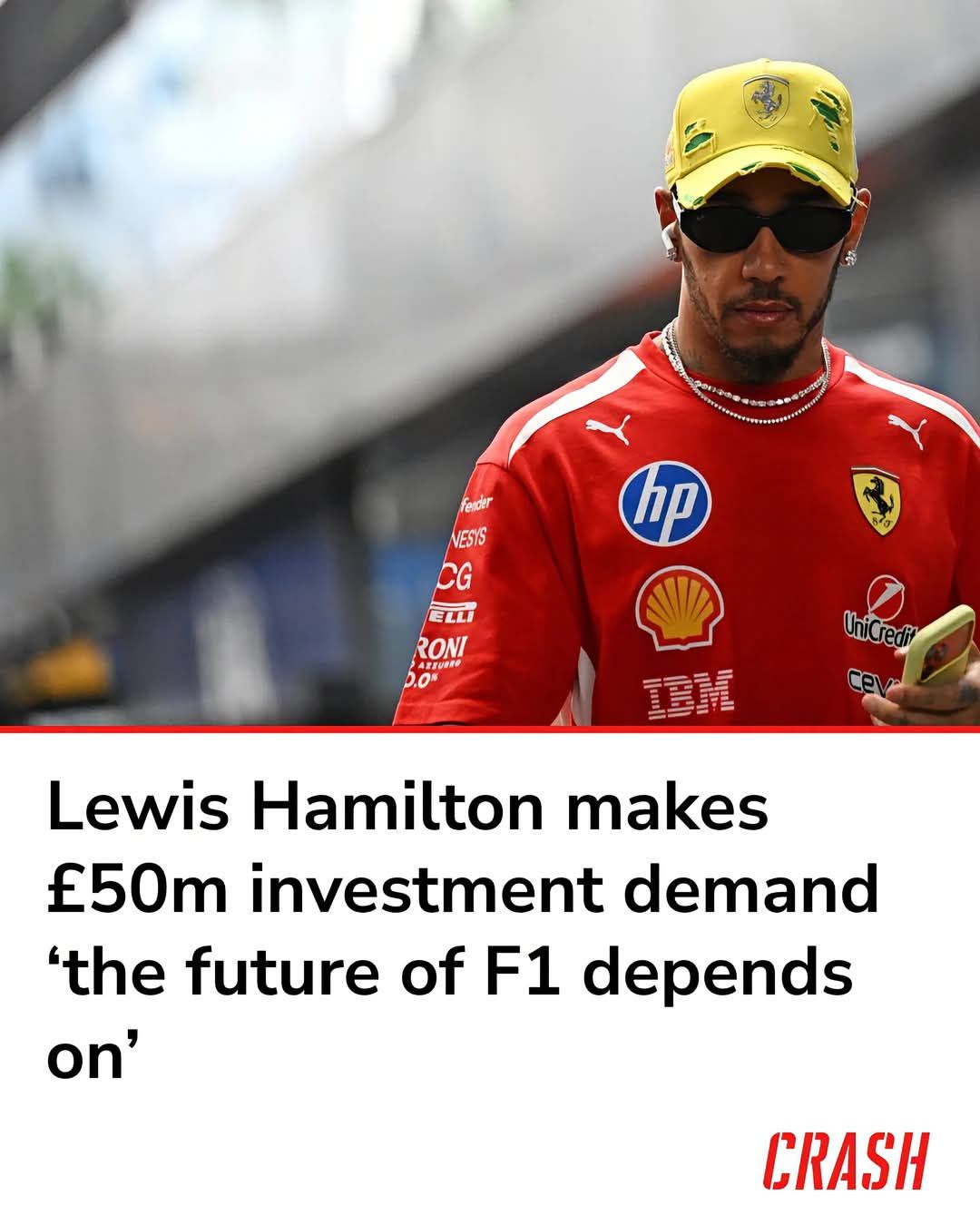
Lewis Hamilton has never been one to stay quiet when he sees unfinished business. On the fifth anniversary of his Mission 44 foundation, the seven-time Formula 1 world champion has issued a clear, ambitious challenge to the sport that made him a global icon. Through a new report titled *Igniting Inclusion*, Hamilton is calling for a collective £50 million investment over five years from Formula 1, the FIA, the teams, and commercial partners to open genuine career pathways for young people from underrepresented backgrounds.
This is not a vague call for better intentions. It is a structured demand for measurement, money, and measurable places in the industry. Hamilton argues that the future of Formula 1 itself depends on unlocking talent that has historically been locked out.
THE CONTEXT BEHIND HAMILTON’S LATEST PUSH
In 2021, Hamilton launched the Hamilton Commission after research showed Black people made up less than one percent of employees in UK motorsport. Mission 44 was created to change that reality for Black people, women, and those from lower socio-economic backgrounds. Five years later, the foundation’s new report acknowledges real progress while insisting the work is nowhere near complete.
Hamilton notes that when he walks through the paddock today he sees more women and more Black and Brown faces than at any point in his career. A Diversity and Inclusion Charter has been signed by the FIA, Formula 1, and all 11 teams. Engineering scholarships have been renewed with a three-year commitment of £2.4 million. More than 500,000 young people across 71 countries have engaged with educational and inspiration programmes. These are tangible steps.
Yet the report highlights a critical gap: the sport still lacks comprehensive, shared data on who actually enters, progresses, and stays in motorsport careers. Inspiration without clear pathways and retention tracking, Hamilton argues, falls short.
WHAT EXACTLY IS HAMILTON ASKING FOR
The *Igniting Inclusion* report outlines three concrete recommendations.
First, create proper accountability through data. Teams, Formula 1, and the FIA should submit annual figures on who joins, who is promoted, and who leaves, broken down by gender, ethnicity, and socio-economic background. An independent partner would publish a single, sport-wide picture each year and recognise best practice.
Second, put serious money behind the pipeline and change the financial rules. The report calls for at least £50 million in new collective funding over five years to support young people from underrepresented backgrounds into motorsport careers and help them remain. Critically, it wants defined talent investment — starting with apprentice salaries — excluded from the cost cap so teams are not penalised for investing in people.
Third, open the front door properly. Every team should commit to and publish a specific number of paid, accessible early-career places each year, with support for travel, accommodation, and relocation. The goal is to build thousands of paid routes into the industry by 2030.
Hamilton’s message is direct: “F1, the FIA and every team must push harder and move faster. We need real investment, more opportunities and greater accountability. We’ve shown that change is possible. Now we need to go further. The talent is out there, and the future of our sport depends on unlocking it.”
WHY THIS MATTERS BEYOND GOOD INTENTIONS
Formula 1 has never been richer or more popular. New audiences, new markets, and a younger global fanbase are watching. Yet the people who design the cars, run the operations, and fill technical roles still do not fully reflect that audience or the wider talent pool available.
Diversity is not only a social issue; it is a competitive one. Homogeneous teams risk missing perspectives that drive innovation. Engineering and technical roles in motorsport require deep STEM skills. Expanding the pipeline from underrepresented groups is one of the smartest ways to grow that talent pool at a time when the industry faces intense competition for engineers from tech, aerospace, and automotive sectors.
For the athletes and young people Hamilton is championing, the difference is concrete. A paid apprenticeship with relocation support can transform a career trajectory that unpaid internships or unpaid “exposure” never will. For teams, better data and protected investment in people could reduce the “brain drain” of promising talent who enter but cannot stay because of financial or cultural barriers.
The broader industry also benefits. Motorsport’s image as an exclusive club has long limited its appeal. A more representative paddock strengthens the sport’s cultural relevance and commercial attractiveness to sponsors who increasingly prioritise inclusion metrics.
THE CHALLENGES AND THE REALISTIC PATH FORWARD
Implementing these recommendations will not be simple. Cost-cap politics are sensitive. Teams already operate under tight financial regulations. Convincing all stakeholders to ring-fence talent investment and contribute to a shared £50 million pot requires leadership and coordination.
Data collection raises practical questions about privacy, consistency across teams of different sizes, and how socio-economic background is defined and measured. Publishing paid places creates transparency but also pressure; under-delivery becomes visible.
Yet the alternative is worse. Continuing with inspiration programmes without robust pathways and measurement risks the perception that the sport talks about inclusion more than it delivers — a view already held by a majority of fans in polling conducted for the report.
Hamilton’s personal investment and visibility give the campaign unusual weight. As a Ferrari driver and one of the most recognised athletes on the planet, his continued pressure makes it harder for the sport to treat diversity as a peripheral project.
WHAT SUCCESS COULD LOOK LIKE BY 2030
If the recommendations are adopted, Formula 1 could look meaningfully different by the end of the decade. Shared annual data would allow genuine tracking of progress rather than anecdotal claims. Cost-cap relief for apprenticeships would encourage teams to invest without competitive penalty. Thousands of paid early-career places would create a visible, accessible pipeline.
The long-term prize is a sport that draws from a wider talent pool, innovates more effectively, and presents a paddock that better mirrors the global audience that now fills the grandstands and digital feeds. Hamilton has framed the choice clearly: the talent exists. The question is whether Formula 1 will unlock it with the same seriousness it applies to every other performance metric.
The £50 million demand is significant, but in the context of Formula 1’s commercial scale it is modest. The greater investment required is cultural and structural. Hamilton has put the challenge on the table. How the sport responds will say a great deal about its understanding of its own future.