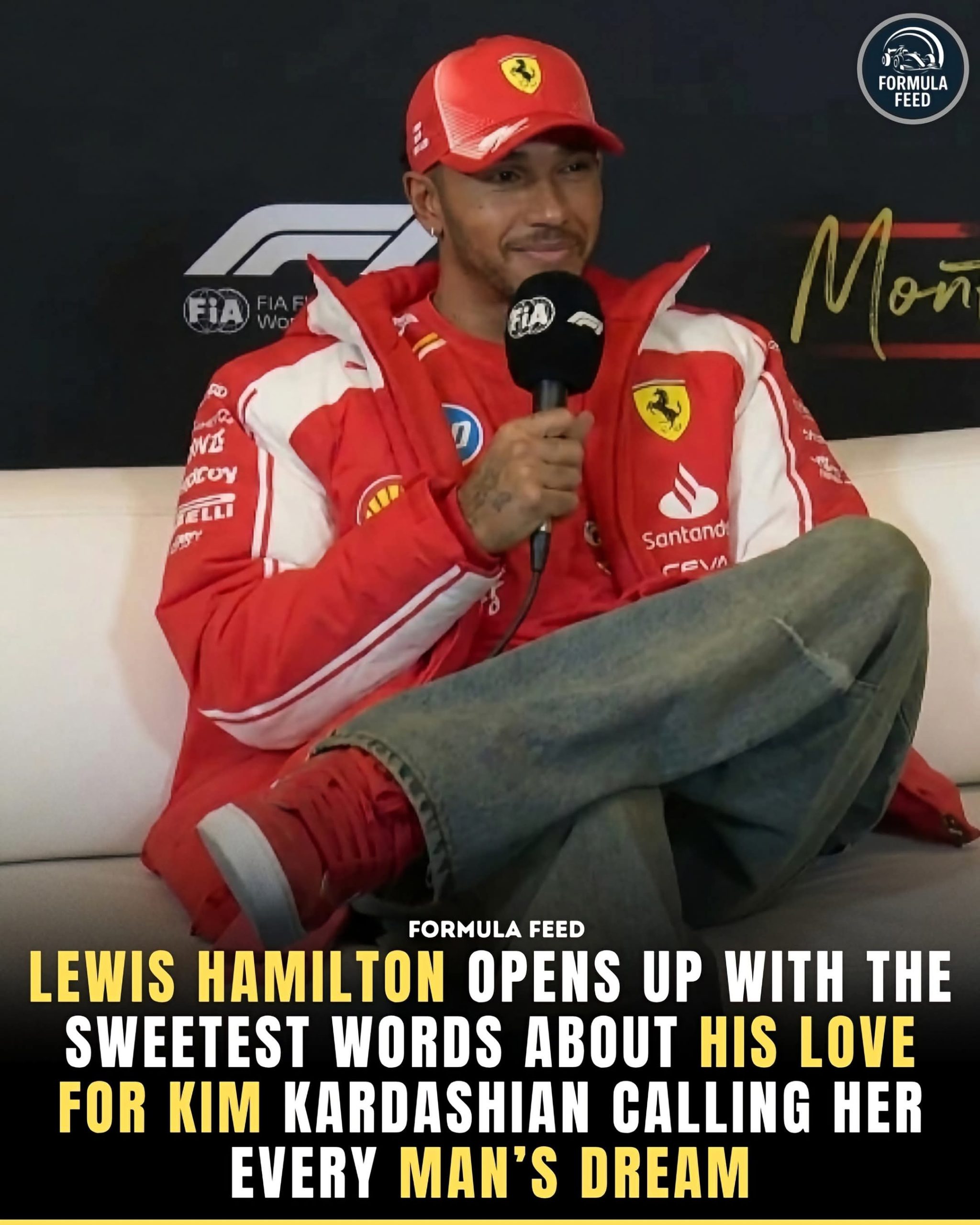
Social media has been buzzing after viral posts claimed that Formula 1 star Lewis Hamilton made glowing and deeply affectionate remarks about media personality Kim Kardashian, describing her in highly admiring terms and hinting at a close personal bond between them.
The comments being shared online have sparked widespread conversation across both the Formula 1 and entertainment worlds, with fans dissecting every detail of the alleged relationship and what it could mean.
Whether taken as rumor, speculation, or fan-driven narrative, the story has quickly become one of the most talked-about crossover topics in recent F1 social chatter.
WHY THE LEWIS HAMILTON AND KIM KARDASHIAN STORY IS TRENDING
The reason this topic is spreading so fast is simple: it combines two of the biggest global celebrity names from completely different worlds.
On one side is Lewis Hamilton, a seven-time Formula 1 world champion and one of the most recognizable athletes on the planet. On the other is Kim Kardashian, a global media figure whose influence stretches across fashion, entertainment, and business.
When names of this magnitude appear together, especially in a romantic context, it naturally drives:
High social media engagement
Rapid reposting across platforms
Strong fan curiosity and debate
This mix creates a perfect viral moment, regardless of how the story originated.
HOW CELEBRITY CULTURE IS BLENDING WITH FORMULA 1
Modern Formula 1 has evolved far beyond racing. Drivers are now global public figures with massive influence in fashion, entertainment, and lifestyle culture.
Hamilton, in particular, has become a central figure in this crossover space. His presence at fashion events, brand collaborations, and cultural discussions has made him one of the most visible athletes outside sport.
Because of this, he is frequently linked with Hollywood personalities, even when those connections are based on speculation rather than confirmed interactions.
This reflects a broader trend in F1 where:
Drivers are treated as global celebrities first, athletes second in media narratives
Personal lives attract as much attention as race performance
Entertainment and sport continuously overlap
THE POWER OF SOCIAL MEDIA IN SHAPING F1 STORIES
The speed at which this story gained traction highlights how Formula 1 content spreads in the digital era.
A single post can evolve into a global discussion within hours, especially when it involves major personalities like Lewis Hamilton and Kim Kardashian.
Social media users often amplify:
Screenshots without original context
Edited or paraphrased quotes
Fan interpretations presented as facts
As engagement grows, the original source becomes less important than the narrative itself.
WHAT THIS MEANS FOR HAMILTON’S PUBLIC IMAGE
For Lewis Hamilton, public attention outside racing is nothing new. Throughout his career, he has remained one of the most discussed figures in global sport, both for his achievements on track and his influence off it.
Stories like this contribute to his larger-than-life presence in media culture, reinforcing his status as:
A sporting icon
A fashion and lifestyle figure
A consistent headline-maker beyond Formula 1
While such narratives can boost visibility, they also blur the line between confirmed information and online storytelling.
FANS DIVIDED OVER VIRAL NARRATIVE
Reactions across fan communities have been mixed. Some enjoy the crossover entertainment angle, while others question how quickly such personal claims spread without clear context.
This division reflects a broader reality in modern sports fandom:
Some fans follow performance strictly
Others engage heavily with lifestyle and celebrity content
Many consume both without separating fact from speculation
As a result, stories like this tend to thrive regardless of verification.
FINAL THOUGHTS: WHY THIS STORY WON’T DISAPPEAR QUICKLY
Whether viewed as rumor, entertainment, or social media speculation, the conversation around Lewis Hamilton and Kim Kardashian highlights how deeply Formula 1 is now connected to global pop culture.
In today’s digital landscape, the line between sport and entertainment continues to blur, and stories like this show exactly how fast a narrative can grow once it captures public imagination.
For now, it remains one of those viral F1-era discussions driven more by online excitement than anything else, proving once again that in modern motorsport culture, attention travels faster than facts.