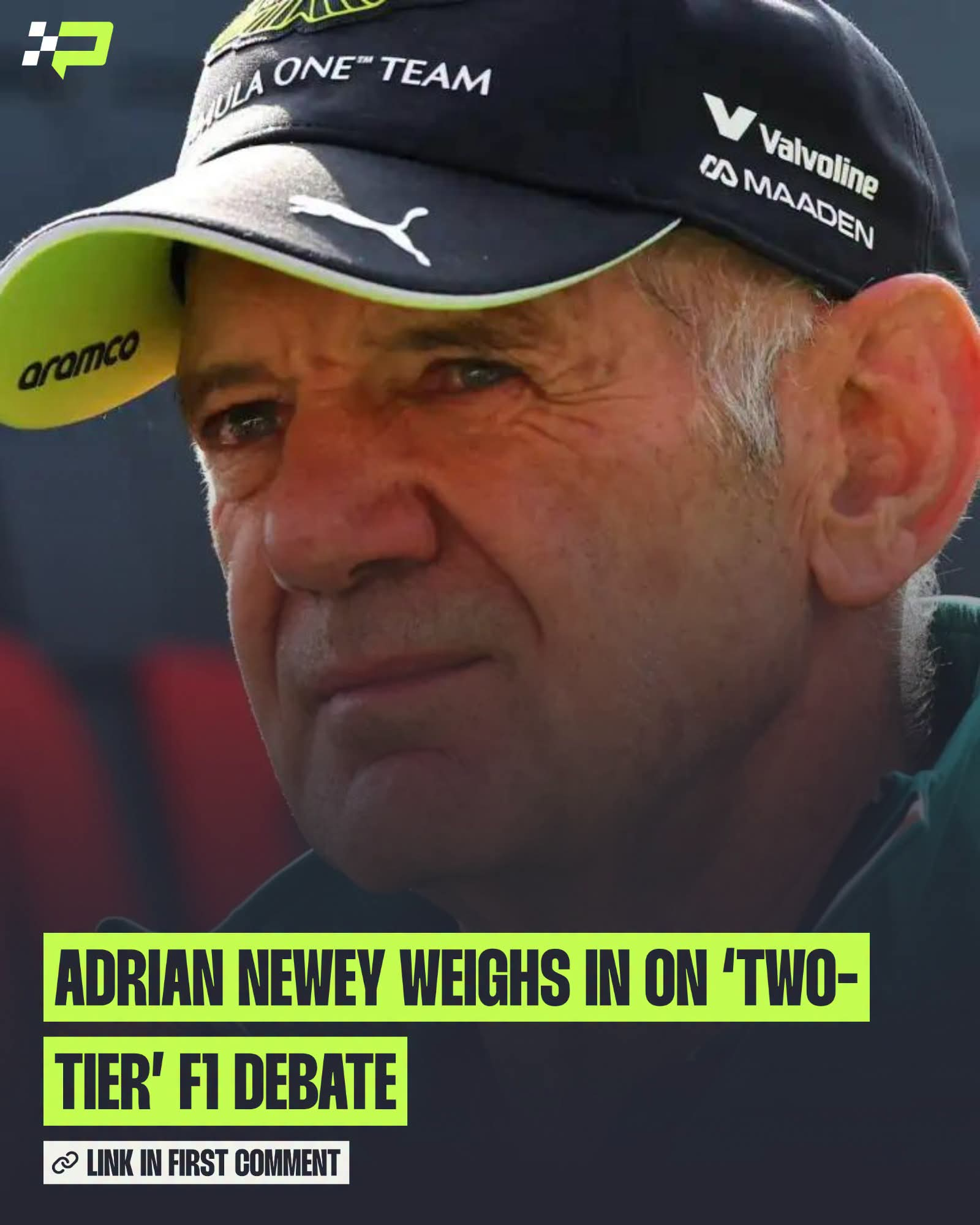
Formula 1 finds itself locked in an uncomfortable debate that refuses to fade. Williams team principal James Vowles has put hard numbers on the table and declared that the cost cap, introduced with high hopes in 2021, has created a two-tier championship. The big four—Mercedes, Ferrari, Red Bull, and McLaren—have tightened their grip rather than loosened it. The rest of the grid is left fighting over scraps. Adrian Newey, now at Aston Martin, has added his voice by supporting the idea of sliding cost-cap allowances for teams further back, rejecting artificial balance-of-performance fixes while acknowledging the structural problem.
This is not just midfield grumbling. It is a fundamental question about whether the financial regulations that saved teams from bankruptcy are now cementing permanent inequality.
THE NUMBERS THAT TELL THE STORY
Vowles arrived at the Sepang press conference armed with data. Across the five completed cost-cap seasons from 2021 to 2025, the big four scored roughly 83.5 percent of available points. Before the cap, in the preceding decade, that figure sat in the mid-to-high 70s. Include the ongoing 2026 campaign and the share climbs higher still. Podium appearances by teams outside the top four have halved, from around 10 percent of the time to roughly 5 percent. In the last 130 grands prix, only one victory has gone to a team outside that elite group.
Those statistics matter because the cost cap was sold on three pillars: long-term financial sustainability, sporting equity, and a compression of competitiveness. The first has succeeded spectacularly. Teams are more stable than at any point in recent memory. The other two, Vowles argues, have failed. The field has not compressed. The gap has widened.
THE COST CAP TRAP THAT KEEPS MIDFIELD TEAMS STUCK
The mechanism is more subtle than simple budget limits. Established top teams already possessed sophisticated factories, digital systems, and efficient processes. Rebuilding teams such as Williams must spend tens of millions of their capped budget just to reach a basic operational standard—tracking parts, modernizing systems, and building the infrastructure the front-runners already take for granted. That money does not buy a faster front wing or a better floor. It buys the ability to function at a professional level. Once spent, less remains for pure performance development. The result is a structural trap: invest in the future and you slow yourself down today; spend on the current car and you fall further behind long-term.
This dynamic explains why even teams that execute well still struggle to bridge the gap. A strong midfield result feels like a triumph rather than a step toward the front. The championship has settled into two distinct competitions: one among the elite four for wins and titles, and another among everyone else for the remaining points and the occasional podium.
WHY NEWEY’S SUPPORT MATTERS
Newey’s endorsement of examining extra cost-cap room for trailing teams carries particular weight. As the most successful designer of his generation and now a team principal at a squad fighting its own challenges, he sits in a unique position. He has rejected balance-of-performance measures that would artificially equalize cars, preferring instead a system that gives lagging teams more financial headroom to invest in the tools and processes that create genuine competitiveness. Cadillac’s Marcin Budkowski has voiced similar support.
Their stance is pragmatic rather than radical. It recognizes that equal spending limits do not produce equal outcomes when starting points differ dramatically. The teams that entered the cost-cap era with mature organizations enjoy a compounding advantage. Those still building the foundations do not.
THE BROADER IMPACT ON DRIVERS, TEAMS, AND THE SPORT
For drivers outside the top four, the stakes are personal. Career progress, contract leverage, and the chance to fight for victories depend on the competitiveness of the car underneath them. A permanent two-tier structure risks turning the midfield into a talent trap: skilled drivers deliver strong results relative to their machinery yet remain invisible in the title conversation.
For the teams themselves, the consequences reach the boardroom. Sponsors pay premiums for visibility near the front. Manufacturers evaluating engine programs or full-team entries look at the likelihood of eventual success. A sport that appears locked into a predictable hierarchy becomes less attractive to new investment even as the commercial value of the top teams soars.
The championship product also suffers. Close racing among four teams is entertaining, yet the absence of genuine outsiders challenging for wins removes one of motorsport’s most compelling narratives—the underdog breakthrough. Fans notice when the same logos occupy the podium week after week.
WHAT COMES NEXT AND WHY IT MATTERS
Vowles has floated the idea of a catch-up mechanism, ideally for 2027, that would give trailing teams additional financial flexibility without dismantling the cost cap entirely. Newey’s openness to a sliding scale points in a similar direction. The alternative is to accept the current structure as permanent and hope that regulation cycles or engine partnerships eventually scramble the order.
Neither outcome is guaranteed. Technical regulation changes can reset hierarchies, as seen in previous eras, yet the cost-cap trap risks slowing any recovery. The teams with superior infrastructure will still extract more performance from the same rules.
Formula 1 has solved the problem of financial instability. It has not yet solved the problem of competitive opportunity. Whether the sport chooses to adjust the rules or simply manage the consequences will shape the character of the championship for the rest of the decade. The data is clear. The voices from both the midfield and the technical elite are speaking. The question is whether the decision-makers are listening closely enough to act before the two tiers become permanent fixtures.