The fallout from the 2026 Monaco Grand Prix continues to dominate Formula 1 headlines, but Mercedes has now made a surprising decision that could mark a major turning point in one of the season’s most controversial disputes.
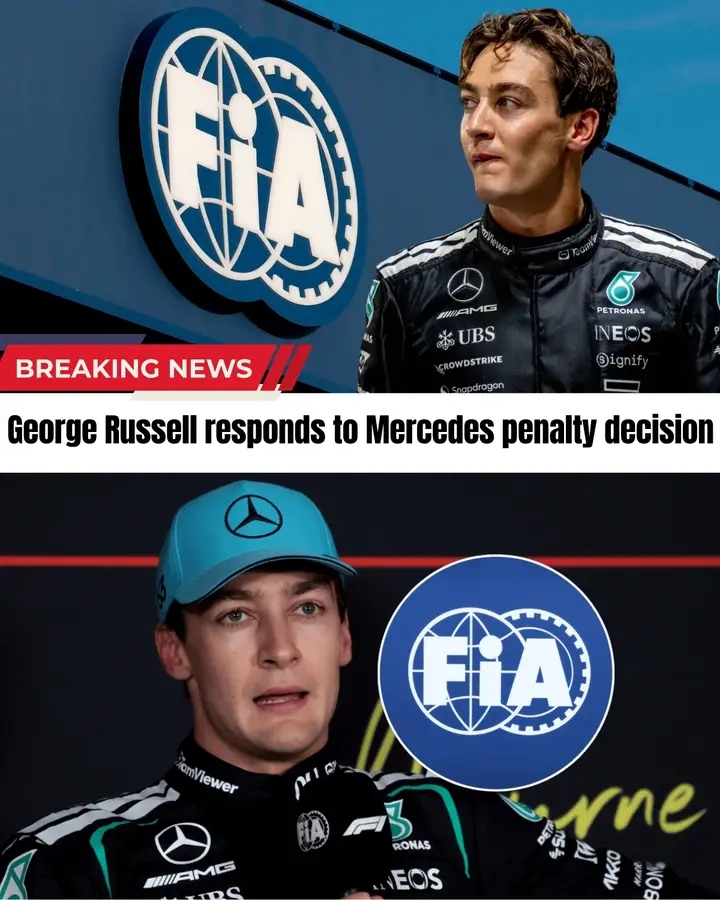
After weeks of frustration, legal consultations, and public criticism, Mercedes has officially withdrawn its request for the FIA to review George Russell’s Monaco penalty. While the move may appear to close the chapter on Russell’s race-day disappointment, the wider controversy surrounding Monaco’s pit-lane speed limit penalties is far from over.
In fact, with other teams still pursuing appeals and protests, Formula 1 could yet witness another dramatic twist in a saga that has already exposed weaknesses in race officiating and raised serious questions about consistency in stewarding decisions.
HOW THE MONACO PENALTY CHAOS BEGAN
The controversy stems from a series of pit-lane speeding penalties issued during the Monaco Grand Prix.
Ahead of the race weekend, Formula 1’s governing body reduced the pit-lane speed limit to 60 km/h. While the change appeared straightforward on paper, it quickly became a major talking point after several drivers were penalized for exceeding the limit by incredibly small margins.
Among those affected were George Russell, Pierre Gasly, Oscar Piastri, and several others.
The situation became particularly explosive when Gasly initially lost a podium finish after receiving multiple speeding penalties. The French driver crossed the line in a podium position, only to see a ten-second penalty added to his race time.
At that point, the story seemed settled.
Then everything changed.
FIA REVERSAL CREATES A NEW PROBLEM
Following Alpine’s successful request for a review, the FIA admitted that an issue existed with how the pit-lane speed limiter had been measured.
As a result, Gasly’s penalties were overturned and his podium was restored.
While Alpine celebrated, other teams immediately began asking difficult questions.
If one driver’s penalties were removed because of an error, what about competitors who had already served penalties during the race?
That question became the center of Mercedes’ argument.
George Russell had accepted and served his punishment during the Grand Prix. Unlike Gasly, however, his race result could not simply be restored by removing a time penalty from the final classification.
Russell and Mercedes believed the FIA’s correction created an uneven outcome, leaving some drivers disadvantaged despite being caught in the same situation.
TOTO WOLFF CONSIDERS LEGAL OPTIONS
The dispute intensified when Mercedes team principal Toto Wolff revealed that the team had examined every possible avenue to challenge the outcome.
Reports suggested Mercedes even consulted legal experts to determine whether the FIA’s decision could be challenged under Formula 1’s sporting regulations.
The aggressive stance reflected just how strongly the team felt about the issue.
For Wolff, the concern was bigger than a single race result.
Formula 1 teams invest hundreds of millions of dollars to compete at the highest level. Championship positions can be decided by just a handful of points, making consistency and fairness absolutely critical.
When penalties are overturned after the fact, teams naturally want assurance that all competitors are treated equally.
WHY MERCEDES CHANGED ITS MIND
Despite initially pursuing a right of review, Mercedes ultimately decided not to continue the fight.
The team’s explanation suggests that discussions with both Formula One Management and the FIA played a significant role in the decision.
According to Mercedes, officials demonstrated a willingness to investigate what happened in Monaco and to implement measures aimed at preventing a repeat of the confusion.
In practical terms, Mercedes appears to have concluded that the likelihood of successfully overturning Russell’s result was relatively small.
A right of review requires significant new evidence rather than simple disagreement with a decision. After exploring every available option, the team seemingly recognized that the legal threshold needed to change the outcome could not be met.
That reality likely influenced Russell’s own response.
The British driver acknowledged that the matter had reached its conclusion and indicated his focus had shifted toward upcoming races.
GEORGE RUSSELL’S FRUSTRATION IS UNDERSTANDABLE
Even though Mercedes has backed down, Russell’s frustration remains easy to understand.
From a driver’s perspective, serving a penalty during the race is a significant setback. Strategy, tire management, and track position are all affected.
When another competitor later receives relief because of an officiating error, questions about fairness become inevitable.
Russell’s situation highlights one of the most difficult challenges facing modern Formula 1 governance.
Stewards must make decisions quickly during live events. However, when new evidence emerges days later, correcting one outcome can sometimes create fresh controversies elsewhere.
This is precisely what happened in Monaco.
WHAT THIS MEANS FOR THE FIA
The governing body may have resolved one dispute, but the broader implications are significant.
The Monaco incident has once again placed the FIA under intense scrutiny regarding consistency and transparency.
Recent seasons have featured numerous debates over stewarding decisions, track limits, penalties, and race control procedures. While the FIA has worked to improve communication, episodes like Monaco show there is still room for improvement.
The biggest lesson may involve the process used to verify technical systems before penalties are issued.
When penalties are handed out for fractions of a kilometer per hour, teams expect measurement systems to be completely reliable.
Any uncertainty can quickly undermine confidence in the results.
CHAMPIONSHIP IMPLICATIONS COULD STILL EMERGE
Although Monaco is only one race, the consequences could stretch much further.
Formula 1 championships have often been decided by remarkably small margins. A handful of points gained or lost in June can become decisive by November.
Mercedes currently remains engaged in a fiercely competitive battle against rivals including Ferrari, McLaren, and Red Bull. Every result matters.
Should the championship fight remain close in the second half of the season, the Monaco controversy may be remembered as one of the defining moments of the year.
Teams will certainly be hoping it does not become a factor in determining either championship.
THE STORY ISN’T OVER YET
Despite Mercedes withdrawing its challenge, Monaco’s final classification may still face further scrutiny.
McLaren has reportedly continued examining its options after the FIA reinstated Gasly’s podium, while Red Bull is also believed to have concerns regarding the revised results.
That means Formula 1 fans should not assume the Monaco standings are permanently settled.
Additional hearings, reviews, or protests could still emerge as teams seek clarity on how the FIA handled the unusual circumstances.
WHAT HAPPENS NEXT?
Looking ahead, Formula 1 is likely to focus on preventing a repeat of the Monaco controversy rather than revisiting every individual penalty.
Expect discussions between teams, the FIA, and Formula One Management regarding technical verification procedures and review mechanisms.
For Mercedes, the priority now shifts back to performance.
Russell and the team know that the most effective response is delivering results on track rather than in hearing rooms.
For the FIA, however, the pressure remains intense.
The governing body must convince teams, drivers, and fans that lessons have been learned from Monaco and that future races will not be overshadowed by similar disputes.
One thing is certain: while Mercedes may have stepped away from the battle, the debate over fairness, consistency, and race officiating in Formula 1 is far from finished.