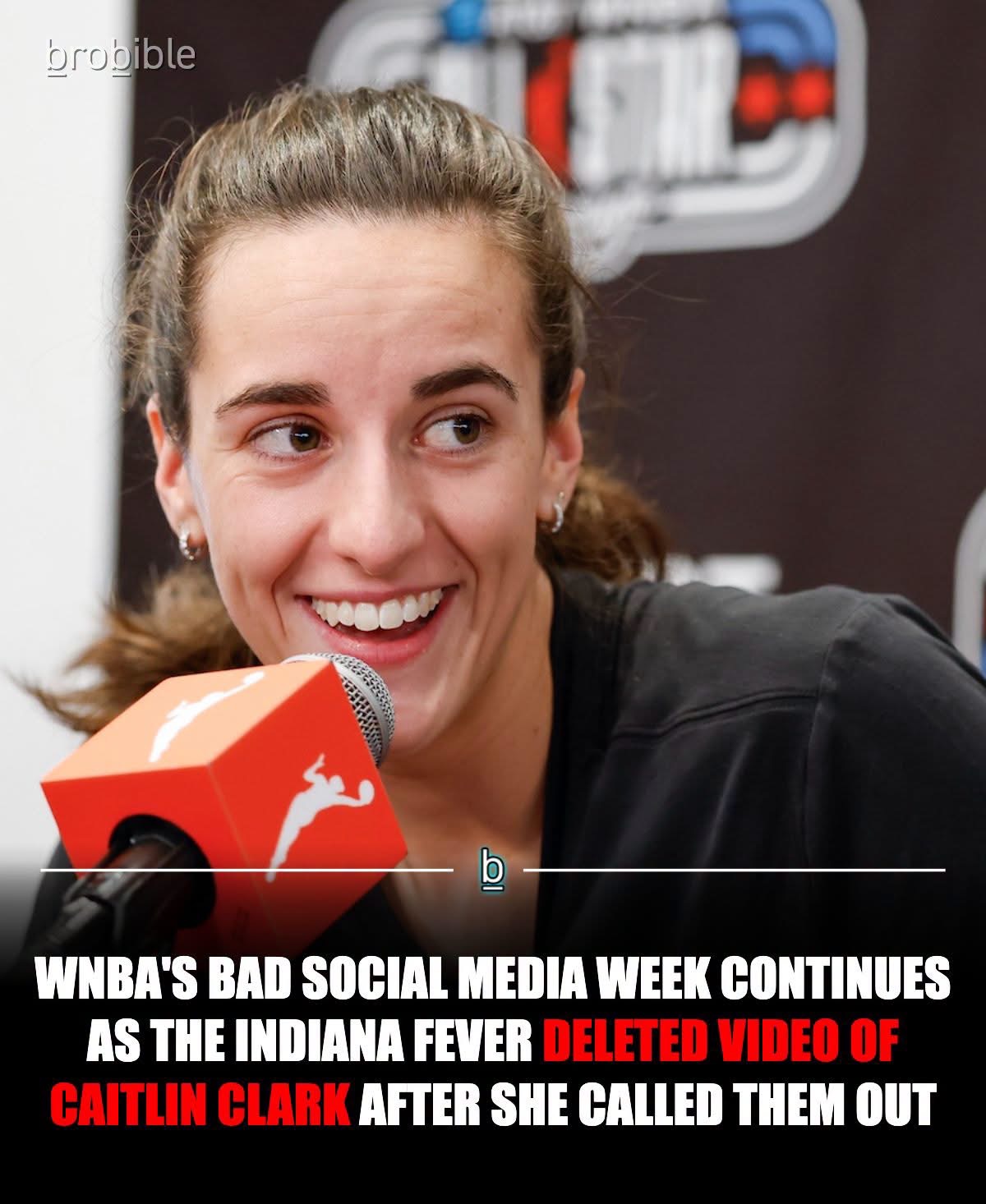
The WNBA’s difficult week on social media took another unexpected turn after the Indiana Fever removed a video featuring Caitlin Clark shortly after the superstar publicly questioned why it had been posted. Coming just days after the league deleted a controversial clip involving Angel Reese and Paige Bueckers, the latest incident has added to growing scrutiny over how WNBA teams and the league are managing their digital presence during one of the sport’s most high-profile seasons.
Clark’s reaction was brief but enough to spark widespread attention. The Fever shared a lighthearted video showing the All-Star guard dancing before Clark herself commented, “Now why would we post this.” Not long afterward, the video disappeared from the team’s social media accounts. Unlike the recently deleted WNBA post involving Reese and Bueckers discussing a friendly $400 wager, Clark’s video did not involve any league rule violations. Instead, its removal appeared to reflect the team’s response to the franchise player’s public discomfort with the content.
CLARK’S INFLUENCE EXTENDS FAR BEYOND THE COURT
The incident once again highlights the extraordinary influence Caitlin Clark now holds across the WNBA. Every social media post, interview, and public appearance involving the Indiana Fever star quickly becomes national news, with millions of fans closely following her every move. That level of attention brings enormous marketing opportunities but also places unprecedented pressure on teams to carefully manage their messaging.
Clark has generally maintained a professional public image since entering the league, choosing to let her performances speak louder than online debates. Her decision to publicly question the post therefore stood out, prompting immediate speculation before the Fever quietly removed the video.
A TOUGH WEEK FOR WNBA SOCIAL MEDIA
The Fever’s deleted post came only days after the WNBA faced criticism for publishing—and then deleting—a video showing Angel Reese and Paige Bueckers joking about a $400 wager on their upcoming game. Although the league later clarified that no disciplinary action would be taken and addressed the matter internally, the incident generated unnecessary controversy because the league’s Collective Bargaining Agreement contains strict rules regarding betting on WNBA games.
Meanwhile, the league has also dealt with fallout surrounding Seattle Storm minority owner Celeste Keaton’s suspension after an incident involving fans supporting Indiana Fever forward Sophie Cunningham. Combined with several other off-court storylines, the WNBA has found itself battling headlines unrelated to basketball during a season that has otherwise produced record interest and television audiences.
SOCIAL MEDIA IS BECOMING A BIGGER CHALLENGE FOR SPORTS ORGANIZATIONS
Professional sports teams increasingly rely on social media to engage younger audiences, build player brands, and drive fan interaction. However, the speed at which content spreads means even harmless posts can quickly become controversial if players, fans, or league officials react negatively.
The Fever’s quick decision to remove Clark’s video suggests organizations are becoming more willing to act immediately rather than allowing online controversies to escalate. While the post itself appeared playful, Clark’s public response shifted attention away from the intended entertainment and toward questions about player privacy and content approval.
KEEPING THE FOCUS ON BASKETBALL
As the second half of the WNBA season continues, league officials and franchises will likely be eager to move the conversation back to on-court action. The league continues to enjoy record attendance, growing television ratings, and unprecedented global attention, much of it fueled by stars such as Caitlin Clark, Angel Reese, Paige Bueckers, and several emerging young talents.
For the Indiana Fever, the deleted video is unlikely to become a lasting issue. Instead, it serves as another reminder that every decision involving the league’s biggest stars now carries enormous visibility. In an era where a single social media post can dominate headlines within minutes, teams must balance engaging content with respecting the preferences of the athletes who have become the faces of the sport.