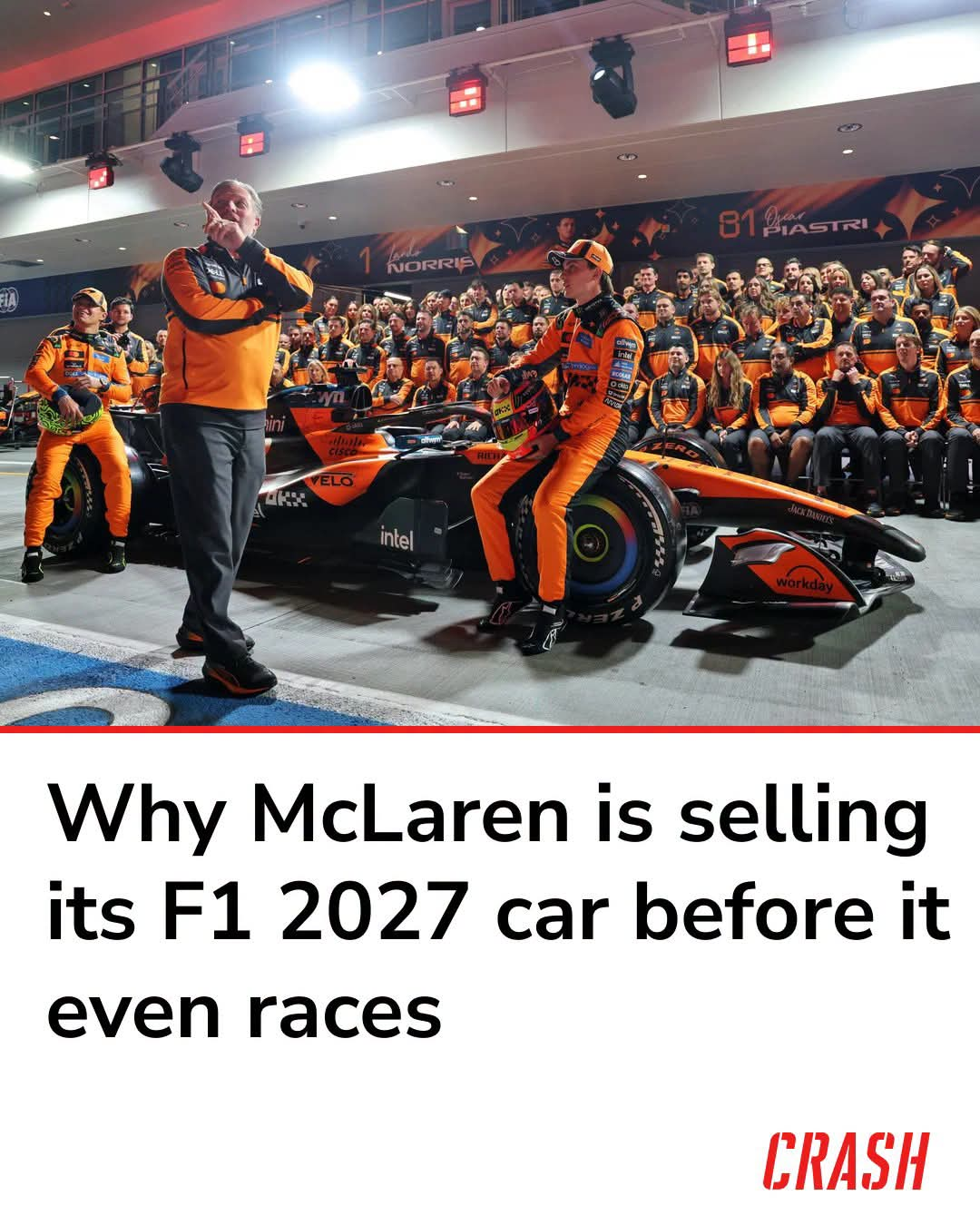
McLaren is taking Formula 1’s commercial opportunities to another level by offering its 2027 challenger for sale months before the car makes its competitive debut. While selling an expensive racing machine before it has even been officially unveiled might sound unusual, McLaren CEO Zak Brown believes the strategy makes considerably more sense than allowing valuable pieces of the team’s history to sit unused behind closed doors.
The Woking-based outfit has confirmed that its 2027 Formula 1 car, expected to carry the MCL41 designation, will be auctioned through RM Sotheby’s in Abu Dhabi on December 9, 2026.
The announcement represents another bold move by McLaren, which is increasingly finding creative ways to connect its racing operations with wealthy collectors, passionate supporters and the wider automotive industry.
However, the decision is about more than simply selling an expensive Formula 1 machine. Brown has now explained the thinking behind the strategy, revealing why McLaren believes giving collectors the opportunity to own its cars is preferable to keeping them hidden away.
ZAK BROWN EXPLAINS WHY MCLAREN IS SELLING ITS FUTURE F1 MACHINERY
Speaking during the team principals’ press conference at the Las Vegas Grand Prix, Brown addressed the thinking behind McLaren’s decision to auction another Formula 1 car before it has competed in a race.
According to the McLaren CEO, the alternative would be to keep producing racing machinery that eventually ends up sitting unused in storage.
Brown explained that McLaren has a passionate automotive following, including collectors who are particularly interested in owning genuine Formula 1 cars.
He believes the auction programme creates opportunities for these individuals to become part of the team’s racing journey rather than simply purchasing a vehicle that has already completed its competitive life.
The McLaren boss also pointed out that the team produces approximately four or five Formula 1 cars annually, making it difficult to justify keeping every machine indefinitely.
From his perspective, allowing collectors to purchase these cars creates a more meaningful relationship between the team and its supporters.
Brown’s explanation also highlights an important development in modern Formula 1: successful teams are increasingly looking beyond traditional sponsorship and prize money to generate commercial opportunities from their sporting heritage.
THE SUCCESS OF THE $11.48 MILLION MCLAREN AUCTION
McLaren’s decision to repeat the experiment is hardly surprising considering the extraordinary success of its previous auction.
In December 2025, the team made history by selling its 2026 MCL40A Formula 1 car before it had competed in a Grand Prix.
The machine eventually sold for an impressive $11.48 million through RM Sotheby’s in Abu Dhabi.
It was a groundbreaking transaction because it demonstrated that collectors were prepared to spend enormous amounts of money on a Formula 1 car whose competitive story had not even begun.
More importantly, the buyer was purchasing something beyond the physical machinery.
They were effectively securing the opportunity to follow the car throughout an entire Formula 1 season, watching it compete against the world’s best drivers and potentially achieve significant results.
That experience represents an entirely different proposition from purchasing a retired racing car several years after its competitive career.
The success of the MCL40A auction has therefore provided McLaren with a commercial model worth repeating.
The upcoming MCL41 auction will test whether the demand for these exclusive experiences remains strong and whether collectors are willing to invest similar amounts in another future Formula 1 machine.
WHAT WILL THE WINNING BIDDER RECEIVE?
The 2027 McLaren auction is designed to offer considerably more than ownership of a racing car.
The successful bidder will have the opportunity to choose a chassis that will be driven by either Lando Norris or Oscar Piastri during the 2027 Formula 1 season.
The car will be supplied with a Mercedes power unit built to the 2027 specification and presented in its official season livery.
However, the biggest attraction could be the additional experiences included in the package.
The winning bidder will receive an invitation to visit McLaren’s headquarters at the McLaren Technology Centre in Woking, where they will have the opportunity to meet Brown, Norris and Piastri.
They will also be invited to the team’s 2027 season launch, giving them an opportunity to experience the excitement surrounding the unveiling of the new challenger.
The package additionally includes exclusive hospitality experiences at two Grands Prix, alongside access to three particularly important events in motorsport:
– The Monaco Grand Prix.
– The 24 Hours of Le Mans.
– The Indianapolis 500.
These experiences connect directly with McLaren’s ambitions across Formula 1, endurance racing and American open-wheel competition.
It is an especially interesting commercial strategy because the team is effectively offering collectors access to several different areas of its racing operations.
Rather than simply selling a car, McLaren is selling access, exclusivity and a closer relationship with one of motorsport’s most recognisable organisations.
WHY THE BUYER WILL NOT RECEIVE THE CAR IMMEDIATELY
Although the successful bidder will technically become the owner of a 2027 McLaren Formula 1 car, taking physical possession of the machine will not happen immediately.
Formula 1 teams operate with highly sophisticated technologies, aerodynamic concepts and engineering solutions that provide significant competitive advantages.
Allowing a rival organisation to gain unrestricted access to a current-generation racing car could potentially expose valuable intellectual property.
Consequently, restrictions are necessary to protect the team’s technical information.
This was already demonstrated by the previous MCL40A auction, whose buyer is scheduled to receive the car in 2028 rather than immediately after the 2026 season.
In the meantime, the buyer was offered a 2025 show car for display purposes.
A similar arrangement may apply to the MCL41, although the precise delivery arrangements for the new auction should be distinguished from those of the previous sale.
The arrangement demonstrates an important balance between commercial ambition and sporting competitiveness.
McLaren wants to monetise its Formula 1 technology and heritage, but it cannot afford to compromise the engineering advantages that help Norris and Piastri compete against their championship rivals.
MCLAREN IS TURNING ITS RACING HERITAGE INTO A BUSINESS ADVANTAGE
There is a bigger commercial story behind McLaren’s decision.
Formula 1 has evolved considerably over the past decade, with teams increasingly recognising the financial value of their brands beyond what happens during Grand Prix weekends.
McLaren is particularly well positioned to take advantage of this development.
The organisation has an extensive motorsport history, multiple championship successes and a global following that extends beyond traditional Formula 1 audiences.
Its appeal also stretches into the luxury automotive and collector markets.
By offering genuine racing machinery through prestigious auctions, McLaren is targeting a category of customers who might not necessarily be reached through conventional merchandise or sponsorship campaigns.
For extremely wealthy collectors, owning a genuine Formula 1 car is an opportunity to possess a piece of motorsport history.
The fact that the MCL41 will actually compete during the 2027 championship makes the proposition even more attractive.
Its owner will have a personal connection to the team’s performance throughout the season, creating an emotional attachment that a conventional showroom purchase cannot easily replicate.
There is also a marketing advantage.
The auction generates publicity around McLaren, introduces the team to a different audience and reinforces its reputation as a premium automotive and motorsport brand.
In that sense, the financial return from the auction could be only one part of the overall benefit.
THE TIMING IS PARTICULARLY INTERESTING FOR MCLAREN
McLaren’s commercial strategy is developing alongside its wider motorsport ambitions.
The team is preparing for an increasingly important period across multiple racing categories, including Formula 1, IndyCar and the World Endurance Championship.
Its planned return to the top level of endurance racing with the MCL-HY Hypercar programme in 2027 adds another dimension to its identity.
The organisation is no longer interested in being recognised exclusively as a Formula 1 team.
Instead, it wants to establish itself as a major force across the different disciplines that make up international motorsport.
This broader ambition also creates additional opportunities for commercial partnerships and exclusive experiences.
The inclusion of Le Mans and the Indianapolis 500 in the MCL41 auction package is therefore particularly significant.
It introduces the winning bidder to the wider McLaren racing organisation rather than limiting the experience to its Formula 1 operations.
That could become an important part of the team’s long-term commercial strategy.
COULD OTHER FORMULA 1 TEAMS FOLLOW MCLAREN’S EXAMPLE?
One of the most interesting questions surrounding this development is whether other Formula 1 organisations will eventually adopt similar auction strategies.
McLaren has demonstrated that there is a market for selling future racing machinery to collectors before it competes.
The $11.48 million sale of the MCL40A provides a strong example of the financial potential.
However, replicating the strategy successfully will depend on several factors.
A team’s historical reputation, championship achievements, global popularity and relationship with collectors will all influence how much potential buyers are prepared to spend.
Teams with extensive championship histories could potentially attract significant interest from collectors seeking iconic machinery.
Nevertheless, the appeal of an unraced car is slightly different.
Its value depends partly on anticipation and the opportunity to follow its development throughout a season.
There is also an element of financial risk for the buyer.
Nobody can know in advance whether the car will become a championship contender, win several races or struggle against its competitors.
That uncertainty is precisely what makes the MCL41 auction unusual.
The buyer is investing in a future sporting story rather than purchasing an established piece of racing history.
If McLaren continues to achieve strong auction results, other manufacturers and racing organisations could become increasingly interested in exploring similar opportunities.
WHAT THIS MEANS FOR LANDO NORRIS AND OSCAR PIASTRI
Although the auction is primarily a commercial development, Norris and Piastri are central to the attraction.
The successful bidder will be able to select a chassis associated with either driver, meaning the car’s competitive history will become part of its eventual collector value.
For Norris, who became the 2025 Formula 1 world champion, the opportunity further strengthens his association with McLaren’s modern success.
Piastri, meanwhile, continues to establish himself as one of the team’s most important competitive assets.
Their continued partnership also provides commercial stability.
McLaren can offer collectors the opportunity to follow two established drivers throughout the season while maintaining a consistent driver line-up.
There is another interesting dimension to this arrangement.
The buyer will effectively have a personal interest in the performance of whichever driver’s chassis they select.
Every podium, victory and memorable performance could add to the emotional significance of the eventual ownership experience.
However, the commercial arrangement will not influence the team’s sporting decisions.
McLaren’s priority will remain maximising its championship results, regardless of which chassis has been selected by the auction winner.
WHAT HAPPENS NEXT?
All attention will now turn to December 9, when RM Sotheby’s hosts the auction in Abu Dhabi, following the 2026 Formula 1 season finale.
The final selling price will be particularly interesting because it will provide another indication of the demand for modern Formula 1 machinery.
The previous $11.48 million transaction established a remarkable benchmark.
Whether the MCL41 can match or surpass that figure remains to be seen.
Much will depend on the appetite of collectors, the exclusivity of the package and the perceived value of owning a genuine McLaren Formula 1 car before its competitive history is written.
There is also the possibility that the auction could become an annual tradition.
Brown has already indicated that McLaren intends to continue offering at least one car each year.
If that strategy remains successful, the team could establish a completely new relationship between Formula 1 racing operations and the luxury collector market.
VERDICT: MCLAREN HAS FOUND ANOTHER WAY TO CAPITALISE ON ITS FORMULA 1 SUCCESS
McLaren’s decision to sell its 2027 Formula 1 car before it races might initially appear unconventional, but Zak Brown’s explanation reveals a carefully considered commercial strategy.
Rather than allowing valuable racing machines to remain hidden in storage, the team is creating opportunities for collectors to become part of its competitive journey.
The previous $11.48 million sale demonstrated that there is considerable demand for this type of exclusive ownership experience.
Now, the MCL41 auction will determine whether McLaren can turn that one-off success into a sustainable business model.
For Formula 1, the development also highlights how much the commercial landscape is changing.
Teams are no longer simply selling sponsorship space, merchandise and hospitality packages. They are finding ways to turn their engineering achievements, racing heritage and competitive experiences into valuable products.
And if McLaren continues to attract multimillion-dollar bids, it would not be surprising to see other Formula 1 teams exploring similar opportunities in the future.
One thing is certain: McLaren has found a way to make its next Formula 1 car commercially valuable long before it has even completed its first competitive lap.SEO KEYWORDS: McLaren 2027 F1 car, McLaren MCL41, Zak Brown, McLaren F1 auction, Lando Norris, Oscar Piastri, RM Sotheby’s, Formula 1 news, McLaren Mercedes 2027.
SUGGESTED META DESCRIPTION: McLaren CEO Zak Brown explains why the team is auctioning its 2027 MCL41 F1 car before it races, following the $11.48 million sale of its previous challenger.