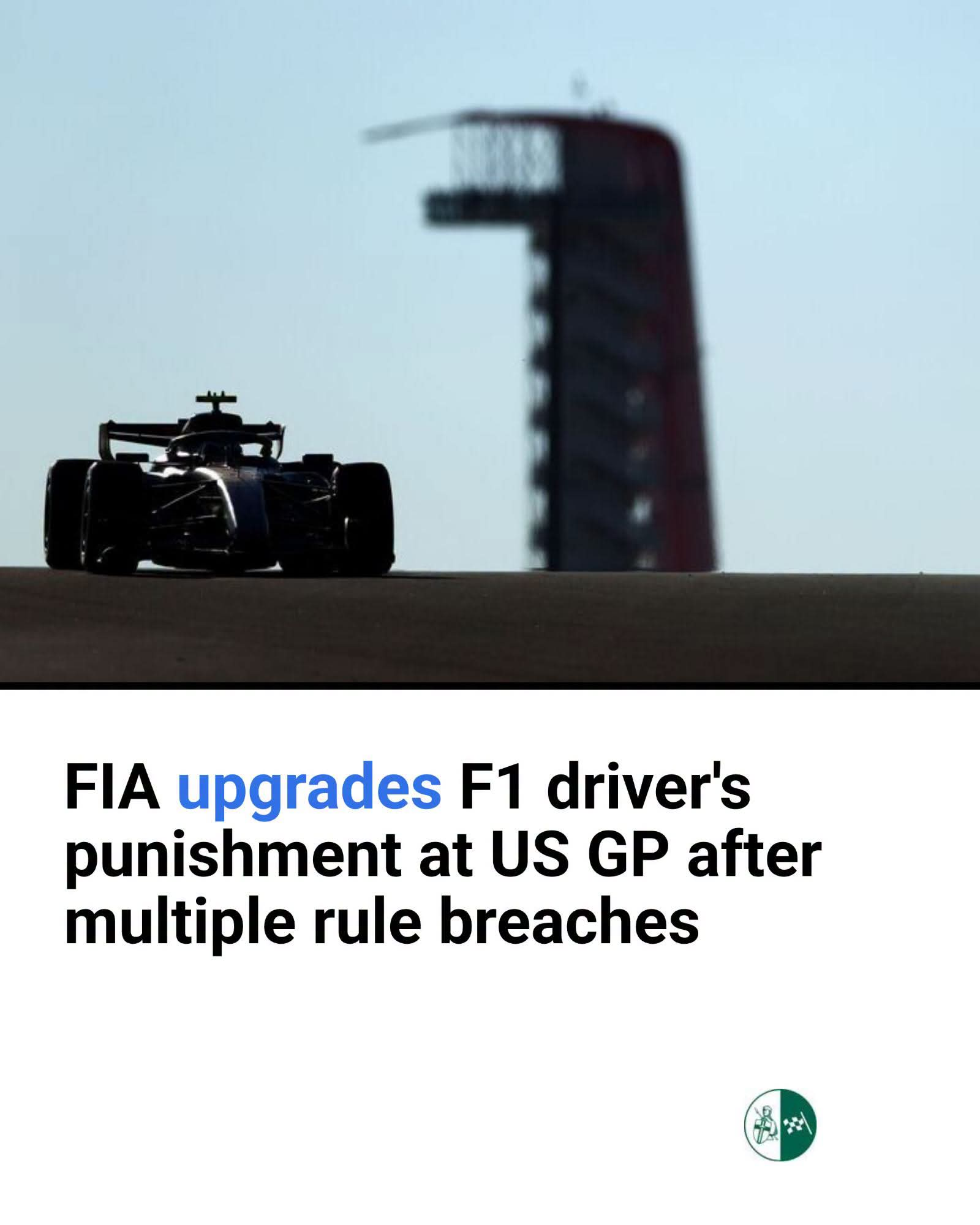
Gabriel Bortoleto will start the United States Grand Prix from the very back of the grid after the FIA confirmed a cumulative 60-place penalty for multiple power-unit component changes. The Audi driver has taken an extensive suite of new parts beyond his seasonal allocation, triggering the largest grid drop of the weekend.
With the regulations converting any penalty exceeding 15 places into an automatic reverse-grid start, Audi elected to introduce as many fresh components as possible once the back-of-the-grid outcome was inevitable.
### HOW THE PENALTY REACHED 60 PLACES
Each Formula 1 car is limited to a set number of power-unit elements across the season. The first time a driver exceeds the allocation for a specific component, a 10-place grid penalty is applied. Subsequent breaches of the same component carry five-place penalties.
Bortoleto was already due grid drops after Audi fitted a fourth energy store and a fourth control electronics unit — both limited to three per year. Once those penalties pushed him beyond the 15-place threshold, the team continued installing additional new parts.
The full list now includes a fifth energy store, a fifth control electronics unit, a fifth internal combustion engine, a fifth turbocharger, a fifth exhaust system, a fourth MGU-K and a seventh power-unit ancillary component. The combined total reached 60 places.
### THE LOGIC BEHIND THE DECISION
Under the current rules, there is no sporting disadvantage to accumulating further penalties once a driver is already destined to start last. By taking multiple new components in one go, Audi ensure Bortoleto has a fresh pool of parts available for the remaining races without incurring additional grid drops at future events.
The approach is pragmatic. Starting 22nd or 30th makes no difference to the race outcome in terms of grid position. Banking extra components now protects the team from further penalties later in the season when points may be more realistically available.
### OTHER DRIVERS ALSO SERVING PENALTIES
Bortoleto is not the only driver dropping down the order. Arvid Lindblad and Franco Colapinto are also serving grid penalties for exceeding their power-unit allocations, though neither approaches the scale of the Audi driver’s sanction. Several other drivers had been under scrutiny during the weekend, but the stewards’ focus remained on the component changes already confirmed.
### WHAT IT MEANS FOR SUNDAY
Bortoleto qualified 13th on pure pace, demonstrating that the car has competitive potential in the midfield. Starting from the pit lane or the back of the grid significantly reduces his chances of scoring points, unless the race is disrupted by safety cars or changing conditions.
For Audi, the priority is longer-term. Fresh power-unit elements give Bortoleto a more reliable platform for the final races of 2026 and remove the risk of further grid penalties in the near future.
### A FAMILIAR END-OF-SEASON REALITY
Large cumulative grid penalties have become a regular feature of the later stages of the Formula 1 season. As teams exhaust their allocated components, the strategic choice often shifts from minimising penalties to maximising the number of new parts taken in a single hit. Bortoleto’s 60-place drop is an extreme example of that logic in action.
Sky Sports commentator David Croft captured the absurdity of the situation with a wry observation that the Brazilian would be starting the race from Houston while the rest of the field remained in Austin. The joke contained a serious point: once a driver is sent to the back, the scale of the penalty becomes largely academic.
On Sunday, Bortoleto will begin the United States Grand Prix from last place. The components in his car, however, will be among the newest on the grid.