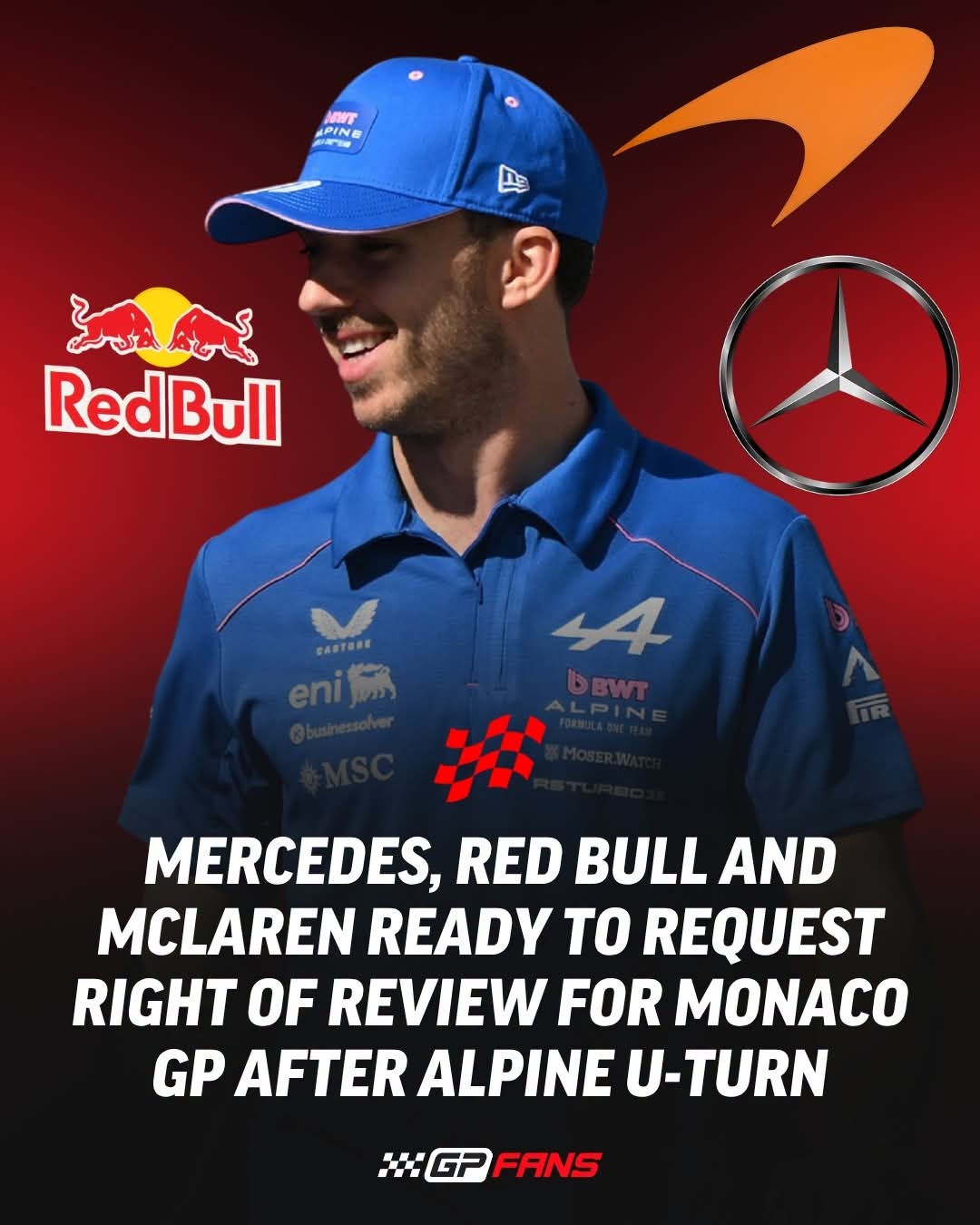
The Formula 1 championship has been thrown into another regulatory storm after McLaren, Mercedes, and Red Bull all moved to challenge the FIA’s decision to overturn Pierre Gasly’s penalty from the Monaco Grand Prix.
The dispute is not simply about one driver keeping a podium finish. Instead, it has raised deeper questions about sporting consistency, fairness, and whether teams are being judged by the same standards when regulations change after a race has already concluded.
The controversy began after several drivers were penalised for pit lane speeding offences during the Monaco Grand Prix. Gasly was handed two separate five-second penalties, while Lewis Hamilton, Oscar Piastri, Franco Colapinto, and George Russell were also punished for similar infringements.
However, after Alpine appealed the decision, the FIA accepted that the team had presented a “significant and relevant new element,” leading to Gasly’s 10-second penalty being removed and his podium position being restored.
FIA DECISION CREATES CHAMPIONSHIP CONTROVERSY
The reversal immediately sparked frustration among rival teams, particularly because other drivers had already accepted their penalties and served them during the race.
George Russell’s case became one of the biggest talking points. The Mercedes driver failed to correctly serve his time penalty and was later given a drive-through penalty, costing him valuable points and damaging his championship hopes.
From the perspective of teams like Mercedes, McLaren, and Red Bull, the problem is not that Gasly benefited from an appeal. The concern is that competitors who followed the original interpretation of the rules were left at a disadvantage.
Formula 1 teams spend entire weekends making strategic decisions based on FIA rulings. A sudden change after the chequered flag can completely alter the competitive picture.
MCLAREN QUESTIONS SPORTING FAIRNESS
McLaren became one of the first teams to publicly react, confirming that it had submitted a notification of appeal.
The team explained that its concern was focused on regulatory consistency rather than targeting Gasly or Alpine.
McLaren argued that every team entered Monaco operating under the same understanding of the pit lane speed regulations. Drivers who received penalties adjusted their races accordingly, and those punishments influenced the final classification.
The team believes removing those penalties afterwards creates a situation where some competitors are punished for following the rules as they were understood at the time.
This could become a major issue for the championship if teams begin to question whether race results can be trusted until several days later.
MERCEDES AND RED BULL JOIN THE FIGHT
Mercedes team principal Toto Wolff confirmed that the team had also contacted the FIA regarding a right of review.
Although Wolff admitted that he was unsure whether the action would lead to a change, Mercedes clearly sees the situation as important enough to challenge.
Red Bull has also joined the process, with team principal Laurent Mekies previously expressing concern over the impact of the decision.
Mekies highlighted the fact that teams were racing with the understanding that penalties issued during the event would stand. Drivers who received punishments had to adapt their strategies around those decisions.
The Red Bull boss suggested that the priority should be providing clarity for fans and competitors so that everyone understands the final result of a race.
THE BIGGER IMPACT ON THE F1 TITLE FIGHT
This controversy arrives at a crucial stage of the season, where every point can influence the championship battle.
A single penalty reversal can affect not only podium positions but also constructors’ championship standings, driver confidence, and future race strategies.
For McLaren, Mercedes, and Red Bull, the concern is that inconsistent enforcement could create a dangerous precedent. If teams believe penalties can later be overturned, they may approach future races differently, potentially changing how drivers handle borderline situations.
The FIA now faces pressure to explain whether Gasly’s case was an exceptional circumstance or whether the original penalty system needs adjustment.
FIA FACES PRESSURE TO RESTORE CONFIDENCE
Formula 1 has always depended on trust in its sporting regulations. Teams accept penalties because they believe every competitor is judged under the same framework.
The Gasly situation has challenged that belief.
The FIA’s review process exists for situations where new evidence emerges, but the timing of this decision has created frustration because other teams had already suffered consequences.
Moving forward, the governing body may need to clarify how similar situations will be handled to avoid future championship disputes.
The outcome of this review could have a much bigger influence than just one Monaco result. It could shape how teams interpret FIA decisions for the remainder of the season and determine whether Formula 1’s current approach to penalties is truly fair.