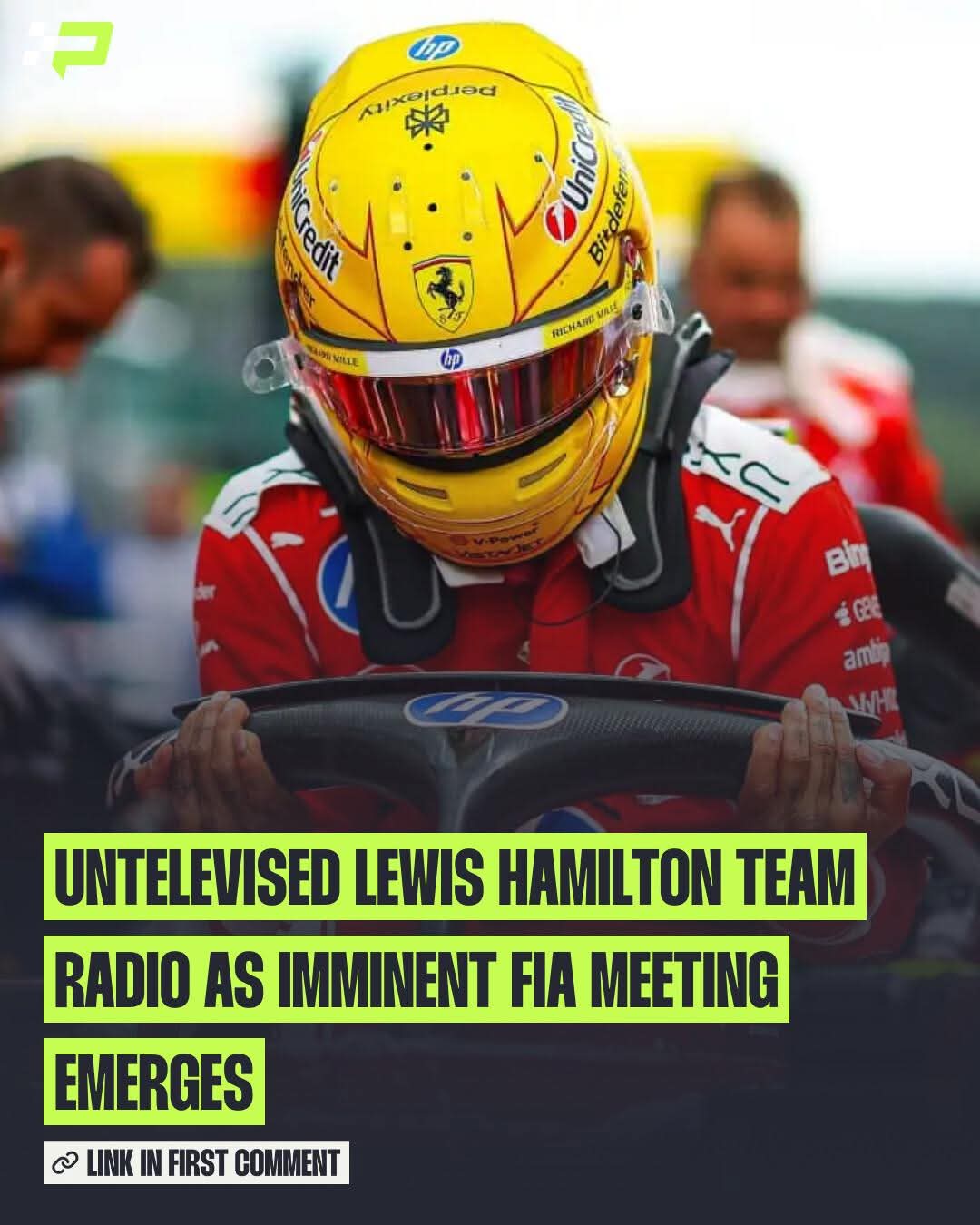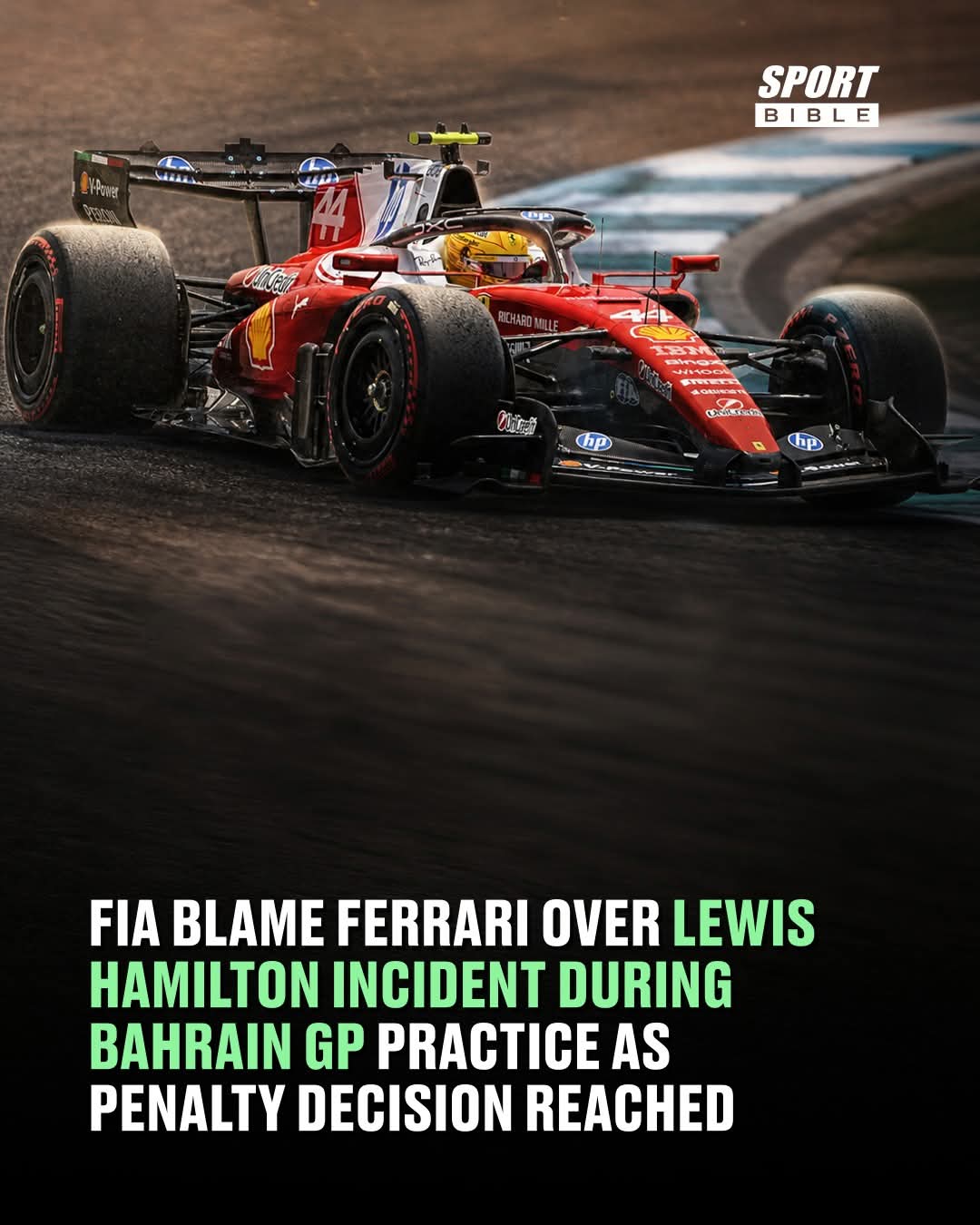
Lewis Hamilton has escaped a grid penalty for impeding Gabriel Bortoleto during second practice for the Bahrain Grand Prix at Sepang, but Ferrari have been hit with a €10,000 fine after the FIA ruled the team failed in its duty of care. The stewards determined that the Scuderia should have provided clearer radio warnings once they knew Hamilton’s right-hand mirror was damaged.
The decision places the primary responsibility on the team rather than the driver and raises fresh questions about communication protocols when a car’s visibility is compromised.
### WHAT HAPPENED ON TRACK IN FP2
During a busy second practice session at Sepang, Hamilton was circulating slowly on the racing line as he approached Turn 8. Bortoleto, on a push lap, closed rapidly and was forced to take avoiding action. The Audi driver first attempted to go around the outside before switching to the inside.
Bortoleto’s frustration was immediate. “What the —- is this guy doing, man,” he said over team radio. “He sees me coming and he just keeps blocking.”
Although the speeds involved meant a collision was avoided, the incident was placed under investigation.
### WHY HAMILTON AVOIDED A GRID PENALTY
In normal circumstances, impeding a driver on a fast lap in practice or qualifying can result in a grid drop. On this occasion the stewards accepted mitigating factors. Hamilton’s right-side mirror was damaged — a fact clearly visible on Bortoleto’s onboard footage — and the Ferrari driver reported that he had not received a timely warning about the approaching car.
As a result, Hamilton received only a warning. The stewards concluded that the root of the problem lay with the information (or lack of it) reaching the cockpit.
### FERRARI HIT WITH FINE FOR FAILING TO WARN
The FIA’s language regarding Ferrari was significantly sharper. In their official decision the stewards stated that the team was aware of the damaged mirror and therefore had an obligation to compensate for Hamilton’s reduced rear visibility.
“The team was aware that HAM’s right-hand mirror was damaged,” the document read. “As such, the Stewards determine that the Team should have provided appropriate radio warnings of significantly faster approaching cars, irrespective of whether those cars were on a push lap or not.
“The Stewards therefore determine that the Team failed to provide its driver with appropriate information in circumstances where it knew that his ability to observe approaching traffic was materially impaired by the damaged mirror and impose a fine of €10,000 on Scuderia Ferrari HP.”
The ruling makes clear that once a team knows a driver’s situational awareness is compromised, the responsibility to manage traffic risk shifts more heavily onto the pit wall.
### TEAM RESPONSIBILITY VERSUS DRIVER AWARENESS
Modern Formula 1 places heavy demands on both driver and team during practice sessions. Traffic is constant, push laps are precious, and the speed difference between a car on a cool-down or preparation lap and one on a hot lap can be enormous. When a mirror is damaged, that challenge intensifies.
The stewards’ decision reinforces an important principle: teams cannot simply leave a driver to cope when they possess critical information about a car’s limitations. Radio communication exists precisely for these scenarios. Ferrari’s failure to deliver timely warnings was judged more culpable than Hamilton’s on-track positioning.
### A RELATIVELY LIGHT OUTCOME FOR BOTH PARTIES
For Hamilton the result is a clear relief. A grid penalty would have complicated his weekend at a circuit where he has historically been strong in qualifying but less fortunate in races. For Ferrari the €10,000 fine is financially minor, especially given the team’s competitive showing in the opening sessions, with Charles Leclerc topping FP2 and Hamilton finishing fifth.
Nevertheless, the public nature of the reprimand serves as a warning. Repeated communication failures of this type could attract harsher sanctions in future.
### WHAT IT MEANS FOR THE REST OF THE WEEKEND
Sepang has returned to the calendar as the venue for the Bahrain Grand Prix, and early running has already produced incident and investigation. Hamilton and Ferrari will want to put the matter behind them quickly and focus on extracting performance from a car that looks competitive.
The broader lesson is one of process. When a car is damaged in a way that affects visibility or awareness, the team’s duty of care increases. In Sepang the FIA decided Ferrari did not meet that standard. Hamilton walks away with a warning. The team pays the fine — and absorbs the criticism.