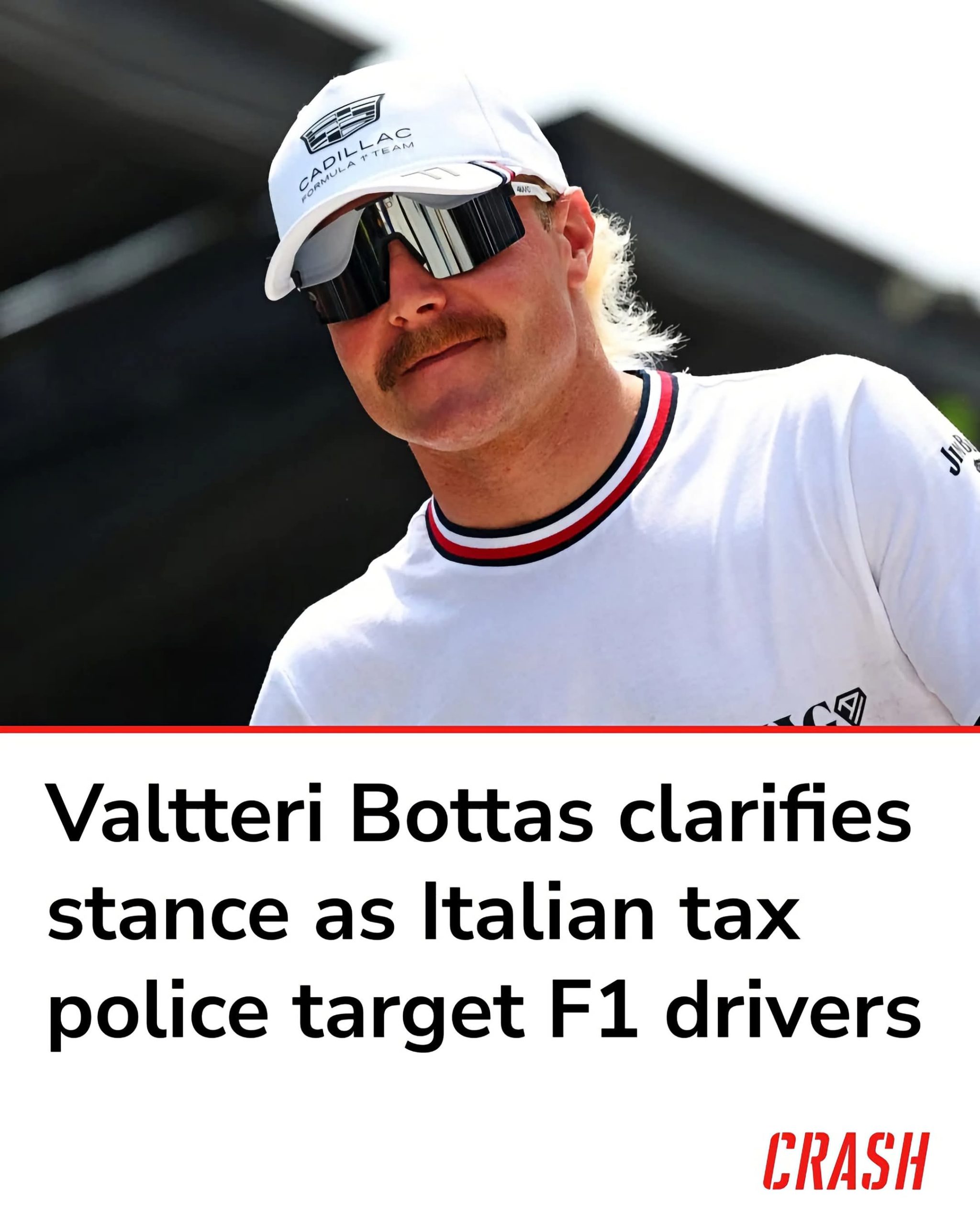
Valtteri Bottas has moved to clear the air after his comments about Italian taxes sparked criticism, insisting Formula 1 drivers have “no problem” paying what they owe — provided the rules are clear from the start. The Cadillac driver’s clarification comes amid reports that Italy’s financial police have contacted multiple drivers seeking tax returns on income earned in the country, in some cases reaching back seven or eight years.
The issue has gained extra urgency because Imola sits high on the list of contingency venues should the season-ending races in Qatar and Abu Dhabi be disrupted by the ongoing conflict in the Middle East.
### WHAT BOTTAS ACTUALLY SAID AND WHY IT CAUSED A STIR
Speaking ahead of the Bahrain Grand Prix at Sepang, Bottas linked the tax situation to a potential calendar change. He noted that no driver particularly wants to finish the season at Imola in light of the recent letters from the Guardia di Finanza, and contrasted the situation with Abu Dhabi’s zero-tax environment.
Those remarks were widely interpreted as drivers trying to avoid paying tax. After pushback, Bottas issued a fuller explanation following Friday practice.
“It’s one of those classic examples where I explained about the situation and they only took just the best bits to make it look really bad for me,” he told Sky Sports F1. “Honestly, we have no problem with paying taxes — as long as we know. We race in many countries and in more than 50 percent of the countries we go to, there’s a certain percentage. And that’s okay, as long as we know.”
The frustration, he said, stems from the retrospective nature of the request. Drivers had previously been told they did not need to file tax returns for Italy. Being asked years later for a substantial sum has created understandable irritation.
### THE WIDER TAX LANDSCAPE IN FORMULA 1
Most Formula 1 drivers structure their tax affairs carefully, often maintaining residency in low- or zero-tax jurisdictions such as Monaco. When they race in countries that levy income tax on appearance fees, prize money or other earnings generated on their soil, clear and consistent rules are essential.
In many territories the process is straightforward and known in advance. Italy’s move to seek returns covering multiple past seasons has disrupted that certainty. Bottas’s core point is not an objection to taxation itself, but to the lack of prior warning and the sudden application of rules drivers believed did not apply to them.
Max Verstappen offered a characteristically blunt counter-view: “There is no tax issue. You just have to pay tax.” Haas driver Ollie Bearman lightened the mood by noting that the complication is “a bit less relevant to me than some of the others.”
### WHY THE TIMING MAKES THE STORY BIGGER
The tax letters would be a paddock talking point in any circumstances. They become strategically significant when linked to the calendar. Formula 1 is scheduled to end the season with a Qatar–Abu Dhabi double-header. Geopolitical instability has forced organisers to prepare alternatives, and Imola has been identified as a ready and willing replacement.
If the Middle East races were postponed or cancelled, a late-season trip to Italy would drop drivers straight into the unresolved tax situation. Bottas’s original comments simply reflected that practical concern.
### THE IMPACT ON DRIVERS, TEAMS AND THE CALENDAR
For the drivers, the issue is both financial and administrative. Large, unexpected bills covering several years create personal planning problems and generate negative headlines. For the teams, any distraction in the final weeks of a championship fight is unwelcome. For Formula 1 and the FIA, the episode underlines the importance of stable, transparent tax treatment across the calendar so that sporting decisions are not complicated by fiscal surprises.
Imola itself risks being viewed less as an attractive emergency venue and more as a complicated one while the tax questions remain open.
### WHAT HAPPENS NEXT
Bottas’s clarification should reduce some of the heat around his personal stance. The deeper questions remain. Will the Guardia di Finanza pursue the historical claims aggressively? Will future Italian races come with clearer, prospective tax guidance? And will the potential need for a calendar contingency force a faster resolution?
Formula 1 has always navigated a complex web of national regulations. Most of the time those issues stay in the background. When they collide with calendar uncertainty and championship pressure, they quickly become paddock-wide talking points.
Bottas has now stated his position plainly: drivers will pay what is owed when the rules are known. The frustration arises when the rules appear to change after the fact. In a sport that prides itself on precision, that principle applies off the track as well as on it.