A surprising war of words has erupted inside the Ferrari camp after long-time brake supplier Brembo publicly challenged Charles Leclerc’s claims about the cause of his Monaco Grand Prix accident. What initially appeared to be a straightforward technical issue has now evolved into one of the most intriguing stories heading into the Spanish Grand Prix, raising questions about driver confidence, supplier relationships, and Ferrari’s ongoing pursuit of consistency in Formula 1’s new era.
The controversy comes at a crucial stage of the 2026 season, with Ferrari attempting to close the gap to championship-leading Mercedes while also managing the growing expectations surrounding both Leclerc and seven-time world champion Lewis Hamilton.
LECLERC’S MONACO FRUSTRATION SPARKED THE CONTROVERSY
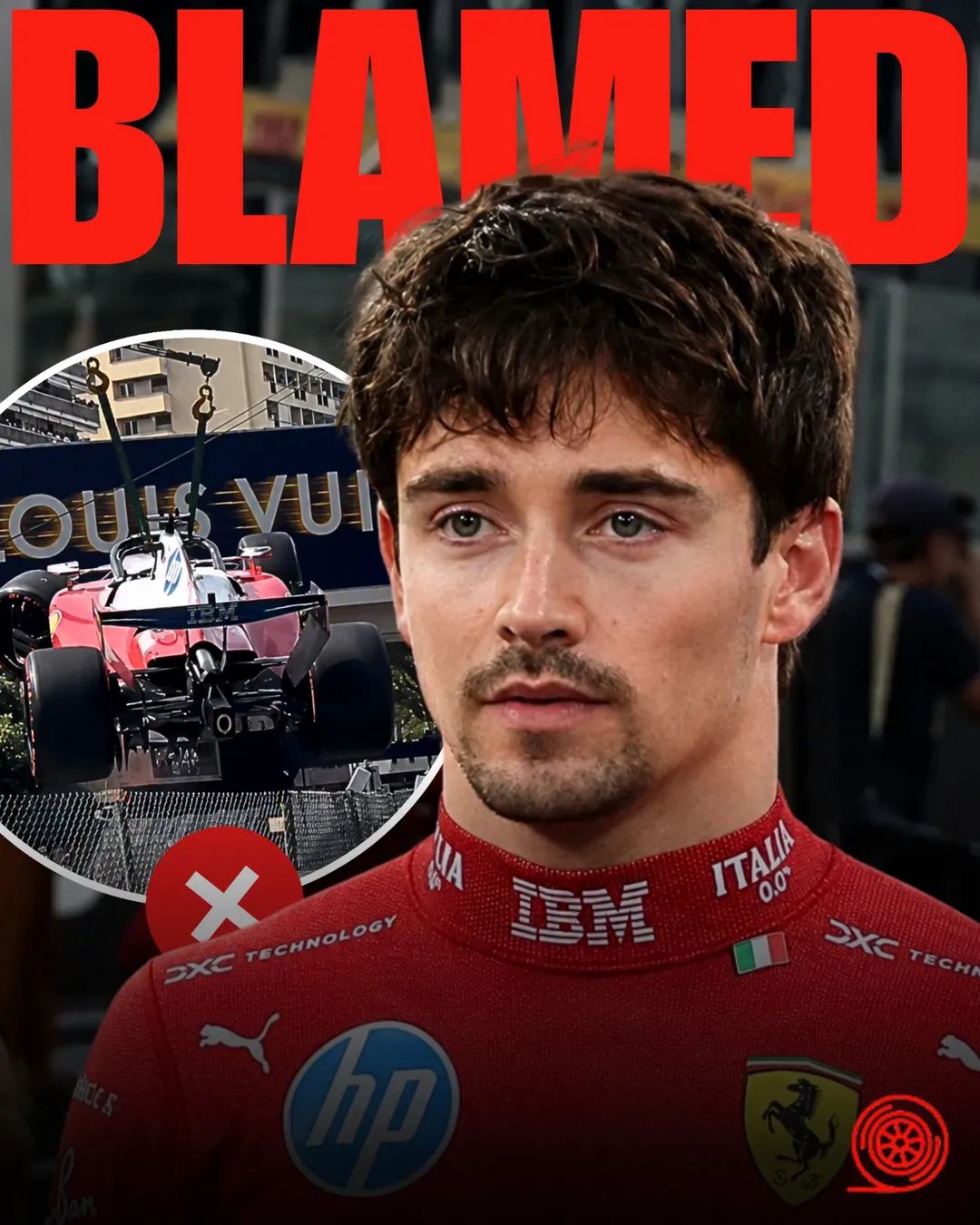
Following his disappointing Monaco weekend, Leclerc pointed directly to a brake issue as the primary cause of his accident. The Monegasque driver claimed that multiple brake units failed to perform as expected, leaving him without the confidence and stopping power needed to navigate one of Formula 1’s most demanding circuits.
For any driver, brake confidence is everything. In Monaco, where barriers sit inches away from the racing line and braking zones arrive almost instantly, even the slightest uncertainty can have major consequences.
Leclerc’s comments suggested that the problem was significant rather than isolated, immediately triggering discussions throughout the paddock about Ferrari’s technical reliability.
However, not everyone agreed with his assessment.
BREMBO RESPONDS WITH A RARE PUBLIC REBUTTAL
Brembo, Ferrari’s brake supplier for more than five decades, quickly responded to Leclerc’s remarks and made it clear that it was not prepared to accept blame without a full technical investigation.
The company expressed surprise at the driver’s conclusions and emphasized that detailed analysis of the available data must take place before any definitive judgment can be made.
Such public responses from suppliers are relatively uncommon in Formula 1. Most disagreements remain behind closed doors, especially when they involve one of the sport’s most iconic partnerships.
The fact that Brembo felt compelled to defend its position publicly highlights how seriously the company views the situation.
For a manufacturer whose reputation is built on performance and reliability across motorsport’s highest levels, suggestions of brake failure carry significant weight.
WHY THIS STORY GOES BEYOND A SINGLE INCIDENT
What makes this situation particularly fascinating is that the disagreement arrives during a season already filled with technical challenges.
The 2026 regulations introduced major changes to Formula 1 machinery, forcing teams and suppliers to adapt rapidly. Components that worked perfectly under previous rules are now operating in a completely different environment.
As a result, teams are continuously searching for solutions to improve performance, reliability, and driver confidence.
When a driver loses faith in a critical component, restoring that trust can become just as important as solving the underlying technical issue.
That appears to be exactly where Ferrari now finds itself.
LECLERC’S DECISION TO FOLLOW HAMILTON’S PATH
Perhaps the strongest indication of Leclerc’s feelings is his decision to abandon his current brake specification and move toward the setup used by Lewis Hamilton.
Hamilton’s braking preferences have long been regarded as among the most refined in Formula 1. Throughout his career, he has worked closely with engineers to create a braking feel that maximizes consistency and confidence, particularly during race conditions.
By switching to Hamilton’s specification, Leclerc is effectively voting with his feet.
Regardless of what future data reveals about the Monaco incident, the Ferrari driver clearly believes a different setup could offer greater stability and predictability.
That decision alone could have major implications for Ferrari’s performance moving forward.
WHAT THIS MEANS FOR FERRARI’S INTERNAL DYNAMICS
The timing of the brake change is particularly interesting because Ferrari is still navigating its first season with Hamilton and Leclerc as teammates.
The arrival of a seven-time world champion naturally creates comparisons between both drivers. Every setup choice, technical preference, and performance trend is scrutinized.
If Hamilton’s brake configuration delivers immediate improvements for Leclerc, it could strengthen the argument that Ferrari should align its technical direction more closely with Hamilton’s feedback.
On the other hand, if the change produces little benefit, attention may shift back toward the underlying mechanical issues that triggered the debate in the first place.
Either way, the situation adds another layer to one of Formula 1’s most closely watched partnerships.
WHY BARCELONA COULD PROVIDE THE ANSWERS
The Spanish Grand Prix presents the ideal environment to evaluate the effectiveness of Leclerc’s switch.
Unlike Monaco’s unique street circuit, Barcelona offers a balanced combination of high-speed corners, heavy braking zones, long straights, and technical sections. Teams often view the circuit as one of the best all-around tests of a car’s true capabilities.
If Leclerc feels more comfortable and competitive throughout the weekend, the brake change could quickly be viewed as a success.
If the same concerns persist, Ferrari may need to dig deeper into its technical package to identify the root cause of the problems.
For engineers, drivers, and suppliers alike, Barcelona may provide some long-awaited clarity.
THE IMPACT ON FERRARI’S CHAMPIONSHIP HOPES
While the story may appear minor compared to major engine or aerodynamic developments, braking performance can significantly influence championship battles.
A driver who trusts the brakes can attack later into corners, defend more aggressively, manage tyres more effectively, and extract maximum performance during qualifying.
In a season where Ferrari is chasing Mercedes and trying to keep pace with the front-runners, even small gains can make a substantial difference.
The team cannot afford recurring technical doubts if it hopes to remain in the fight for victories and podiums throughout the remainder of the campaign.
PREDICTION: THE SWITCH COULD BENEFIT LECLERC IMMEDIATELY
From a competitive standpoint, the most likely outcome is that Leclerc experiences at least a short-term boost in confidence following the move to Hamilton’s brake specification.
Whether the Monaco issue was truly caused by brake failure or not, confidence plays a massive role in Formula 1 performance. Drivers often become faster simply because they feel more comfortable attacking the limits of the car.
The real question is whether the change solves a genuine technical weakness or merely addresses a confidence issue.
Barcelona may provide the first clues, but the full answer could take several races to emerge.
One thing is certain: Ferrari now finds itself managing not only a technical challenge but also a public disagreement between one of its star drivers and one of the most respected suppliers in motorsport. And that makes this story far more significant than a simple brake change.