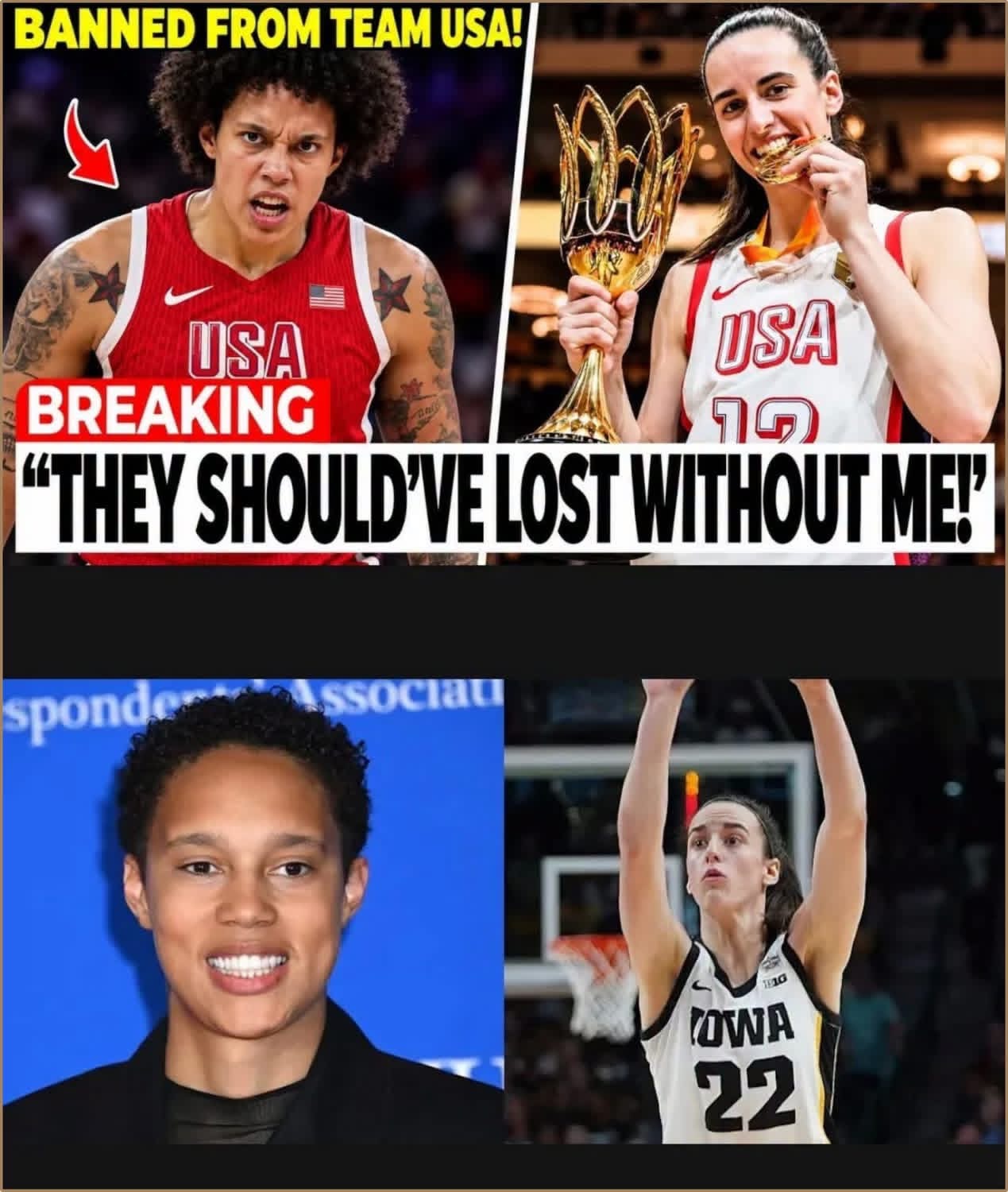
A wave of online discussion has erupted around Team USA’s recent gold-medal success and the absence of veteran centre Brittney Griner from the roster. Sensational claims have circulated suggesting her omission is linked to new genetic-testing policies, while Caitlin Clark and other younger stars helped deliver the title. Separating verified developments from speculation is essential.
The conversation sits within a much larger, ongoing debate about fairness, eligibility standards and the future of the women’s category in elite sport.
WHAT IS ACTUALLY KNOWN ABOUT GRINER’S ABSENCE
Brittney Griner is a three-time Olympic gold medallist and one of the most accomplished centres in women’s basketball history. She has dealt with significant real-world challenges in recent years, including her detention in Russia and subsequent recovery of form and fitness. Roster decisions for major tournaments involve performance, health, chemistry and coaching preference.
Claims that Griner was removed specifically because she failed or would fail chromosomal or genetic sex testing are not supported by official statements from USA Basketball, the IOC or other governing bodies. Griner is a biological female. Presenting her situation as an eligibility case of that nature risks spreading misinformation.
THE BROADER POLICY CONTEXT
In recent years, the International Olympic Committee and various international federations have updated frameworks around gender eligibility, transgender participation and differences of sex development (DSD). These policies generally focus on testosterone thresholds, biological advantage and the integrity of the female category. Implementation varies by sport and organisation.
Discussions about more consistent testing or clearer biological criteria have intensified as high-profile cases in other sports have drawn public attention. Some athletes and commentators argue that without robust, evidence-based standards, the female category risks being compromised. Others emphasise inclusion and caution against policies that could unfairly target intersex or transgender athletes.
Sophie Cunningham and several other players have publicly called for protections that prioritise fair competition for female athletes, particularly at youth and developmental levels. These comments form part of a wider athlete-led conversation rather than a coordinated campaign against any single player.
CAITLIN CLARK AND THE NEW GENERATION
Caitlin Clark’s presence on the successful Team USA roster symbolises the shift toward a younger, high-usage, skill-based style of play. Her popularity has brought unprecedented attention to the women’s game. Angel Reese, Paige Bueckers and other emerging stars are similarly reshaping the commercial and cultural landscape of the sport.
The gold-medal performance without Griner demonstrates depth in the player pool. It does not, by itself, prove any eligibility-related narrative.
SHOULD THE WNBA ADOPT STRICTER ELIGIBILITY PROTOCOLS?
This is the substantive policy question raised by the current discourse. The WNBA has so far operated under existing league and federation rules without introducing mandatory chromosomal screening for all players. Advocates for change argue that aligning with clearer biological criteria would protect the integrity of the women’s game. Critics counter that such measures could create privacy concerns, legal challenges and unintended harm to athletes with natural variations.
Any move toward expanded testing would require careful scientific grounding, consistent application and transparency. Simply following social-media pressure is unlikely to produce durable or fair policy.
KEEPING THE CONVERSATION GROUNDED
Women’s basketball is experiencing a period of remarkable growth, driven by new stars, increased investment and heightened public interest. Debates about eligibility and fairness are legitimate and necessary. They should be conducted with accurate information, respect for individual athletes, and a focus on evidence rather than speculation.
Brittney Griner’s career achievements stand on their own. Caitlin Clark and the current generation are writing the next chapter. The sport will be best served by policies that protect fair competition while avoiding the spread of unverified claims that distort the real issues at stake.