The fallout from the controversial on-court incident involving Indiana Fever star Caitlin Clark and Phoenix Mercury veteran Alyssa Thomas continues to dominate WNBA headlines, with the conversation now stretching far beyond basketball. What initially appeared to be another physical moment in a heated regular-season contest has evolved into a national debate over player safety, league discipline, and whether the WNBA is doing enough to protect its biggest stars.
The discussion intensified after Indiana Attorney General Todd Rokita publicly criticized the league’s disciplinary decision, adding a political dimension to an already polarizing issue. While opinions remain divided over whether the punishment was appropriate, the controversy underscores how every incident involving Clark now carries league-wide implications.
TODD ROKITA PUBLICLY CRITICIZES THE WNBA’S DISCIPLINARY DECISION
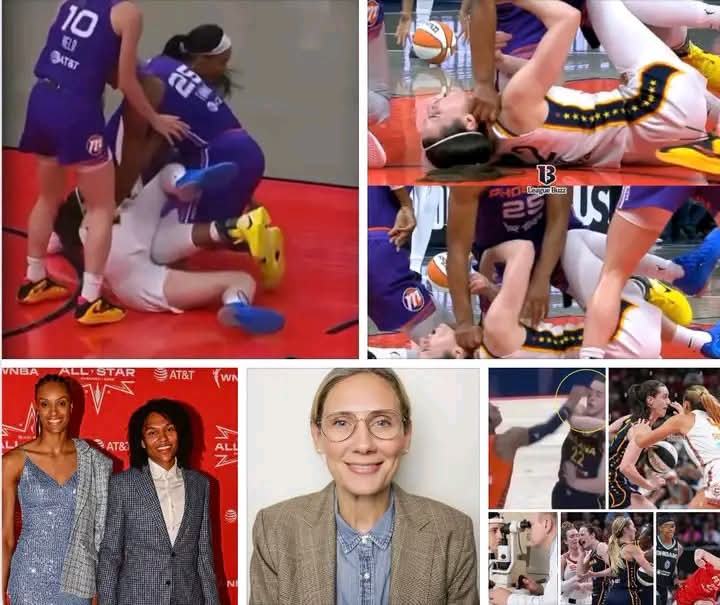
Rokita became one of the most prominent public figures to weigh in after the WNBA suspended Alyssa Thomas for one game following postgame review of an incident in which Thomas made forceful contact with Clark’s neck area.
The attorney general argued that the punishment did not adequately reflect the seriousness of the play, calling the league’s response insufficient and suggesting that stronger penalties would send a clearer message about protecting players from dangerous contact.
His comments quickly spread across national media outlets, fueling fresh discussion about whether the WNBA has been consistent when handling incidents involving excessive physicality.
Although the league has not responded directly to Rokita’s remarks, his criticism has ensured that the incident remains a major talking point well after the final buzzer.
THE INCIDENT THAT IGNITED THE CONTROVERSY
The controversy began during a matchup between the Indiana Fever and Phoenix Mercury when officials did not initially assess the play as a Flagrant 2 foul during live action.
Following its standard review process, however, the WNBA upgraded the play after the game, issuing Thomas a Flagrant Foul 2 along with an automatic one-game suspension and financial penalty.
Clark was later sidelined with a back injury, forcing her to miss Indiana’s following game against the Los Angeles Sparks.
While there has been no official indication that the injury will create long-term concerns, the situation heightened attention because Clark has become one of the league’s biggest attractions both competitively and commercially.
WHY PLAYER SAFETY HAS BECOME THE CENTER OF THE CONVERSATION
Professional basketball has always embraced physical competition, but recent events have renewed questions about where the league should draw the line between aggressive defense and unnecessary contact.
Many former players argue that hard fouls are part of championship basketball and caution against removing physicality from the game altogether. Others believe any contact involving a player’s head or neck deserves significant punishment regardless of intent because of the potential for serious injury.
The WNBA now faces the difficult challenge of balancing competitive intensity with protecting players whose health is critical to both their teams and the league’s overall success.
As more games receive national television audiences and increased media coverage, every disciplinary decision is likely to face greater scrutiny than ever before.
CAITLIN CLARK’S IMPORTANCE EXTENDS FAR BEYOND THE FEVER
Clark’s influence reaches well beyond Indiana’s win-loss record.
Since entering the WNBA, she has helped drive unprecedented television ratings, attendance figures, merchandise sales, sponsorship interest, and media attention. Every game she plays attracts significant interest from casual sports fans in addition to dedicated basketball followers.
That popularity naturally increases attention whenever she is involved in controversial plays.
From a basketball perspective, Indiana’s offense revolves around Clark’s elite court vision, perimeter shooting, and ability to create opportunities for teammates. Losing her—even briefly—can significantly impact the Fever’s offensive rhythm and playoff aspirations.
The incident serves as another reminder that protecting franchise players is not simply about one athlete; it also affects competitive balance and the league’s continued growth.
WHAT THIS MEANS FOR THE FEVER’S PLAYOFF AMBITIONS
Indiana remains one of the league’s most ambitious teams, and maintaining Clark’s health could ultimately determine how far the Fever advance this season.
The roster has developed more depth around its young superstar, but replacing her overall production remains nearly impossible. Beyond scoring, Clark dictates tempo, creates open looks, and consistently forces opposing defenses to alter their game plans.
If she returns fully healthy, Indiana still possesses the talent to compete with the WNBA’s elite teams. However, any prolonged absence could tighten an already competitive playoff race.
The organization will almost certainly prioritize long-term health over rushing its franchise cornerstone back onto the court.
THE WNBA MAY FACE EVEN MORE PRESSURE GOING FORWARD
This controversy is unlikely to disappear quickly.
Future physical encounters involving Clark—or any other marquee player—will almost certainly be examined more closely by fans, analysts, and league officials. The WNBA may also face increasing pressure to demonstrate consistency when reviewing dangerous plays, particularly those involving contact to vulnerable areas such as the head and neck.
At the same time, league officials must avoid creating the perception that disciplinary decisions change depending on which player is involved. Maintaining competitive fairness while protecting athletes will remain one of the league’s biggest challenges.
FINAL THOUGHTS
Todd Rokita’s criticism has ensured that the conversation surrounding Caitlin Clark, Alyssa Thomas, and WNBA player safety continues well beyond the original incident. Whether fans agree with his assessment or support the league’s disciplinary decision, the debate highlights the growing spotlight now surrounding every major ruling involving the WNBA’s most recognizable stars.
As the season progresses, Indiana’s immediate focus will be getting Clark back at full strength while continuing its push toward championship contention. Meanwhile, the league must continue refining how it balances physical competition with player protection, knowing that every future decision will be scrutinized by a rapidly expanding audience.
One thing is certain: the discussion surrounding player safety, officiating consistency, and the protection of elite talent is unlikely to fade anytime soon.