The WNBA continues to find itself at the center of intense public debate following a wave of viral social media posts involving Phoenix Mercury star Alyssa Thomas, Indiana Fever guard Caitlin Clark, and league commissioner Cathy Engelbert. The latest online claims accuse Thomas of misleading the public about her communications with league officials following her suspension stemming from the now widely discussed on-court incident involving Clark.
However, many of the allegations circulating online remain unverified, highlighting the growing challenge of separating confirmed reporting from speculation in an era where viral content often spreads faster than established facts. While the discussion surrounding player safety, officiating, and league leadership is very real, many of the dramatic narratives currently dominating social media have yet to be independently confirmed by credible news organizations.
THE CONTROVERSY SURROUNDING THOMAS CONTINUES TO GROW
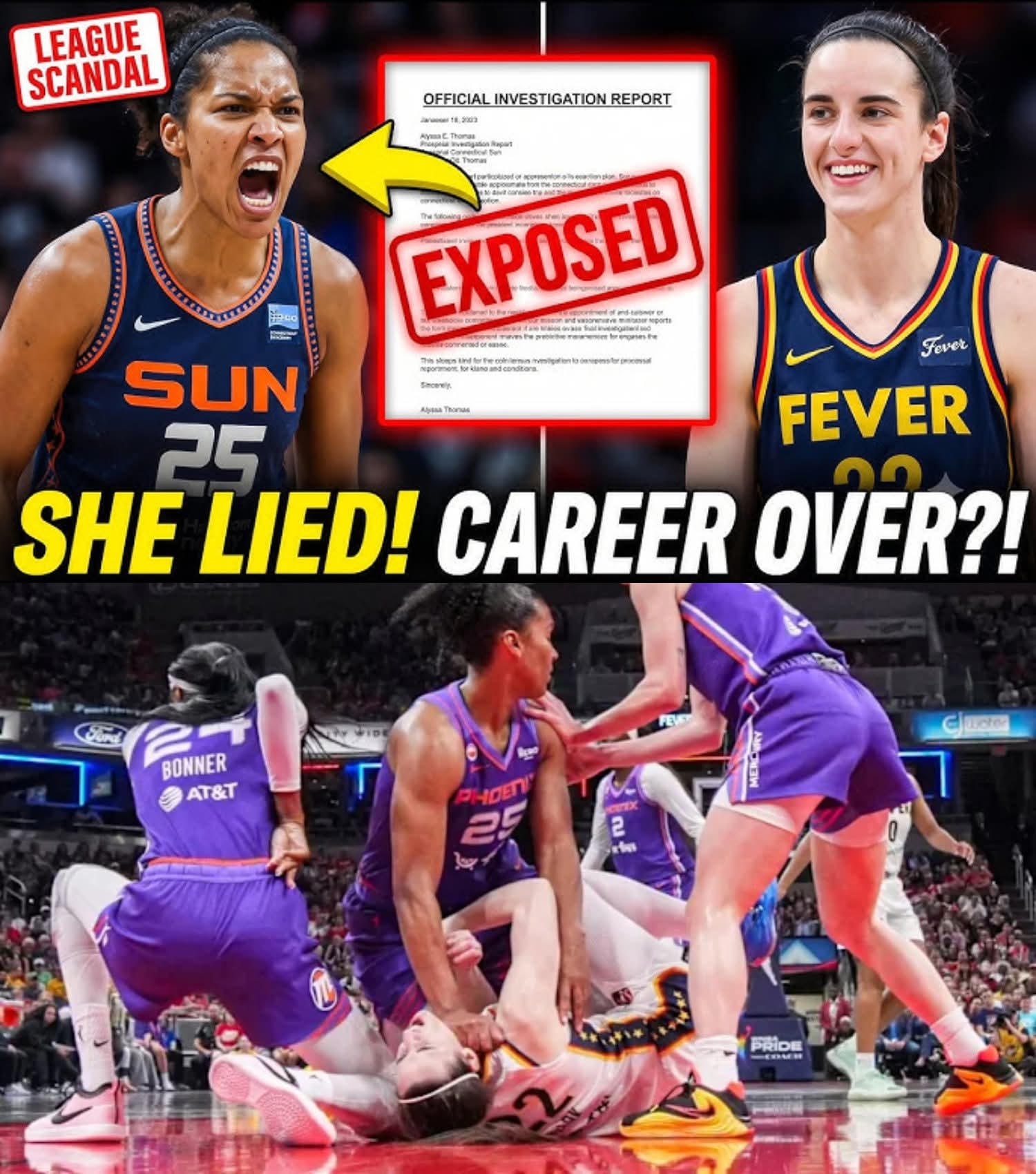
Public attention surrounding Alyssa Thomas intensified after the June 24 matchup between the Phoenix Mercury and Indiana Fever.
During a loose-ball sequence, Thomas made contact with Caitlin Clark’s throat while both players battled for possession. Although officials did not immediately assess a flagrant foul during the game, the WNBA later reviewed the play, upgraded it to a Flagrant 2, and suspended Thomas for one game after determining the contact constituted a non-basketball act.
The decision immediately divided fans.
Some believed the suspension was appropriate given the nature of the contact, while others argued the play was the result of a physical basketball scramble rather than intentional misconduct.
SOCIAL MEDIA HAS TURNED THE STORY INTO SOMETHING MUCH BIGGER
Rather than fading after the suspension, the controversy has expanded into a much broader conversation.
Numerous websites and social media accounts have published increasingly sensational claims involving Thomas, Clark, WNBA executives, and league officials. Among the latest allegations are claims that Thomas falsely suggested league leadership ignored her concerns while privately communicating with Commissioner Cathy Engelbert.
At the time of publication, these specific claims have not been independently verified by major news outlets.
That distinction matters.
In today’s media environment, screenshots, anonymous sources, edited videos, and incomplete information frequently circulate online before verified reporting can establish what actually occurred.
PLAYER SAFETY REMAINS THE BIGGER ISSUE
While internet debates continue, one issue remains impossible to ignore: player safety.
Clark has been involved in several highly physical incidents during her sophomore WNBA season, leading many observers—including Indiana Fever head coach Stephanie White—to question whether officials have been consistent in protecting star players.
At the same time, Thomas has publicly discussed receiving online harassment following the suspension, illustrating how quickly on-court incidents now evolve into personal attacks away from basketball.
The situation demonstrates that both physical safety during games and responsible fan behavior outside arenas deserve serious attention.
THE WNBA’S GROWTH HAS CREATED NEW CHALLENGES
The league’s unprecedented popularity has dramatically changed the environment surrounding its players.
Television ratings continue reaching new highs, attendance records are being challenged across multiple markets, and social media engagement has skyrocketed. Players now perform under a level of scrutiny that few WNBA athletes experienced just a few years ago.
With that increased visibility comes increased pressure.
Every hard foul, referee decision, interview quote, and social media post can instantly become national news. That level of exposure benefits the league commercially, but it also magnifies controversies that previously may have remained relatively minor basketball stories.
LEAGUE LEADERSHIP FACES A DELICATE BALANCING ACT
Commissioner Cathy Engelbert and league officials continue facing difficult decisions as the WNBA grows.
They must balance protecting player safety while preserving the league’s physical style of play. They must also respond to growing online hostility without appearing to favor one player or franchise over another.
Perhaps most importantly, league leadership must ensure disciplinary decisions remain transparent and consistent.
Whether involving Caitlin Clark, Alyssa Thomas, or any other player, fans increasingly expect accountability that is applied equally across the league.
WHY VERIFIED REPORTING IS MORE IMPORTANT THAN VIRAL HEADLINES
One of the biggest takeaways from this ongoing saga is the importance of relying on credible information.
Several recent viral articles surrounding Clark and Thomas have mixed confirmed events with unverified claims, making it increasingly difficult for fans to distinguish fact from speculation.
Responsible sports journalism requires separating documented facts from internet rumors. While passionate debate is healthy for any growing sport, misinformation ultimately benefits nobody—not the players, not the teams, and certainly not the league itself.
WHAT THIS MEANS FOR THE WNBA MOVING FORWARD
The Clark-Thomas controversy has become about much more than one play.
It has evolved into a discussion about officiating standards, league leadership, player protection, fan conduct, media responsibility, and the pressures created by the WNBA’s rapid rise in popularity.
The league now finds itself at a pivotal moment. Continued growth will depend not only on the remarkable talent displayed on the court but also on maintaining public trust through consistent officiating, transparent communication, and accurate reporting.
For Alyssa Thomas and Caitlin Clark alike, the focus will eventually return to basketball. But the conversations sparked by recent events are likely to shape how the WNBA approaches player safety, public relations, and league governance for years to come.