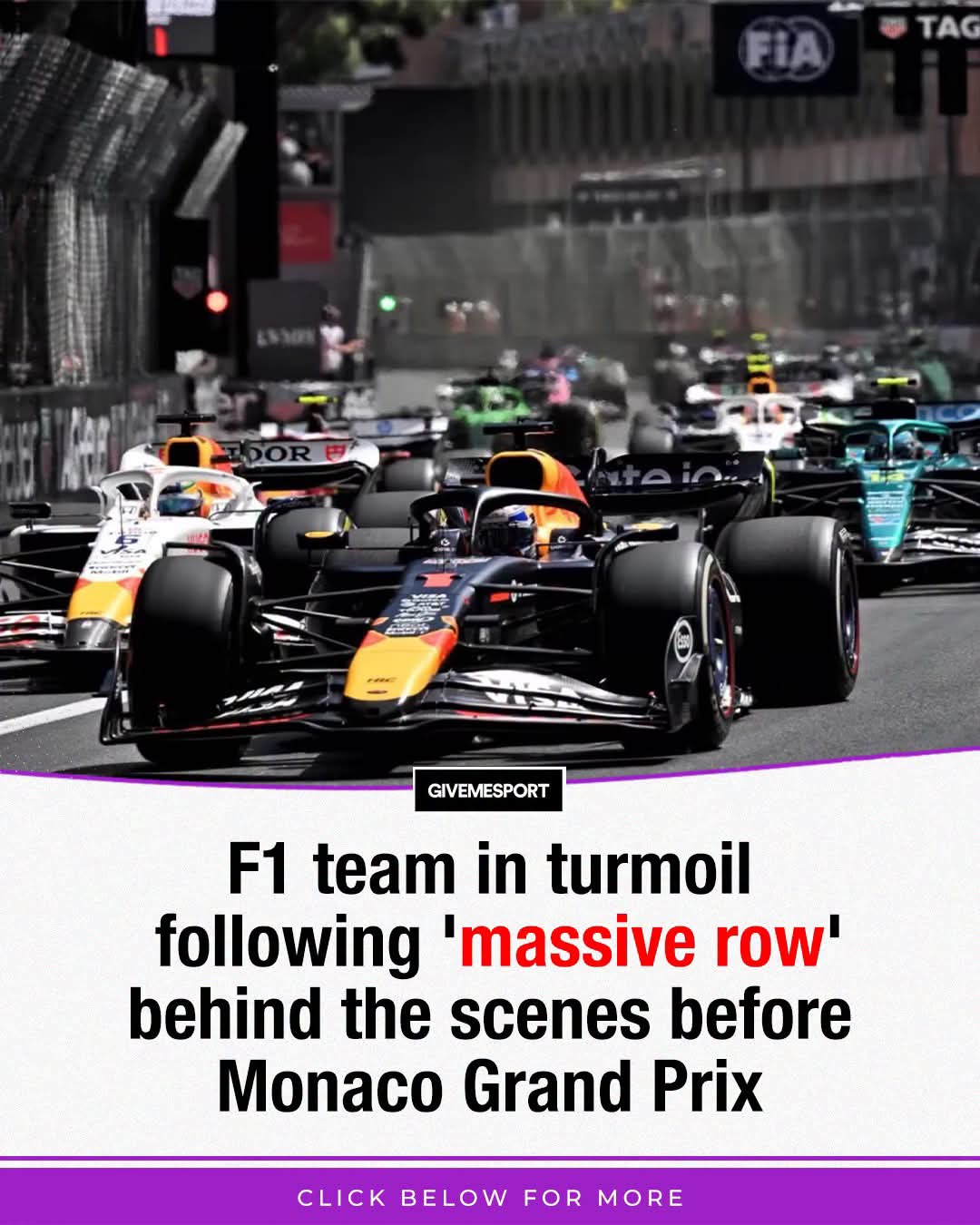
Aston Martin’s ambitious Formula 1 project is facing growing scrutiny after reports surfaced of significant internal tensions within the team during the Monaco Grand Prix weekend. While the Silverstone-based outfit finally scored its first point of the 2026 season, questions continue to surround the team’s direction, technical development, and ability to deliver on the lofty expectations that accompanied Formula 1’s new regulatory era.
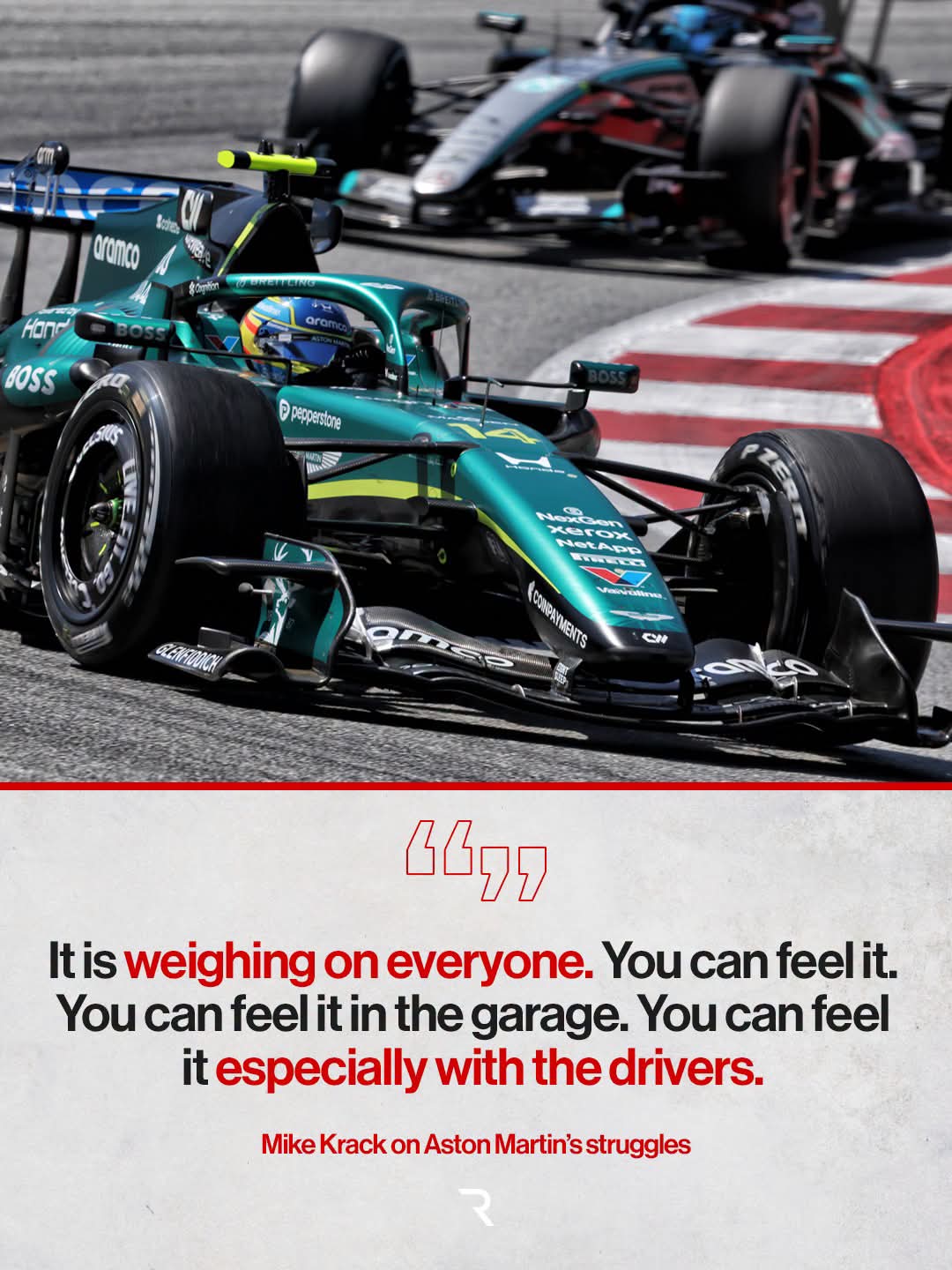
The situation has intensified after claims emerged that frustration is building behind the scenes as Aston Martin struggles to transform massive investment, world-class facilities, and elite personnel into competitive on-track results.
A PROJECT BUILT TO CHALLENGE THE ELITE
Few teams entered the 2026 season with greater expectations than Aston Martin.
The arrival of legendary designer Adrian Newey was viewed as one of the most important technical signings in modern Formula 1. Combined with Aston Martin’s state-of-the-art factory, substantial financial backing from team owner Lawrence Stroll, and a long-term partnership with Honda, many believed the team could emerge as a genuine title contender under the new regulations.
Instead, the opening phase of the season has been far more difficult than anticipated.
Rather than fighting at the front, Aston Martin has spent much of the campaign battling reliability concerns, balance issues, and a lack of outright pace. The AMR26 has consistently struggled to match the leading teams, leaving both Fernando Alonso and Lance Stroll unable to challenge for podiums or victories.
THE AMR26 HAS BECOME THE CENTER OF CONCERN
While early speculation pointed toward power unit limitations, attention has increasingly shifted toward the car itself.
Reports from within the paddock suggest the AMR26’s chassis package remains the team’s biggest weakness. Weight concerns, aerodynamic inconsistencies, and excessive vibrations have reportedly limited performance across a variety of circuits.
The challenge for Aston Martin is that Formula 1’s 2026 regulations were designed to reward teams that could quickly understand a completely new technical platform. Teams such as Mercedes appear to have adapted rapidly, while Aston Martin has struggled to unlock the full potential of its package.
That reality is particularly painful considering Newey’s arrival was expected to accelerate the team’s progress rather than expose further weaknesses.
LAWRENCE STROLL’S PRESSURE IS UNDERSTANDABLE
Lawrence Stroll has invested enormous resources into turning Aston Martin into a championship-winning organization.
From building one of Formula 1’s most advanced facilities to recruiting some of the sport’s brightest engineering minds, few owners have demonstrated the same level of commitment.
However, Formula 1 remains a results-driven business.
When investment rises, expectations rise with it. Finishing near the back of the grid after years of preparation naturally creates pressure throughout the organization. Every disappointing weekend increases scrutiny on leadership, engineering decisions, and long-term planning.
If reports of internal disagreements are accurate, they may simply reflect the frustration of a team that expected to be fighting for victories but instead finds itself struggling to score points.
MONACO OFFERED A SMALL POSITIVE SIGN
Despite the difficult season, Monaco provided at least one reason for optimism.
Fernando Alonso secured Aston Martin’s first point of the campaign after benefiting from incidents and problems affecting several rivals. While the result alone does not transform the team’s fortunes, it prevented the uncomfortable scenario of remaining pointless deep into the season.
More importantly, it offered valuable morale inside a team that desperately needed something positive.
Yet Monaco’s unique characteristics make it difficult to draw broad conclusions. The narrow street circuit often produces unusual outcomes that do not necessarily reflect a car’s true competitiveness.
The real test arrives in Barcelona.
BARCELONA COULD REVEAL THE TRUE SCALE OF THE PROBLEM
The Circuit de Barcelona-Catalunya is one of Formula 1’s most complete examinations of car performance.
With a combination of high-speed corners, long straights, technical sections, and tire management demands, weaknesses are often exposed quickly. Teams cannot rely on circuit-specific strengths to mask deficiencies.
That is why many observers believe Aston Martin could face another difficult weekend in Spain.
If the AMR26 struggles once again, pressure will intensify on the technical department and increase questions about how quickly Newey and the engineering team can turn the project around.
Conversely, any noticeable improvement could signal that Aston Martin is beginning to understand the car’s limitations and develop effective solutions.
WHY THIS MATTERS FOR THE FUTURE OF ASTON MARTIN
The importance of Aston Martin’s current situation extends beyond 2026.
The team has built its entire long-term strategy around becoming a championship contender. Honda’s full integration, Newey’s influence, and future development programs are all tied to that objective.
A prolonged period of underperformance risks creating a cycle of pressure that can slow progress rather than accelerate it. Formula 1 history is filled with examples of teams possessing enormous resources but failing to convert potential into success.
The next several months could therefore prove critical.
If Aston Martin begins closing the gap to Mercedes, Ferrari, McLaren, and Red Bull, confidence will quickly return. If results continue to disappoint, difficult questions regarding leadership, development direction, and future priorities will become impossible to avoid.
PREDICTION: PATIENCE WILL BE REQUIRED
While Aston Martin’s start to 2026 has been disappointing, writing off the project entirely would be premature.
Adrian Newey has repeatedly demonstrated an ability to solve complex technical problems, and the team still possesses one of Formula 1’s strongest infrastructures. Major regulation cycles often require multiple development phases before competitive balance fully emerges.
The more likely scenario is that Aston Martin gradually improves during the second half of the season rather than producing an immediate breakthrough.
However, the expectation of fighting for championships means incremental progress may no longer satisfy those at the top of the organization.
For now, Monaco’s solitary point offers a small boost, but Barcelona may provide a much clearer picture of whether Aston Martin’s ambitious Formula 1 dream is merely delayed—or facing a far more serious challenge.