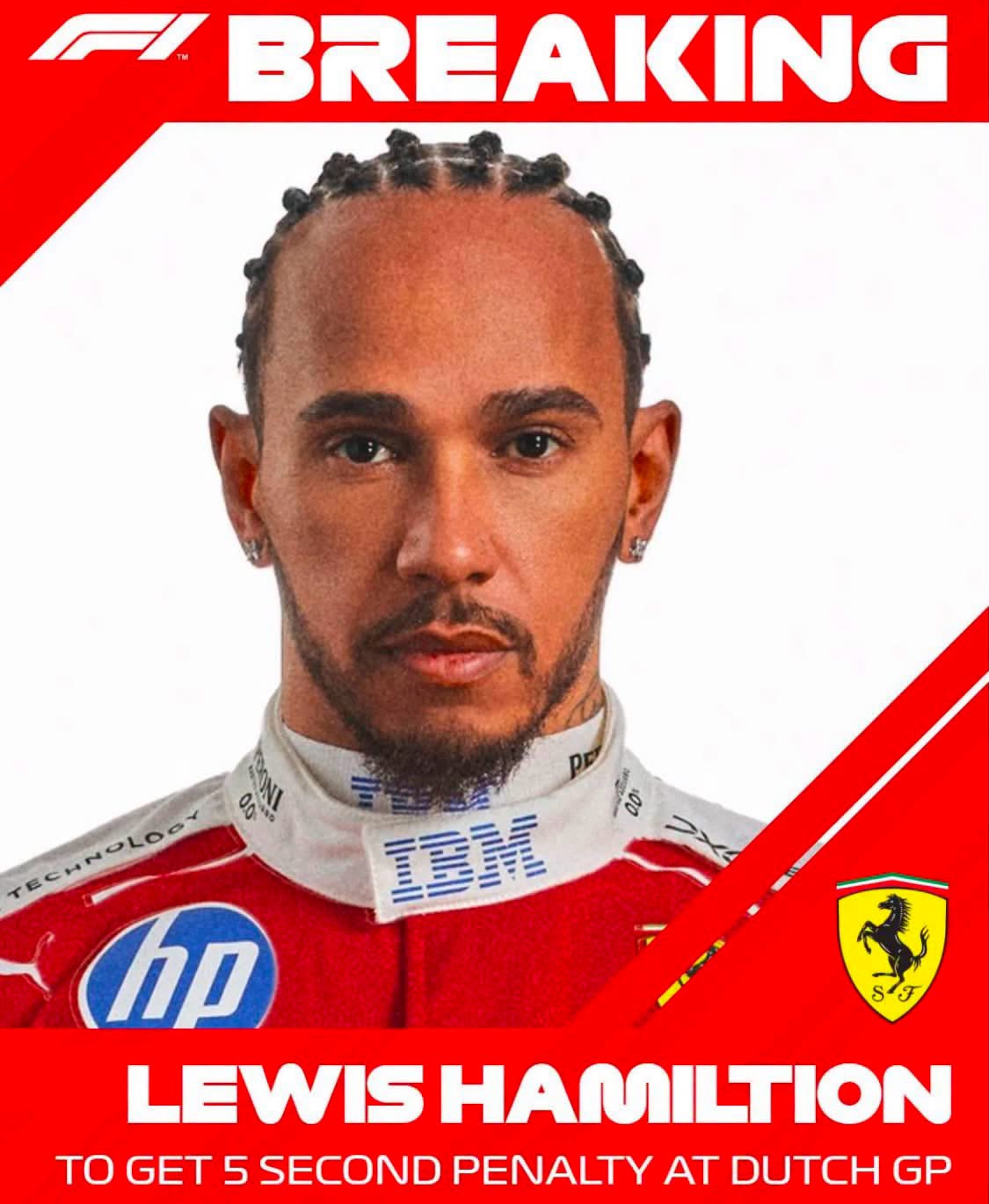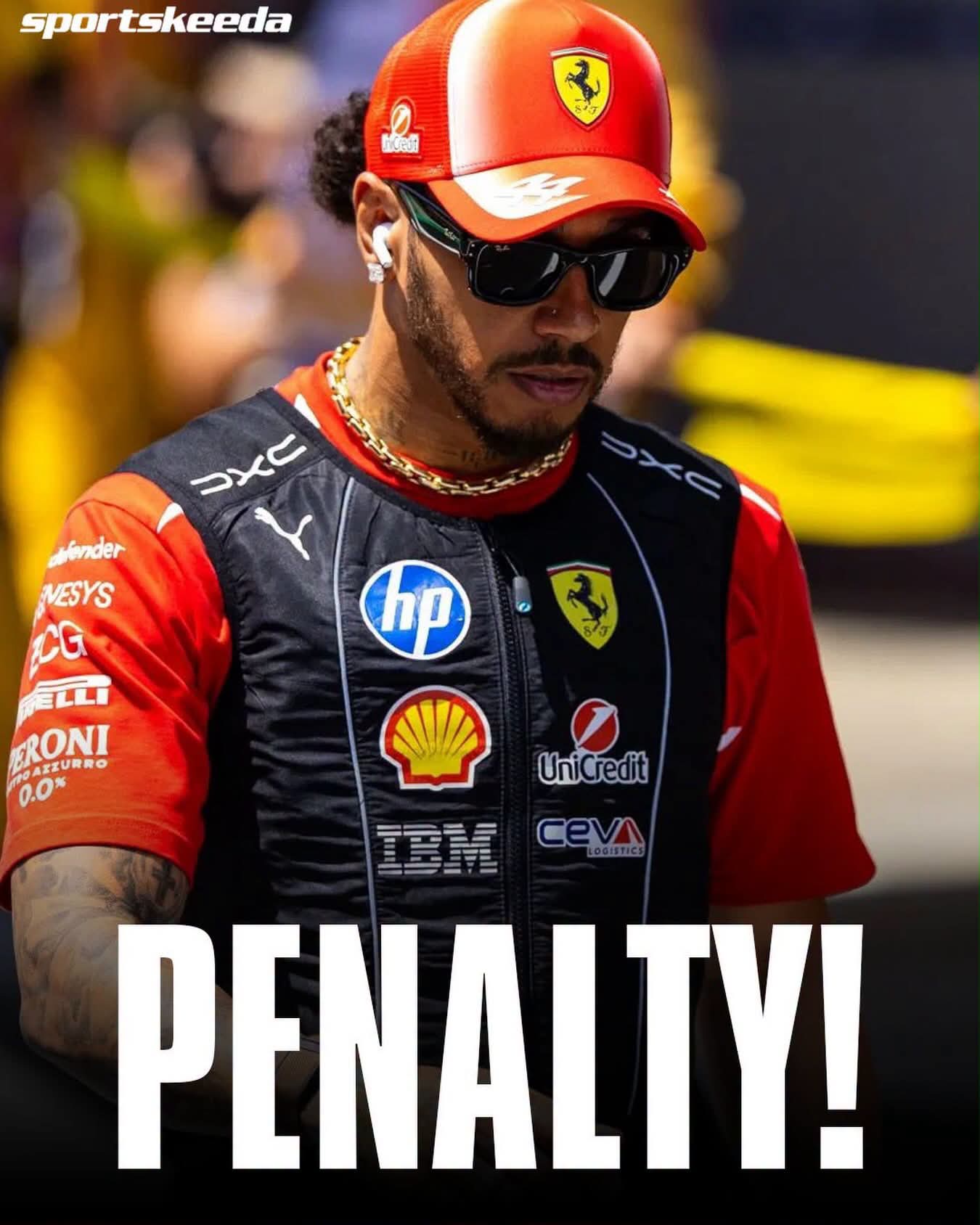
Lewis Hamilton’s hopes of maximizing his result took an early hit after race stewards handed the Ferrari driver a five-second time penalty for a false start. In a race where every second matters, the sanction immediately changed the complexion of Hamilton’s afternoon and forced both driver and team into damage-control mode.
A false start penalty may appear minor compared to drive-through or stop-and-go punishments, but in modern Formula 1, where the margins between leading teams are often measured in tenths of a second, a five-second penalty can dramatically alter finishing positions, podium battles, and championship momentum.
WHAT HAPPENED DURING THE START?
The penalty was issued after officials determined that Hamilton moved before the race start procedure had been fully completed. Formula 1 uses sophisticated sensors embedded in each starting grid position to detect even the slightest movement before the lights go out.
Once race control confirmed the infringement, stewards applied the standard five-second penalty in accordance with Formula 1 sporting regulations.
Unlike some penalties that require an immediate pit lane visit, Hamilton could continue racing, with the five seconds either being served during his next pit stop or added to his final race time if he did not make another stop.
WHY A FIVE-SECOND PENALTY CAN CHANGE EVERYTHING
Although five seconds may sound insignificant, it can completely transform a driver’s race strategy.
Teams must decide whether to push harder before the pit stop to create a gap, alter tire strategies, or rely on overtaking to recover lost ground. Every strategic decision becomes more complicated because the driver is effectively racing with an invisible time deficit.
For Hamilton, that meant balancing outright pace with tire management while ensuring the penalty caused as little damage as possible.
FERRARI NOW FACES A STRATEGIC CHALLENGE
Ferrari’s pit wall immediately had to recalculate its race plan after the penalty announcement.
Instead of simply focusing on maximizing pace against rival teams, engineers also had to consider where Hamilton would rejoin after serving the additional five seconds.
The timing of the pit stop became even more important. Pitting too early could trap Hamilton behind slower traffic, while staying out too long might compromise tire performance.
These are the split-second decisions that often determine whether a driver salvages valuable championship points or leaves the circuit frustrated.
THE IMPACT ON THE CHAMPIONSHIP BATTLE
Every point carries enormous value as the 2026 Formula 1 season enters its crucial phase.
Hamilton remains among the leading contenders in the Drivers’ Championship, while Ferrari continues chasing Mercedes in the Constructors’ standings.
A single penalty may not define a championship, but seasons are often remembered for moments where seemingly small mistakes produced major consequences.
If Hamilton loses positions because of the penalty, those missing points could become increasingly significant later in the year.
FALSE STARTS ARE RARE AT THE FRONT OF THE GRID
Experienced drivers rarely receive false-start penalties because they spend years perfecting their launch timing.
However, the introduction of increasingly sensitive electronic monitoring means even the slightest movement before the lights extinguish can trigger an automatic investigation.
The system is designed to ensure fairness across the grid, removing subjectivity from one of the most critical moments of every Grand Prix.
While frustrating for drivers, the technology helps maintain consistency in stewarding decisions.
CAN HAMILTON RECOVER?
Lewis Hamilton has built a career on overcoming adversity during races.
Throughout his Formula 1 career, he has recovered from penalties, poor qualifying sessions, and unexpected setbacks to deliver remarkable results.
Whether he can repeat that feat depends on several factors, including Ferrari’s pace, tire degradation, safety car timing, and the competitiveness of the cars around him.
If Ferrari possesses strong race speed, Hamilton still has an opportunity to limit the damage and fight back into contention.
WHAT THIS MEANS MOVING FORWARD
The penalty serves as another reminder of how unforgiving modern Formula 1 has become.
With teams operating at such a high level, even the smallest mistake—whether from the driver, pit crew, or strategists—can reshape an entire race weekend.
Hamilton and Ferrari will now focus on recovering as many points as possible while avoiding further setbacks.
As the championship battle intensifies, every race becomes increasingly important, making this five-second penalty a potentially costly moment in what promises to be one of the most competitive Formula 1 seasons in recent memory.