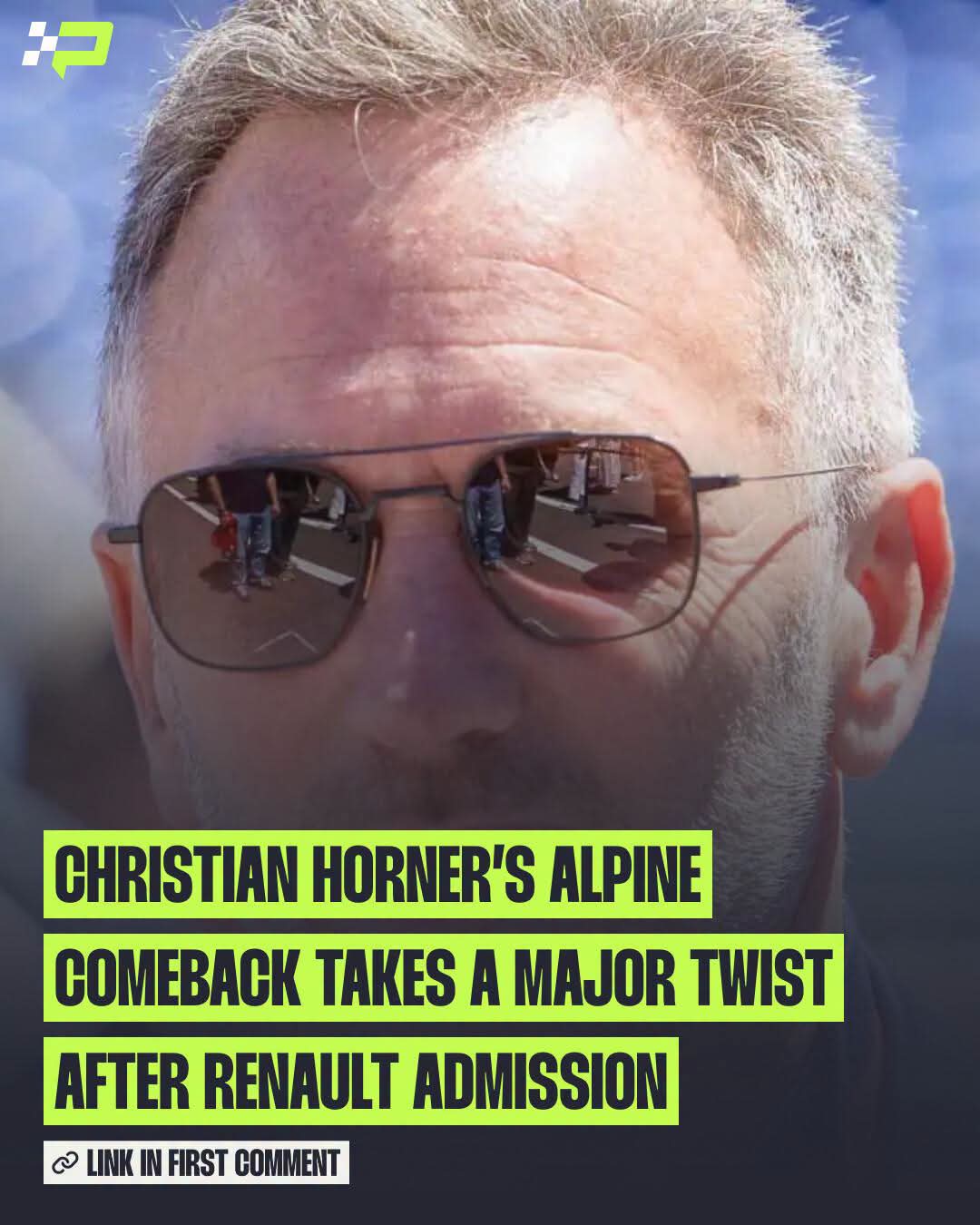
Christian Horner’s path back into Formula 1 appears to have hit another roadblock after Renault Group CEO Francois Provost publicly dismissed reports linking the former Red Bull boss with a stake in Alpine. While speculation surrounding Horner’s future has intensified since his departure from Red Bull, the latest comments suggest Alpine may no longer be the most realistic destination for one of Formula 1’s most successful team leaders.
The development comes at a crucial moment for both Horner and Alpine, as the Formula 1 landscape continues to evolve under the sport’s new regulations and increasing manufacturer interest.
WHY ALPINE WAS SEEN AS THE PERFECT FIT
Ever since Horner left Red Bull, many observers believed Alpine represented a logical next chapter. Unlike established front-running teams, Alpine remains a project with significant untapped potential, making it attractive to someone seeking influence beyond the traditional role of team principal.
Reports had suggested Horner was interested not only in managing a team but also in securing an ownership stake. That ambition aligned with discussions surrounding Otro Capital’s minority shareholding in Alpine, creating speculation that the Briton could return to Formula 1 in a leadership position with genuine long-term influence.
For a figure who spent two decades building Red Bull into a championship-winning powerhouse, simply taking another team principal role may no longer be enough. Ownership, strategic control, and the ability to shape a project from the top appear to be increasingly important factors in any future move.
RENAULT MAKES ITS POSITION CLEAR
Those hopes have now been significantly weakened.
Provost made it clear that Renault is not currently engaged in discussions with Horner and emphasized that the French manufacturer intends to maintain firm control over Alpine regardless of what happens with minority shareholders.
The message is important because it highlights Renault’s long-term commitment to the team at a time when rumors about investors, partnerships, and ownership changes continue to circulate throughout the paddock.
By publicly stating that Renault wants to retain control, the company has effectively reduced the possibility of an external figure arriving with substantial influence over the operation.
For Horner, that removes one of the key attractions that may have made Alpine appealing in the first place.
WHAT THIS MEANS FOR ALPINE’S FUTURE
Alpine’s situation remains fascinating despite the Horner speculation cooling down.
The Enstone-based team has experienced flashes of competitiveness but has struggled to establish itself as a consistent contender against the sport’s leading organizations. Frequent leadership changes, fluctuating performance levels, and strategic uncertainty have prevented Alpine from becoming the championship challenger Renault envisioned.
The team now faces a critical period. Formula 1’s new technical era is creating opportunities for ambitious teams to close the gap to the front, but success will require stability, investment, and clear leadership.
Renault’s decision to maintain control suggests the company still believes it can achieve those goals internally rather than relying on a high-profile external figure to reshape the organization.
Whether that strategy succeeds remains one of Formula 1’s biggest unanswered questions.
BYD EMERGES AS A MORE INTRIGUING OPTION
With Alpine seemingly off the table for now, attention is increasingly shifting toward Chinese automotive giant BYD.
The company has reportedly explored Formula 1 opportunities and has already held discussions with senior figures within the sport. Horner’s recent interactions with BYD executives have naturally sparked fresh speculation about a completely different route back into Formula 1.
Unlike Alpine, a potential BYD project could offer something far more attractive: the chance to build a team or manufacturer-backed operation from the ground up.
That scenario would provide Horner with the level of influence, ownership involvement, and long-term strategic control that many believe he is now seeking.
Given Formula 1’s growing popularity in Asia and the global expansion of electric and hybrid vehicle manufacturers, BYD’s interest would make significant commercial sense.
WHY HORNER’S NEXT MOVE MATTERS TO FORMULA 1
Few executives have shaped modern Formula 1 as successfully as Horner.
Under his leadership, Red Bull transformed from an ambitious newcomer into one of the most dominant teams in the sport’s history, winning multiple constructors’ and drivers’ championships across different eras.
His return would instantly impact the competitive balance of Formula 1. Whether he joins an existing team, launches a new project, or partners with a major manufacturer, Horner’s experience in building championship-winning organizations remains one of the most valuable assets available in the paddock.
That is why every rumor surrounding his future continues to attract attention.
PREDICTION: HORNER MAY WAIT FOR A BIGGER OPPORTUNITY
The latest developments suggest Horner is unlikely to rush back into Formula 1 simply for the sake of returning.
If Alpine cannot provide the ownership structure or strategic authority he desires, waiting for a larger opportunity could be the smarter move.
A manufacturer-backed project, a potential twelfth team entry, or a major investment-led venture may ultimately align better with his ambitions than stepping into an established organization with limited control.
For now, Renault’s comments have cooled one of Formula 1’s hottest rumors. But if Horner’s career has demonstrated anything, it is that he rarely thinks in the short term.
His Formula 1 comeback may have been delayed, but it is unlikely that the story is over.