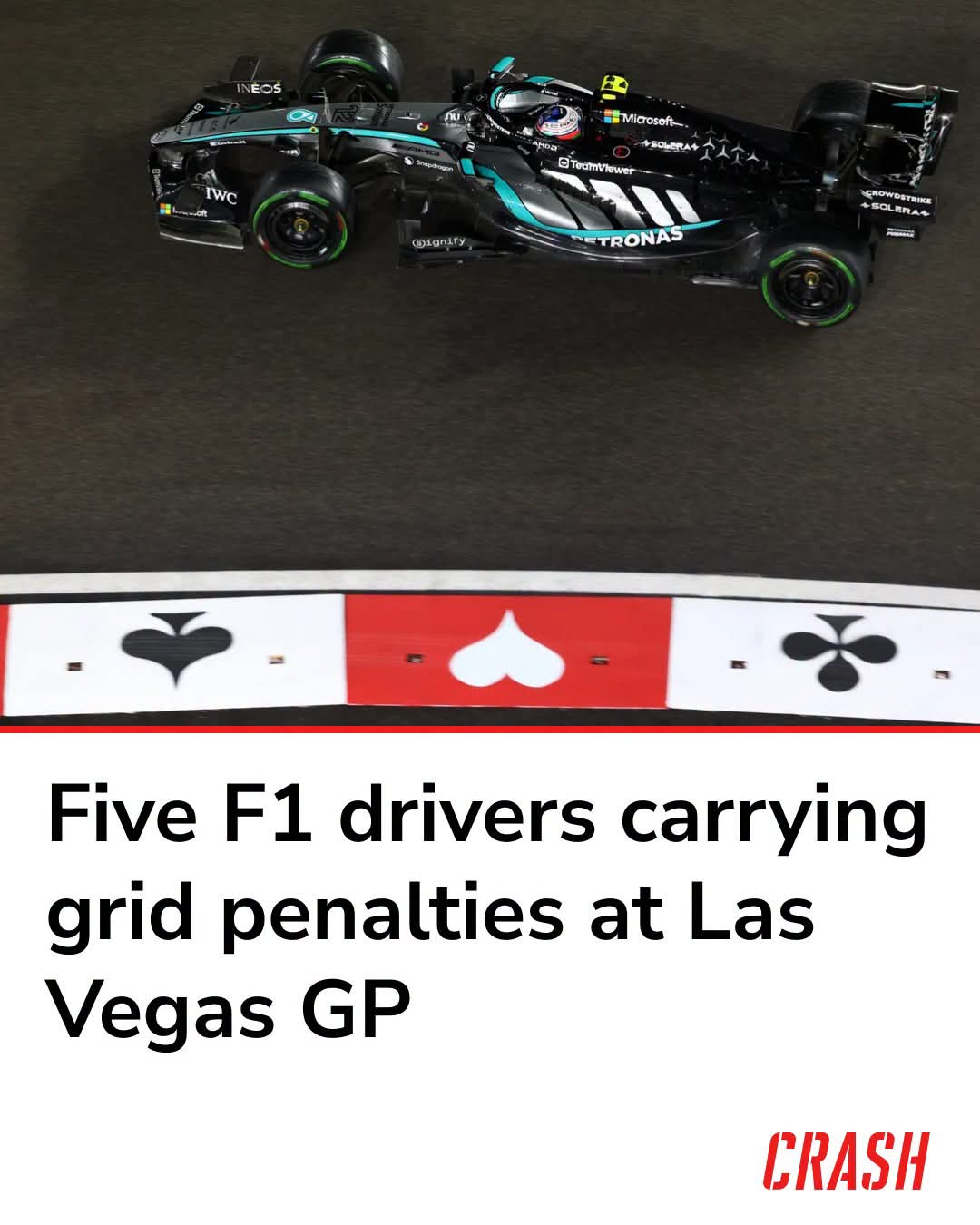
FIVE F1 DRIVERS FACING GRID PENALTIES AT 2026 LAS VEGAS GRAND PRIX AS ENGINE CHANGES SHAKE UP THE FIELD
The neon lights of the Las Vegas Strip are about to witness another night of high-stakes Formula 1 drama, but this time the chaos starts before the lights even go out. At least five drivers will take grid penalties at the 2026 Las Vegas Grand Prix, the result of power unit component changes that have pushed several teams beyond their seasonal allocations. What looked like a relatively straightforward late-season race has suddenly become a tactical puzzle involving fresh engines, upgraded turbos, and long climbs through the field on one of the calendar’s most overtaking-friendly street circuits.
This is not a minor administrative footnote. With the drivers’ and constructors’ titles already decided earlier in the season, the remaining races still carry real weight for team standings, driver reputations, and momentum heading into 2027. Starting positions will be scrambled, race strategies rewritten, and the usual Las Vegas spectacle amplified by the knowledge that several big names will be charging from further back than they would like.
THE DRIVERS HIT WITH PENALTIES AND WHAT THEY MEAN
The confirmed list paints a clear picture of late-season component management under pressure. Newly crowned world champion Kimi Antonelli will drop five places after Mercedes fitted a sixth internal combustion engine to his car. Because this is not his first time exceeding the allocation, the penalty is five places rather than the heavier ten-place hit that comes with the first breach.
Oscar Piastri faces a steeper ten-place drop. McLaren confirmed the Australian will take a fifth ICE after a reliability concern, triggering the full penalty. Carlos Sainz joins him with the same ten-place sanction after Williams installed a fifth turbocharger. Oliver Bearman is the hardest hit: a near-complete power unit change on his Haas, involving fifth examples of multiple elements, exceeds the 15-place threshold and sends him to the back of the grid. Lance Stroll completes the group with a ten-place penalty for a new energy store and control electronics on his Aston Martin, the latest chapter in a season plagued by reliability issues with those components.
These are not arbitrary punishments. Formula 1’s power unit rules strictly limit the number of each major element a driver may use across a season. Exceed the limit and the grid drops follow in a structured way: ten places for the first extra unit of a given type, five for subsequent ones, with cumulative penalties beyond 15 places resulting in a mandatory back-of-the-grid start.
WHY THESE PENALTIES MATTER ON THE LAS VEGAS STRIP
Las Vegas is not a circuit that forgives a poor starting position the way some permanent tracks can. The long straights, heavy braking zones, and relatively open layout create genuine overtaking opportunities, especially under the DRS zones and with energy deployment strategies that can vary wildly between teams. That reality softens the blow somewhat. A driver starting tenth or fifteenth still has a realistic shot at strong points if the car has pace and the strategy lands.
For Antonelli, the five-place drop is particularly interesting. As world champion, he arrives with less pressure than most, yet every race still shapes how the season is remembered. A recovery drive under the lights would reinforce the narrative of a young champion who can still fight when the odds are stacked. For Piastri and Sainz, the ten-place hits sting more because both remain capable of podium contention when the car is working. Bearman’s back-marker start turns the race into a pure damage-limitation and recovery exercise, while Stroll’s penalty continues a difficult campaign for the Aston Martin driver.
Teams also feel the ripple effects. Mercedes and McLaren are managing the introduction of an ADUO-spec turbo upgrade, a development opportunity available to manufacturers whose power units sit below a performance threshold. The decision to run the new turbo on some cars but not others shows how carefully teams weigh a small performance gain against the cost of further grid penalties. Williams and Haas are simply trying to keep cars reliable to the finish. Aston Martin continues to battle energy store and electronics failures that have already cost them points and forced multiple changes.
THE BIGGER PICTURE FOR F1’S LATE-SEASON LANDSCAPE
Component allocation battles have become a regular feature of modern Formula 1. As seasons stretch longer and reliability is pushed harder, more drivers find themselves taking penalties in the final races. What stands out in Las Vegas is the concentration of hits in one event and the mix of title contenders, midfield regulars, and backmarkers involved. It underlines how tightly the current power unit regulations constrain development and force hard choices between performance, reliability, and starting position.
For the championship picture, the penalties arrive after the major titles have been settled. That removes some of the high-stakes tension but creates a different kind of intrigue. Drivers fighting for second, third, or best-of-the-rest positions now face an uneven grid. Constructors’ points remain valuable for prize money, prestige, and internal team dynamics. A strong recovery by Piastri or Antonelli could still shift the final order in meaningful ways.
Looking ahead, these late-season changes also feed into 2027 planning. Teams gather data on upgraded components under race conditions. Drivers who repeatedly take penalties may push harder for reliability improvements or different power unit strategies next year. The ADUO system itself continues to evolve as a tool for keeping the field competitive without opening the floodgates to unlimited development.
WHAT TO EXPECT WHEN THE LIGHTS GO OUT
The Las Vegas Grand Prix has already built a reputation for unpredictable racing under the lights. Add multiple grid penalties and the potential for early chaos increases. The long run to the first corner, the high-speed nature of the circuit, and the energy management demands create perfect conditions for those starting further back to make rapid progress if they can stay out of trouble.
Antonelli has already shown he can climb through the field, most notably with a strong recovery at Monza earlier in the season. Piastri and Sainz possess the race craft to turn a compromised start into a solid result. Bearman and Stroll will be looking for clean air and opportunistic strategy calls. For the rest of the field, the penalties create openings. Drivers who qualify well and avoid the midfield scrap stand to benefit from the disrupted order.
The story of this weekend is larger than five grid drops. It is about how Formula 1’s technical regulations shape the racing, how teams balance short-term results against longer-term reliability, and how a spectacular street circuit can turn a difficult starting position into an opportunity. When the cars line up under the Las Vegas skyline, the real race will begin several rows further back for some of the grid’s biggest names. That is when the true value of these penalties, and the drivers’ ability to overcome them, will become clear.